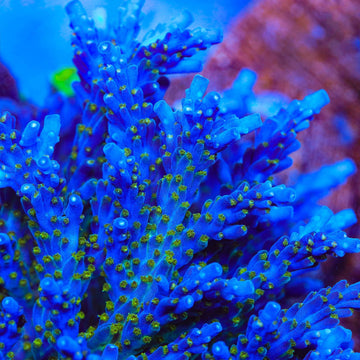
PC Rainbow Acropora Coral
Overview
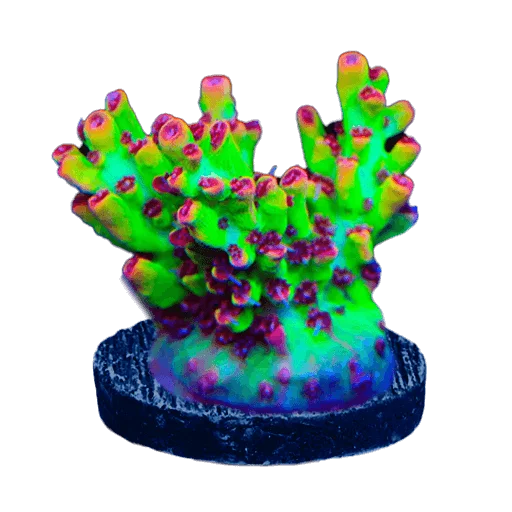
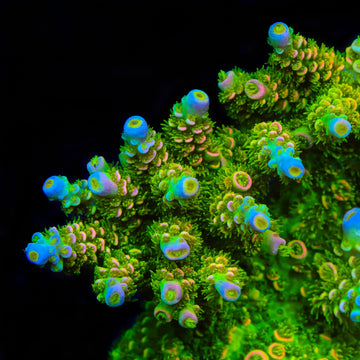
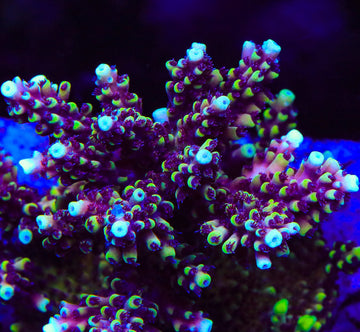
PC Rainbow Acropora Coral shows multicolored branch tips with dense, fine polyps. Acropora millepora is a small-polyp stony branching coral that prefers strong light and high, turbulent water flow. It is primarily photosynthetic via symbiotic algae, but occasional small-particle foods can support growth and maintain color. Place high on stable rockwork with space from aggressive neighbors, and keep alkalinity and calcium stable to prevent stress.
Quick Facts
Care
Difficult
Lighting
High
Flow
High
Placement
High
Temperament
Peaceful (allow 1–2 inches for growth)
Recommended Parameters
Temp
76–80°F
pH
8.1–8.4
Salinity
1.025–1.026
Calcium
420–450 ppm
AlkAlkalinity
8–9 dKH
Magnesium
1280–1350 ppm
Feeding
photosynthetic (primary), microplankton, rotifers, copepod nauplii, oyster eggs, coral-specific powdered foods, amino acid supplements, marine snow/bacterioplankton
Care & Placement
FAQ
Frequently Asked Questions
About the PC Rainbow Acropora Coral
-
Why does my PC Rainbow Acropora lose its rainbow tones and look brown or pastel?
Color shifts usually trace to light and nutrient balance. Aim for 250–400 PAR with strong blue/UV (350–450 nm) and avoid excessive white/red. Keep NO3 around 5–15 ppm and PO4 0.03–0.10 ppm; too low yields washed pastels, too high causes browning. Stable alkalinity (7.5–8.5 dKH) is key. Potassium supports pinks/reds; iron/iodine help greens/yellows—dose only after testing. -
How should I mount and shape this millepora for best growth?
Let it encrust before vertical growth. Mount at a slight angle or horizontally to promote fuller branching and reduce basal shadowing. Provide strong, turbulent flow around the base to keep tissue healthy. Periodic pruning of inner branches improves light penetration and maintains color at the core. Avoid cradles that trap detritus under the frag. -
What flow pattern suits A. millepora, and how do I know it’s too much or too little?
Mimic shallow reef surge: high, chaotic, alternating flow. Too little: detritus collects, polyps remain withdrawn, and base darkens. Too much laminar flow: tissue recession or burn on the windward side and constantly retracted polyps. Use crossfire from multiple pumps, not a single jet, and cycle intensities to keep polyps extended without battering tissue. -
What pests and subtle symptoms should I watch for with PC Rainbow Acropora?
Watch for Acropora-eating flatworms (AEFW): faint bite marks, pale patches, and tan egg clusters on undersides; confirm with a turkey baster blast. Red bugs cause reduced polyp extension and muted colors without obvious tissue loss. Dip new pieces (iodine or low-dose insecticide dips), rinse well, and inspect after lights out. Maintain a quarantine schedule for all Acropora additions.