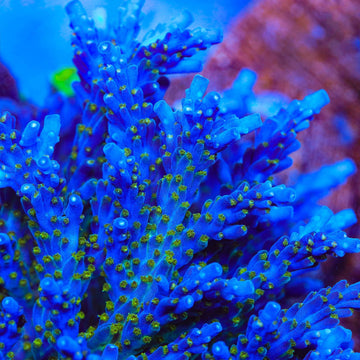
Paletta Tricolor Acropora Coral
Overview
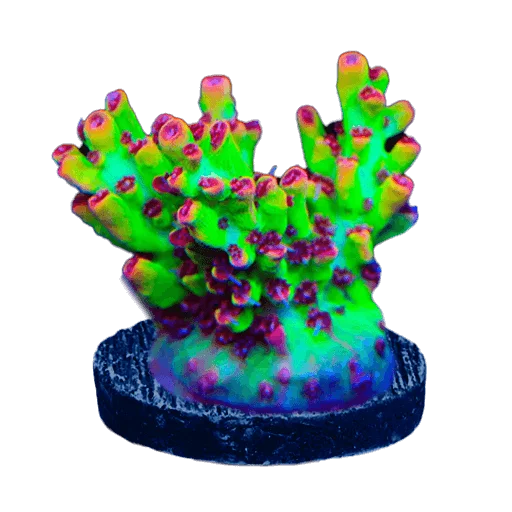
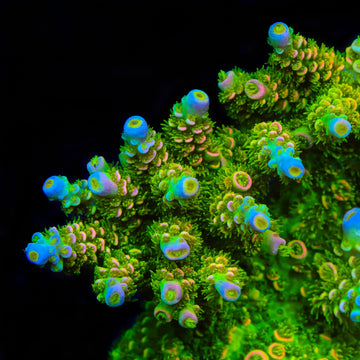
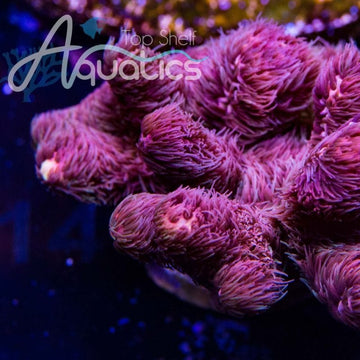
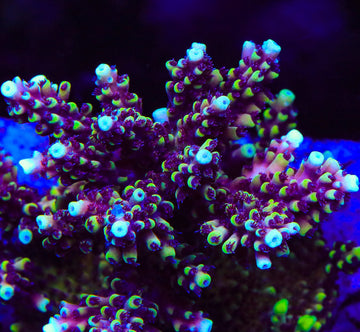
Paletta Tricolor Acropora Coral forms tight branching colonies with blue to purple tips, a green base, and pale polyps. Acropora valida is a small-polyp stony coral that prefers strong light and high, turbulent flow. It is mainly photosynthetic with symbiotic algae but will take very fine planktonic foods, which can support growth and color. Place high on stable rockwork with space from stinging corals, and keep water parameters stable to prevent tissue recession.
Quick Facts
Care
Difficult
Lighting
High
Flow
High, turbulent
Placement
High
Temperament
Peaceful (2–3 inches spacing from other corals)
Recommended Parameters
Temp
77–80°F
pH
8.1–8.4
Salinity
1.025–1.026
Calcium
400–450 ppm
AlkAlkalinity
7–9 dKH
Magnesium
1280–1350 ppm
Feeding
photosynthetic (primary), microplankton, rotifers, copepod nauplii, powdered coral foods, oyster eggs, fish eggs, amino acid supplements, dissolved and particulate organics
Care & Placement
FAQ
Frequently Asked Questions
About the Paletta Tricolor Acropora Coral
-
How do I maintain the signature tri-color (purple base, blue tips, green polyps) in Paletta Tricolor Acropora?
Aim for high, stable PAR (250–400) with a blue-leaning spectrum (14–20K). Keep alk steady (8–9 dKH), moderate nutrients (NO3 5–15 ppm, PO4 0.03–0.08 ppm), and strong cross-flow. Potassium 380–420 ppm and adequate iron help purples; avoid ultra-low nutrients that wash out tips. Prevent shadowing—this coral colors best when the whole colony gets even light. -
My tips are burning while the base browns—what’s causing mixed signals?
Tip burn often comes from a quick alk or light increase without matching nutrients; the base browns when shaded or flow-deprived. Slow any light/alk changes, increase random flow underneath branches, and raise nutrients slightly if very low. Trim neighboring colonies or reposition to reduce shadowing. Maintain temperature stability; small swings can amplify these issues. -
How do I detect and manage pests this coral is sensitive to, like AEFW and red bugs?
For AEFW, look for oval bite marks and tissue thinning on shaded sides; a turkey baster blast may dislodge flatworms. Red bugs appear as tiny orange dots on polyps, causing reduced extension. Use a rigorous dip protocol (e.g., iodine, Bayer) for new frags and consider whole-tank Interceptor (with care) for red bugs. Quarantine, inspect at night, and repeat dips to catch hatch cycles. -
Why does this coral sometimes stall after encrusting instead of branching upward?
Acropora valida often encrusts widely before pushing axial growth. If it stalls, check for insufficient PAR at the rim, laminar flow hitting only one side, or micro-limitation of trace elements. Increase random flow, bump PAR modestly, and verify potassium/iodine within range. Lightly trim a competing branch to open space—the colony frequently resumes vertical growth when perimeter competition drops.