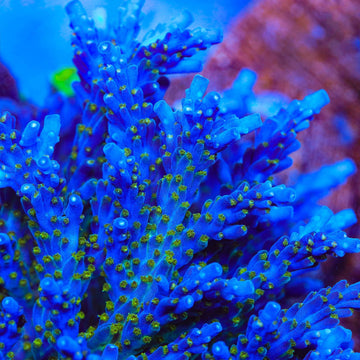
Oregon Blue Tort Acropora Coral
Overview
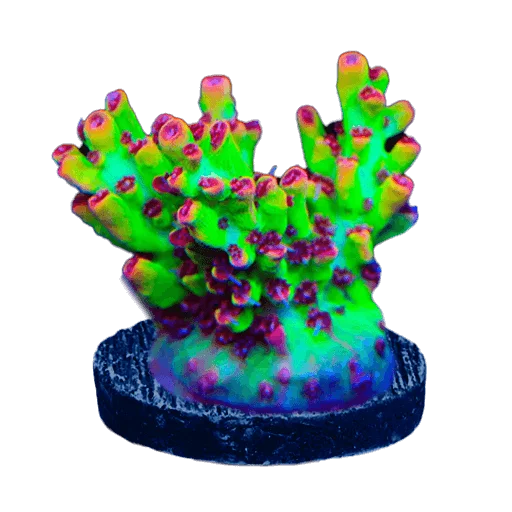
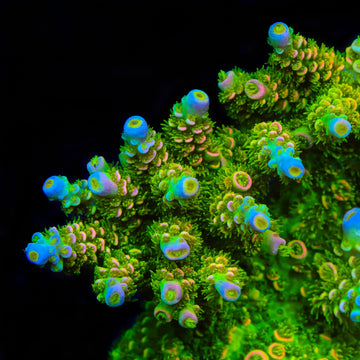
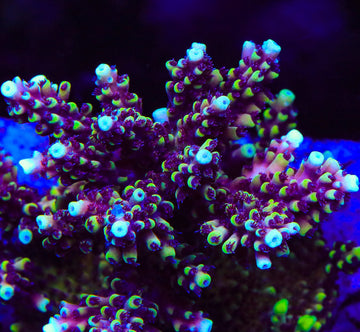
Oregon Blue Tort Acropora Coral shows vivid blue, upright branching with tight, pointed tips. Acropora tortuosa is a small-polyp stony branching coral that prefers strong light and high, turbulent water flow. It is primarily photosynthetic with symbiotic algae, and occasional micro-plankton feeding can support growth and color. Place high on stable rockwork with space from aggressive corals; avoid shading and keep water parameters stable.
Quick Facts
Care
Difficult
Lighting
High
Flow
High, turbulent
Placement
High
Temperament
Peaceful (3+ inches spacing)
Recommended Parameters
Temp
77–80°F
pH
8.1–8.4
Salinity
1.025–1.026
Calcium
420–450 ppm
AlkAlkalinity
8–9 dKH
Magnesium
1280–1350 ppm
Feeding
photosynthetic (primary), microplankton, rotifers, copepods, oyster eggs, powdered coral foods (e.g., Reef-Roids), amino acids
Care & Placement
FAQ
Frequently Asked Questions
About the Oregon Blue Tort Acropora Coral
-
Why does my Oregon Blue Tort lose its deep blue and turn teal or brown under strong light?
Color shifts usually signal nutrient/light imbalance, not insufficient PAR. Aim for high, stable PAR (300–450) with strong, chaotic flow, but keep nitrate 2–10 ppm and phosphate 0.03–0.08 ppm. If nutrients bottom out, blues wash to teal; if they rise too high, it browns. Potassium 380–420 ppm supports blues; verify with ICP. Acclimate lighting gradually to avoid tip burn. -
The base is receding while tips keep growing—what’s causing “shadow die-off”?
Thick tortuosa branches can shade their own base. Combine strong cross‑flow to clear detritus with periodic pruning to open the colony. Encourage encrustment before vertical growth by placing the frag flat and giving room to plate out. If recession continues, check for AEFW (bite marks) and verify alkalinity stability; rapid alk swings accelerate basal tissue loss. -
Are there telltale signs of pests specific to this Acropora, and how should I respond?
Look for pale, irregular bite patches between corallites (AEFW) and reduced polyp extension with tiny orange specks (red bugs). Tortuosa’s tight corallites hide eggs along shaded bases. Use a multi‑week dip protocol (e.g., weekly Bayer or commercial dips) plus turkey‑baster blasts to dislodge worms. For red bugs, consider in‑tank interceptor treatment in a fish‑only system or quarantine first. -
My colony stalls after shipping or a big water change—how can I re‑ignite growth?
Tortuosa often pauses after stress. Stabilize parameters for 2–3 weeks, then gradually raise PAR to target. Add targeted flow to the base, and consider low‑dose amino acids or fine particulate feeds at night to encourage polyp activity. Verify trace levels (potassium, iodine) via ICP. Small, strategic pruning can stimulate new axial growth once encrustment resumes.