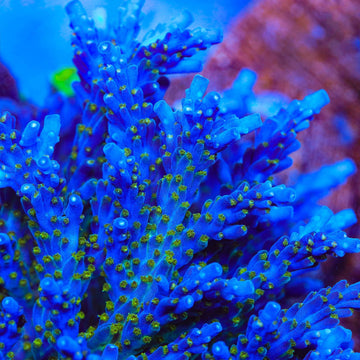
ORA Pearlberry Acropora Coral
Overview
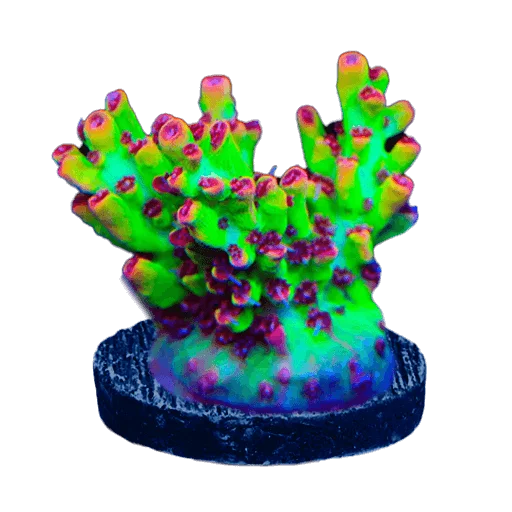
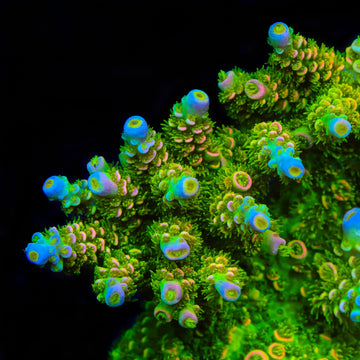
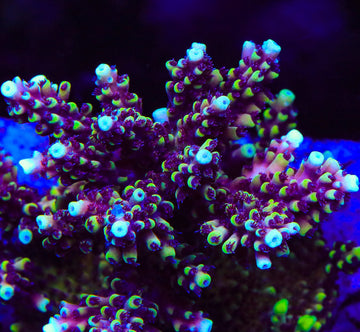
ORA Pearlberry Acropora Coral shows tightly spaced, upward-branching tips with pearly blue to purple highlights. Acropora desalwii is a small-polyp stony branching coral that prefers strong light and high, turbulent water flow. It is primarily photosynthetic with symbiotic algae but can benefit from occasional very fine planktonic foods, which may support growth and coloration. Place high on stable rockwork with space from aggressive neighbors, and keep parameters stable with low nutrients.
Quick Facts
Care
Difficult
Lighting
High
Flow
High
Placement
High
Temperament
Peaceful (2–3 inches spacing)
Recommended Parameters
Temp
77–80°F
pH
8.1–8.4
Salinity
1.025–1.026
Calcium
420–450 ppm
AlkAlkalinity
8–9 dKH
Magnesium
1280–1400 ppm
Feeding
photosynthetic, microplankton, rotifers, copepod nauplii, oyster eggs, reef roids–type coral foods, amino acid supplements
Care & Placement
FAQ
Frequently Asked Questions
About the ORA Pearlberry Acropora Coral
-
Why is my ORA Pearlberry losing its pearly blue tips and looking washed out?
This coral needs strong, stable light (PAR ~300–450) with a strong blue/UV component. If tips fade, check for low PAR, aggressive light changes, or imbalances in nutrients and traces. Keep NO3 ~2–10 ppm, PO4 0.03–0.08 ppm, and potassium ~380–420 mg/L. Avoid ultra-low nutrients with high alkalinity; that combo bleaches tips. Light-acclimate slowly and maintain steady alkalinity (7.5–8.5 dKH). -
How can I shape its growth—tabling or branching?
ORA Pearlberry (Acropora desalwii) encrusts first, then throws slender branches. Mount small frags horizontally on a flat plug or shelf rock to encourage multiple axial points and a mini-table form. Upright mounts favor a single dominant branch. Provide wide, open space, high, chaotic flow, and don’t crowd it—shade from neighbors will skew growth and color. -
I’m seeing “burnt tips” and slow tissue loss—what’s the likely cause?
Common triggers are high alkalinity paired with very low nutrients, sudden PAR spikes, or pests like AEFW. First, stabilize parameters and raise nutrients slightly if near zero. Bring alk down to 7.5–8.5 dKH, increase flow, and check for pests (night inspection, dips). Run fresh carbon if soft corals are nearby to reduce chemical warfare. Frag ahead of recession if needed. -
Polyp extension is poor on one side—could flow be the issue?
Yes. Laminar, one-directional blasts often cause tissue wear on the downstream side. Aim for strong, random turbulence that sweeps from multiple angles. Alternate pumps or use gyre/random modes. If PE improves at night, fish nipping may be involved—watch for dwarf angels or pecking wrasses. Ensure stable temp and pH, which also affect PE.