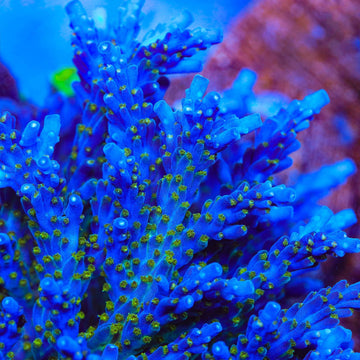
ORA Green Planet Acropora Coral
Overview
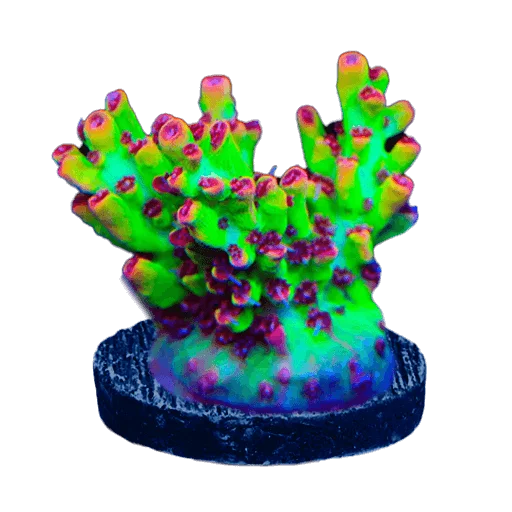
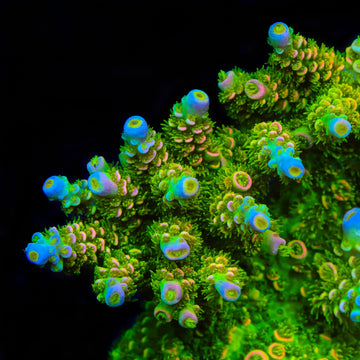
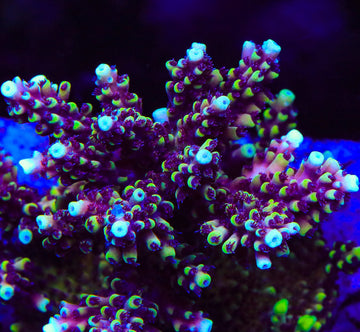
ORA Green Planet Acropora Coral shows vivid green branches with compact radial corallites. Classified as Acropora sp., it is a small-polyp stony branching coral that prefers strong light and high, turbulent flow. It is primarily photosynthetic via symbiotic algae but can use occasional fine particulate foods to support faster growth and richer color. Place high on stable rockwork with space from aggressive neighbors, and maintain stable alkalinity and calcium to prevent tissue loss.
Quick Facts
Care
Difficult
Lighting
High
Flow
High
Placement
High
Temperament
Peaceful (3–6 inches spacing)
Recommended Parameters
Temp
76–80°F
pH
8.1–8.4
Salinity
1.025–1.026
Calcium
420–450 ppm
AlkAlkalinity
8–9 dKH
Magnesium
1280–1350 ppm
Feeding
photosynthetic (primary), microplankton, rotifers, copepod nauplii, coral-specific powdered foods, amino acid supplements
Care & Placement
FAQ
Frequently Asked Questions
About the ORA Green Planet Acropora Coral
-
Why does my ORA Green Planet Acropora lose its neon green and look dull or yellowish under strong lighting?
This strain’s green fluoresces best under strong blue (420–460 nm). Excessive white-heavy PAR can wash it out or push yellow tones. Aim for high but stable PAR (250–350 at the tips), with nutrients detectable (NO3 2–10 ppm, PO4 0.02–0.08). Avoid big alkalinity swings; keep 8–9 dKH. Gradually acclimate to brighter light to prevent paling or “burnt tips.” -
The base is receding slowly while the tips look fine—what’s causing this?
Dense branching can trap detritus at the base, fueling slow tissue necrosis. Increase crossflow around the colony’s lower half, turkey-baste weekly, and ensure the frag is mounted to allow perimeter flow. Check for low, unstable nutrients and alk drift. Address pests (AEFW, red bugs) even if damage isn’t obvious; base recession often precedes visible bite marks. -
My polyp extension is short during the day—should I be worried?
This cultivar often shows modest daytime extension under high flow and light yet opens more at night. If extension suddenly retracts, investigate irritants: excessive laminar flow, alkalinity swings, aggressive neighbors (especially leather corals), or pests. Adjust to pulsing/random flow, add carbon to reduce chemical warfare, and verify stable parameters before assuming a feeding issue. -
What’s a good strategy to keep the colony from shadowing itself as it grows?
Encourage a wide, encrusted base first by mounting on a small pedestal or tilted plug and providing high, turbulent flow around the perimeter. Periodically trim interior branches to open channels for light and flow, preventing shaded die-off. Plan spacing from adjacent SPS to allow lateral growth; this strain thickens quickly and can out-compete slower acros for light.