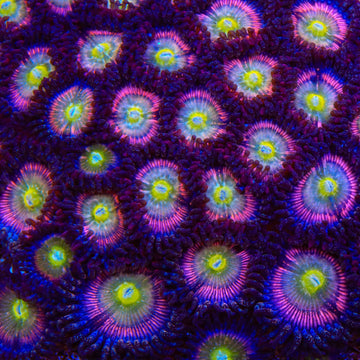
OG Soprano Zoanthids Coral
Overview
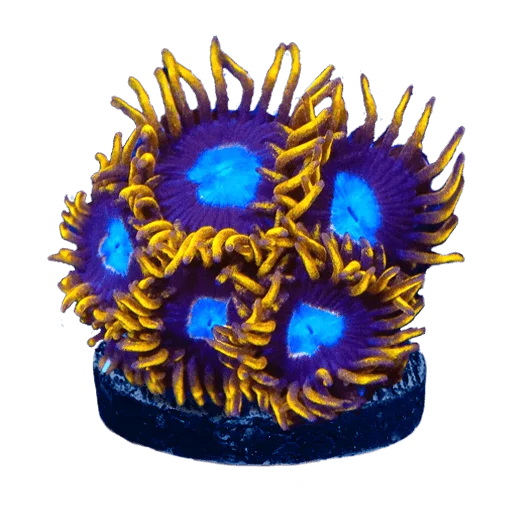
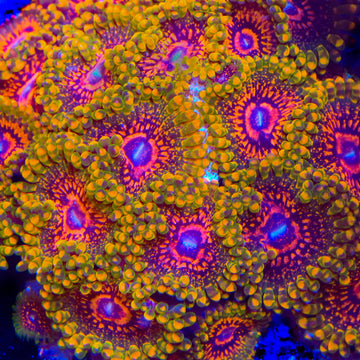
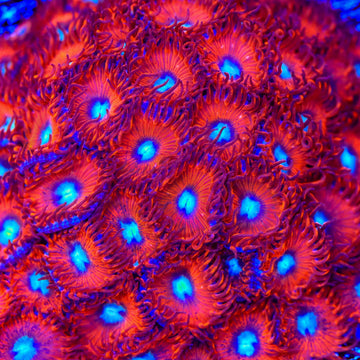
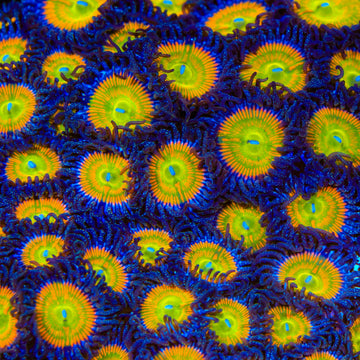
OG Soprano Zoanthids Coral features button-like polyps with contrasting centers and frilled skirts. Zoanthus sp., a soft colonial polyp coral, prefers moderate light and low to moderate water flow. It is primarily photosynthetic with symbiotic algae but benefits from occasional small planktonic foods to support faster growth and stronger color. Place on an isolated rock to control spread and give space from stinging corals; handle with care due to potential toxins.
Quick Facts
Care
Easy
Lighting
Low–Moderate
Flow
Moderate
Placement
Low–Mid
Temperament
Semi-aggressive (fast-spreading; 2–3 inches spacing)
Recommended Parameters
Temp
76–80°F
pH
8.1–8.4
Salinity
1.025–1.026
Calcium
400–450 ppm
AlkAlkalinity
8–10 dKH
Magnesium
1250–1350 ppm
Feeding
photosynthetic, microplankton, phytoplankton, rotifers, cyclops, brine shrimp nauplii, powdered coral foods, marine snow
Care & Placement
FAQ
Frequently Asked Questions
About the OG Soprano Zoanthids Coral
-
Why do my OG Soprano Zoanthids shift from neon to muted tones over time?
Color shifts often track light spectrum, nutrients, and trace balance. Blues/actinic accentuate fluorescence; heavy white or very low nutrients can wash colors. Slightly richer nutrients (measurable nitrate 5–15 ppm, phosphate 0.03–0.1) and stable iodine/iron can help. Avoid rapid PAR jumps—acclimate over 2–3 weeks. If polyps shade each other, thin the mat to restore even light. -
They’re growing a thick mat but some polyps stay closed—what’s the fix?
Persistent “pouting” often points to detritus trapping or pest irritation. Increase crossflow to keep skirts moving, turkey-baste the colony weekly, and inspect at night for zoa-eating nudibranchs, sundial snails, or spiders. Do targeted dips (iodine or peroxide at coral-safe ratios). If the mat is smothering, lift edges and trim to improve circulation. -
What’s the best feeding approach for this morph—target or broadcast?
They’ll photo-adapt well but respond to occasional fine-particle broadcast (reef roids, powdered zoa foods) at dusk when tentacles are receptive. Over-targeting can foul skirts and invite bacteria. Feed small amounts once or twice weekly, then increase flow for 10–15 minutes to clear leftovers. Watch for improved extension and faster mat creep as your cue. -
My OG Sopranos stalled after adding aggressive softies nearby—why?
Zoanthus can slow under allelopathic pressure. Run fresh carbon, increase skimming, and give a few inches of spacing from leathers or clove polyps. Renew carbon every 2–3 weeks. A mid-water placement with steady, indirect flow helps buffer chemical stress. If growth resumes in 1–2 weeks, the issue was chemical competition rather than lighting or nutrients.