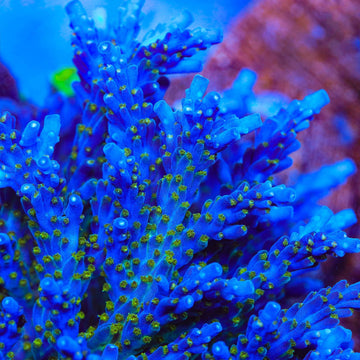
OG Red Dragon Acropora Coral
Overview
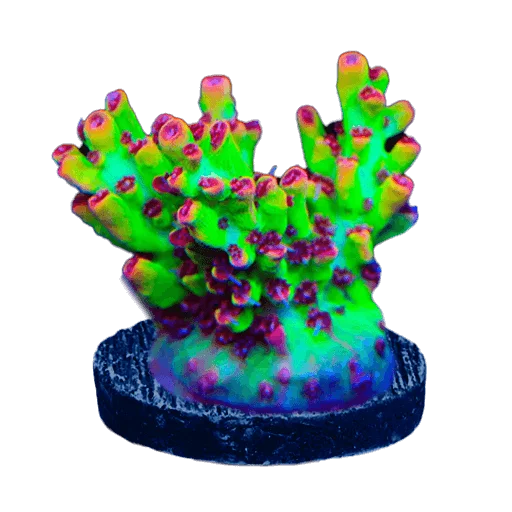
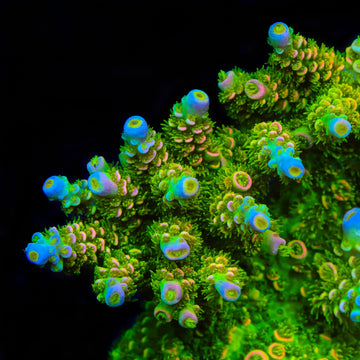
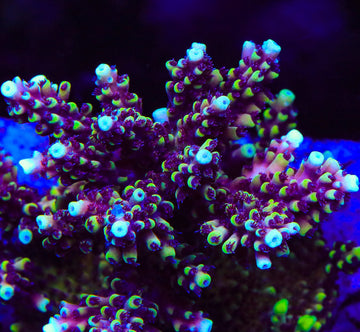
OG Red Dragon Acropora Coral shows thin, smooth branches with vivid red-pink tissue and pale growth tips. Acropora carduus is a small-polyp stony branching coral that prefers strong lighting and high, turbulent water flow. It is primarily photosynthetic through symbiotic algae, but small, frequent feedings of fine plankton can support faster growth and maintain color. Place high on stable rockwork with ample space from other corals, and maintain very stable water parameters.
Quick Facts
Care
Difficult
Lighting
Moderate–High
Flow
Moderate–High
Placement
High
Temperament
Peaceful (2–3 inches spacing)
Recommended Parameters
Temp
76–80°F
pH
8.1–8.4
Salinity
1.025–1.026
Calcium
420–450 ppm
AlkAlkalinity
7.5–9 dKH
Magnesium
1280–1350 ppm
Feeding
photosynthetic (primary), microplankton, rotifers, copepod nauplii, oyster eggs, coral-specific microfoods (e.g., Reef Roids), amino acid supplements, dissolved organics
Care & Placement
FAQ
Frequently Asked Questions
About the OG Red Dragon Acropora Coral
-
Why does my OG Red Dragon shift from deep red to pink or brown even though parameters look fine?
This coral prefers moderate PAR (200–300) with heavy blue spectrum. Excess white light or PAR >350 can wash it to pink/pale; elevated nutrients push it toward brown. Aim for NO3 ~2–10 ppm, PO4 ~0.02–0.07 ppm, stable alkalinity 7.5–8.5 dKH, and cool, steady temps (24–25.5°C). Color usually rebounds after gradual light adjustment and a few weeks of stability. -
What placement and flow bring out its best growth form without shadowing?
It encrusts first, then throws thin, upright branches that easily self-shade. Start low and acclimate upward; give open space all around. Provide strong, random flow from multiple sources—avoid a single blasting jet that can strip tissue on the leeward side. Rotating or alternating pumps help keep detritus off the base and maintain coloration along inner branches. -
How can I judge health when the polyps are tiny and barely extend?
Red Dragon shows minimal daytime extension even when thriving. Look for pearly white axial tips, steady encrustment at the base, intact smooth tissue between corallites, and stable color. At night, you may see subtle feeding response to fine particulate foods or aminos. Dull tips, receding base, or matte tissue often indicate instability, excess light, or pests rather than “poor polyp extension.” -
What’s the most common hidden cause of slow base recession in Red Dragon?
Subtle alkalinity drift combined with chemical warfare and detritus at the base. Check for day–night alk swing, run fresh carbon near softies/LPS, increase chaotic flow under the colony, and inspect for AEFW or red bugs. If recession continues, perform an iodine/broad-spectrum coral dip, trim into healthy tissue, and remount away from aggressive neighbors. Stable parameters typically halt the spread.