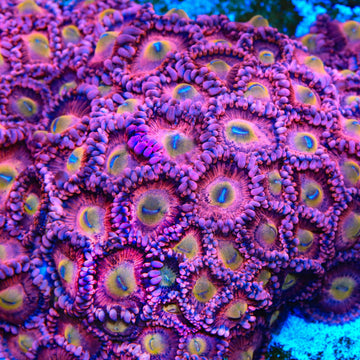
OG Godzilla Mushroom Coral
Overview
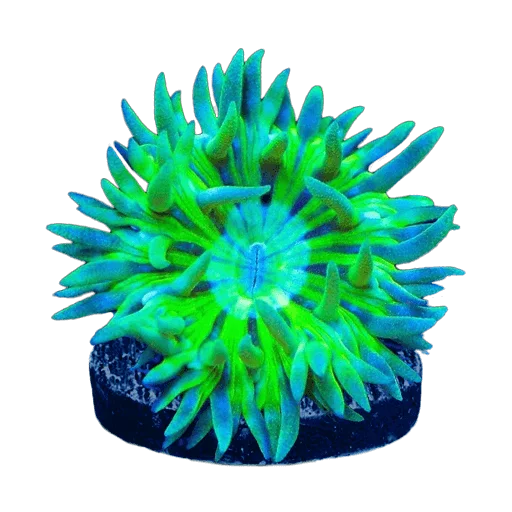
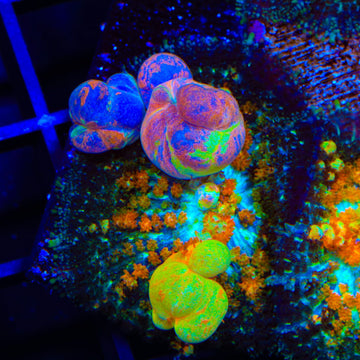
OG Godzilla Mushroom Coral shows a large, textured cap with bumpy vesicles and bold green tones. Classified as Rhodactis sp., it is a soft mushroom polyp that prefers low to moderate light and gentle to moderate water flow. It relies on symbiotic algae for energy but accepts small meaty foods or coral foods, which can speed growth and deepen color. Place on isolated rock with space around it, as it can expand, shade neighbors, and may sting nearby corals.
Quick Facts
Care
Easy
Lighting
Low–Moderate
Flow
Low–Moderate, indirect
Placement
Low–Mid
Temperament
Semi-aggressive (3–6 inches spacing)
Recommended Parameters
Temp
76–80°F
pH
8.1–8.4
Salinity
1.025–1.026
Calcium
380–450 ppm
AlkAlkalinity
8–10 dKH
Magnesium
1250–1350 ppm
Feeding
photosynthetic, finely chopped mysis shrimp, enriched brine shrimp, copepods, cyclops, coral-specific powdered foods, marine snow, small pellet or gel foods, suspended particulates and dissolved organics
Care & Placement
FAQ
Frequently Asked Questions
About the OG Godzilla Mushroom Coral
-
Why does my OG Godzilla Mushroom Coral inflate and deflate or “pancake” throughout the day?
Rhodactis adjusts its tissue thickness to manage light and flow, often inflating under lower flow and deflating when shedding film or expelling water. Frequent pancaking can signal excess light, abrupt parameter swings, or irritants. Try slightly reducing PAR, softening flow, and gently turkey-basting debris. Stable nutrients (nitrate 5–15 ppm, phosphate 0.03–0.1 ppm) usually restore a consistent posture. -
How can I keep the trademark color and bumps without bleaching or flattening?
Provide moderate, blue-leaning light (low–mid PAR) and avoid sudden increases; ramp up over weeks. Keep flow indirect so the tissue can “billow” slightly. Feed small meaty foods (mysis, reef roe) weekly to support tissue mass. Maintain stable alkalinity and non-zero nutrients. Washed-out green or persistent gaping often points to too much light or stripped nutrients. -
Can OG Godzilla sting or overtake nearby corals?
Yes. Large Rhodactis can extend mesenterial filaments and damage neighbors, especially at night. Give it a rock “island” and 7–10 cm clearance from LPS/SPS. It may also creep via pedal laceration and shade other corals as it expands. If it starts wandering, adjust light/flow or nutrients; movement often indicates it’s seeking a better niche. -
Can a large Rhodactis eat small fish or inverts?
Occasionally. Big, sticky specimens can trap tiny gobies, shrimp, or sleeping juvenile fish, especially after feeding when mucus is thick. Avoid placing it where nano fish roost, and do not over-target-feed just before lights out. If it snags something, gently waft water to encourage release rather than pulling, which can tear tissue.