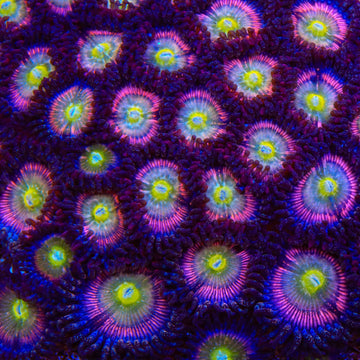
OG Bizarro Zoanthids Coral
Overview
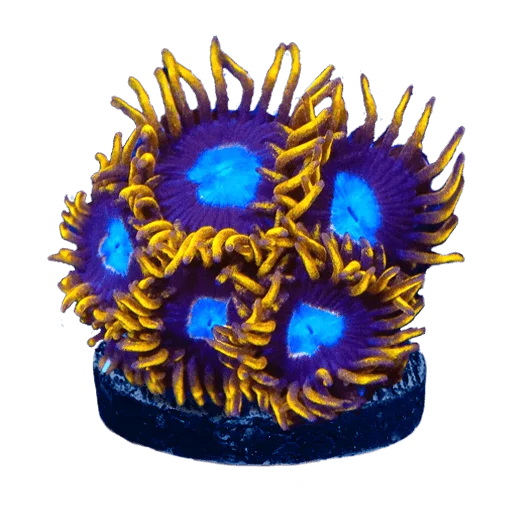
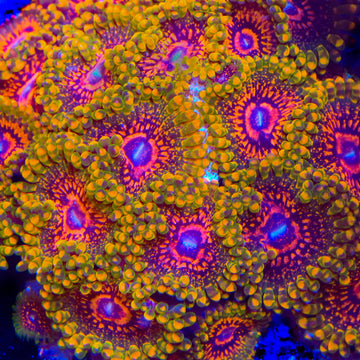
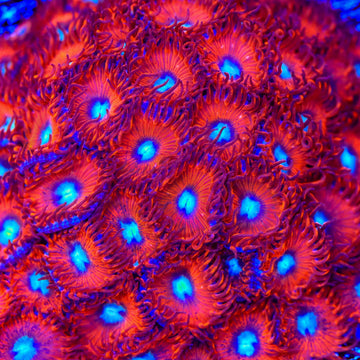
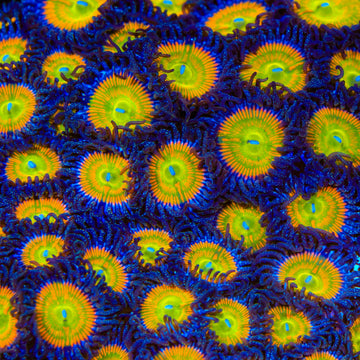
OG Bizarro Zoanthids Coral features small button-like polyps with contrasting centers and skirts. Zoanthus sp. is a soft, colonial mat-forming coral that spreads over rock; it does well under moderate light and low to moderate water flow. It is photosynthetic via symbiotic algae, but occasional small particulate foods can boost growth and maintain color. Place on an isolated rock to control spread, and handle with care, as some zoanthids can contain toxins.
Quick Facts
Care
Easy
Lighting
Low–Moderate
Flow
Moderate, indirect
Placement
Mid–Low
Temperament
Semi-aggressive (fast grower; allow 3–4 inches spacing)
Recommended Parameters
Temp
76–82°F
pH
8.1–8.4
Salinity
1.025–1.026
Calcium
380–450 ppm
AlkAlkalinity
8–10 dKH
Magnesium
1300–1400 ppm
Feeding
photosynthetic (primary), microplankton, phytoplankton, rotifers, copepod nauplii, powdered coral foods, marine snow, finely minced mysis or brine
Care & Placement
FAQ
Frequently Asked Questions
About the OG Bizarro Zoanthids Coral
-
Why do my OG Bizarro Zoas lose their pop under strong whites even though PAR is fine?
This morph shows best contrast under blue-heavy spectrum. Intense white light can wash pigments, causing “flat” colors despite acceptable PAR. Shift spectrum toward 420–470 nm, reduce whites, and stabilize nutrients (nitrate 5–15 ppm, phosphate 0.03–0.1 ppm). Trace balance matters; mild iron/iodine replenishment can help, but avoid overdosing. Expect color to return over 2–4 weeks. -
The colony is growing but polyps stay small and skirts are short—what’s the likely cause?
Often flow or chemistry. OG Bizarro tends to extend skirts in brisk, non-laminar flow; too little flow leads to compact polyps and detritus buildup. Also check alkalinity stability (keep daily swing <0.3 dKH) and avoid ultra-low nutrients. Slightly elevated nitrate often restores fuller extension within days. -
Can I isolate OG Bizarro to prevent it from overrunning rocks without stunting growth?
Yes—use a “zoa island” with a rubble moat. Place the frag on a small, freestanding rock surrounded by coarse rubble or bare sand, then siphon any runners. Trim mats at the perimeter with a sharp scalpel and immediately dip the cut edge in iodine. This maintains vigor while controlling spread. -
What’s the safest dip protocol for this morph when dealing with pests like sundial snails or zoa-eating nudibranchs?
Start with a gentle iodine-based dip (per label) for 5–7 minutes, swish vigorously, then inspect for egg spirals and manually remove them. Repeat every 4–5 days for two weeks to break life cycles. Avoid harsh peroxide concentrations; this morph can sulk. Rinse in clean tank water before returning.