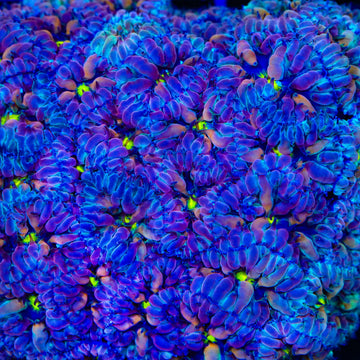
Nuclear Blast Blastomussa Coral
Overview
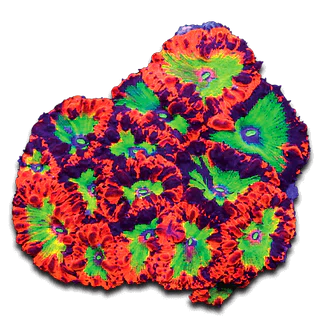
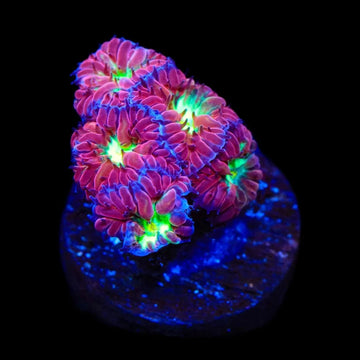
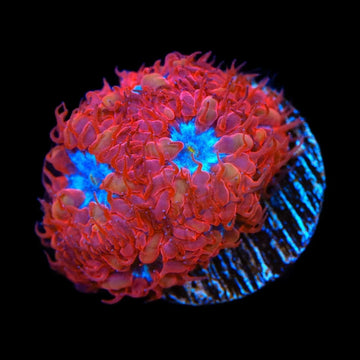
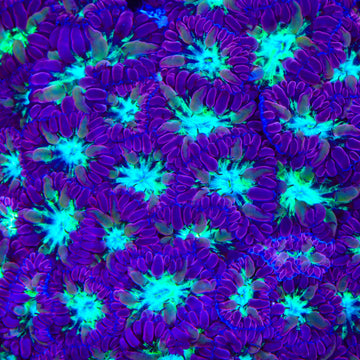
Nuclear Blast Blastomussa Coral shows large, fleshy polyps with thick, ridged mouths and bright radial coloration. Blastomussa wellsi is a large‑polyp stony coral forming dome-shaped heads; it prefers low to moderate lighting and gentle, indirect flow. It hosts symbiotic algae for photosynthesis but accepts small meaty foods at night, which can boost growth and deepen color. Place on stable rock or sand with space from aggressive corals, as its tissue is delicate and can be damaged by contact.
Quick Facts
Care
Moderate
Lighting
Low–Moderate
Flow
Low–Moderate
Placement
Low–Mid
Temperament
Peaceful to semi-aggressive (2–3 inches spacing)
Recommended Parameters
Temp
76–82°F
pH
8.1–8.4
Salinity
1.025–1.026
Calcium
400–450 ppm
AlkAlkalinity
8–9 dKH
Magnesium
1280–1350 ppm
Feeding
photosynthetic, mysis shrimp, enriched brine shrimp, finely chopped seafood (krill, shrimp), cyclops, zooplankton, microplankton, coral-specific powdered foods (e.g., Reef Roids), marine snow
Care & Placement
FAQ
Frequently Asked Questions
About the Nuclear Blast Blastomussa Coral
-
My Nuclear Blast Blastomussa lost its neon pop. Is it light or nutrients?
This morph often washes out under high PAR. Aim for 60–120 PAR with strong blue/UV (420–460 nm) and moderate nutrients (NO3 5–15 ppm, PO4 0.03–0.1 ppm). Sudden alkalinity shifts dull color fast. If faded, lower intensity over a week, increase blue channel, and feed small meaty foods 2–3x weekly. Avoid prolonged white-heavy spectrums. -
Why do some heads recede while others look fine on the same colony?
Shadowed or high-flow edges often starve first. wellsi has large, fleshy polyps that dislike direct, turbulent flow. Rotate or slightly tilt the frag so all heads receive similar light and gentle, indirect movement. Check for vermetid snails and stinging neighbors (favia, galaxea). Verify stability: daily swings in dKH or salinity commonly target the weakest heads. -
Best practice to frag Blastomussa wellsi without losing polyps?
Use a diamond saw and cut through skeleton between heads—never across mouths. Plan cuts so each piece carries full polyp tissue and a rim of skeleton. Dip in iodine, place in low light/low flow for 5–7 days, and pause feeding 48 hours to prevent bacterial issues. Resume light target feeding once polyps fully inflate and accept food. -
Can it sit on the sandbed long-term, or does it need a rock?
Sandbed is fine and often preferred due to lower light, but elevate slightly on a small tile or rubble to protect tissue from abrasion and detritus. Avoid areas where gobies or wrasses bury it. If placing on rock, choose a ledge with shade options and minimal flow bounce-back to prevent chronic polyp retraction.