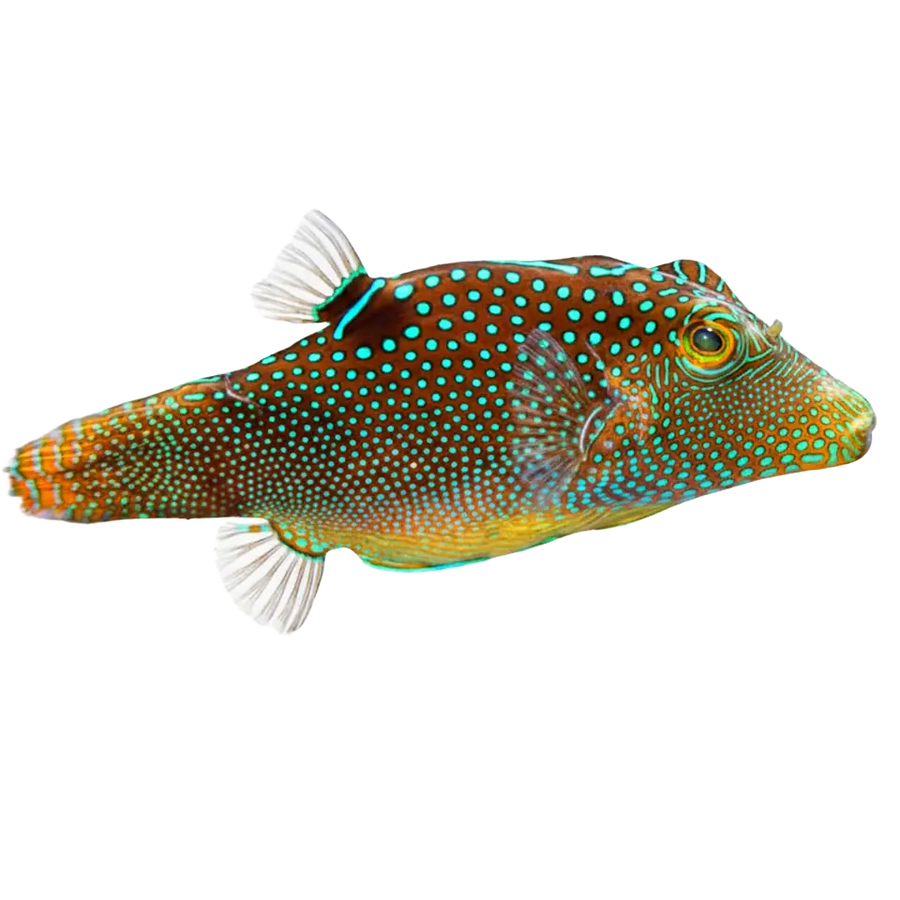
Blue Spotted Puffer

Overview:
The Blue Spotted Puffer, known scientifically as Canthigaster solandri, is a vibrant and engaging species often sought after by marine aquarium enthusiasts. This species requires a well-maintained saltwater environment with a tank size of at least 50 gallons to accommodate its active swimming behavior. Ideal water conditions include a temperature range of 72-78°F, a pH of 8.1-8.4, and a specific gravity of 1.020-1.025. The tank should be equipped with ample live rock for hiding and grazing, as well as open swimming spaces. Regular water changes and efficient filtration are crucial to maintain water quality, as puffers are sensitive to poor conditions.

Compatibility:
When considering tankmates for the Blue Spotted Puffer, it's essential to account for its semi-aggressive nature. They can coexist with other similarly sized, non-aggressive fish, but caution should be taken with smaller or more timid species, as they may become targets of harassment. Avoid housing them with slow-moving or long-finned fish, as puffers may nip at fins. Additionally, invertebrates like shrimp and crabs are at risk of being eaten. It's best to introduce them to a community of robust, active fish that can hold their own.

Health and Quarantine:
Blue Spotted Puffers are prone to common marine diseases such as ich and bacterial infections. Quarantining new arrivals for at least 2-4 weeks before introducing them to the main tank is recommended to prevent the spread of disease. Regular monitoring for signs of stress or illness, such as changes in color, appetite, or behavior, is vital. Maintaining optimal water quality and a balanced diet will support their immune system. If health issues arise, consult with a marine veterinarian for appropriate treatment options.

Mysis Chopped Seafood Shellfish
The Blue Spotted Puffer is a slow swimmer, often using its pectoral fins for precise movements. It exhibits solitary behavior, preferring to swim alone. This species is moderately territorial, defending its space against intruders. It can coexist with other non-aggressive species but may nip at long-finned or smaller tank mates. Care should be taken when housing with invertebrates, as it might view them as prey. Overall, it thrives in a peaceful environment with ample hiding spots.

FAQ

Frequently Asked Questions

About the Blue Spotted Puffer

  • Can I keep a Blue Spotted Puffer (Canthigaster solandri) in a reef tank without it destroying my corals and invertebrates?
    Blue Spotted Puffers are generally unsafe for most “clean-up crew” inverts. They almost always eat snails, crabs, shrimp, small clams, and tube worms, and they will nip at feather dusters and some sessile inverts. However, they are usually safe with most stony corals (SPS and many LPS) and soft corals, though some individuals may nip at fleshy polyps (e.g., open brains, acans, scolys). If you try them in a reef, assume you will lose snails and possibly ornamental shrimp and be prepared to supplement algae and meaty foods manually since they will eliminate much of your natural clean-up crew.
  • How do I keep my Blue Spotted Puffer’s beak from overgrowing in captivity?
    Their teeth grow continuously, and in captivity they often don’t get enough hard-shelled foods to wear them down. Provide regular feedings of crunchy items such as small shelled shrimp, clam on the half shell, cockle, crab legs, or unshelled krill. Offer these at least 2–3 times per week. Avoid feeding only soft foods like mysis and pellets long term. If the beak becomes overgrown (they can’t fully close their mouth or have trouble grabbing food), a veterinary or very experienced aquarist trim under sedation is often required; this is risky and should not be attempted casually.
  • Why does my Blue Spotted Puffer keep pacing the glass and nipping at its reflection, and how can I reduce this stress behavior?
    This species is intelligent and easily bored. In small or bare tanks they may glass-surf, chase reflections, or pick at equipment. First, ensure the tank is large enough (minimum ~55–75 gallons for a single specimen) with lots of live rock, caves, and overhangs for exploration. Break up line-of-sight with rockwork to minimize reflections. Dim ambient room lighting relative to tank lighting, and avoid placing the tank where sunlight hits the glass. Provide environmental enrichment: rearrange rockwork occasionally, use feeding puzzles (food in shells, in a feeder clip, or inside small PVC bits), and vary diet and feeding locations. These steps usually reduce pacing and self-directed aggression.
  • My Blue Spotted Puffer sometimes changes color and its blue spots fade or darken. Is this normal or a sign of illness?
    Rapid color shifts in this species are common and often linked to mood, stress, or sleep. When resting or sleeping they may become darker or mottled; when startled or stressed they may either darken overall or “wash out,” making spots less vivid. This is normal if the fish is otherwise eating well, breathing normally, and behaving actively. Concern is warranted if color change is accompanied by clamped fins, rapid breathing, flashing, visible white spots/patches, or lethargy—then consider parasites (Cryptocaryon, velvet, flukes) or poor water quality (ammonia, nitrite, high nitrate). Test water, verify salinity and temperature, and quarantine/treat if disease is suspected.
  • What is the ideal diet and feeding schedule for a Blue Spotted Puffer to prevent both malnutrition and obesity?
    They are omnivores with a strong preference for meaty foods. A good base is a mix of high-quality frozen mysis, chopped shrimp, clam, squid, and marine fish flesh, plus some plant matter (e.g., spirulina-based foods, nori strips, bits of macroalgae). Include hard-shelled foods several times per week for beak wear. Feed small portions 1–2 times daily; puffers beg constantly, but overfeeding leads to fatty liver and shortened lifespan. A healthy puffer should look well-rounded but not ballooned after meals and should return to a more streamlined shape between feedings. Periodic “light days” (reduced feeding once a week) help prevent chronic overfeeding.