Whitetail Bristletooth Tang

Overview:
The Whitetail Bristletooth Tang, also known as Ctenochaetus flavicauda, is a popular marine fish known for its vibrant appearance and active nature. This species thrives in a well-maintained saltwater aquarium with a minimum size of 75 gallons to provide ample swimming space. The ideal habitat should mimic its natural reef environment, featuring live rock formations for grazing and hiding. Maintain water conditions with a temperature range of 72-78°F, a pH of 8.1-8.4, and specific gravity between 1.020-1.025. Regular water changes and efficient filtration are essential to keep the environment clean and stable.

Compatibility:
This species is generally peaceful and can coexist with a variety of tankmates, making it suitable for community aquariums. However, caution should be taken when housing them with other tangs or similarly shaped fish, as territorial disputes may arise. It is best to introduce them to the tank as the last addition to minimize aggression. Compatible tankmates include other peaceful fish such as clownfish, gobies, and wrasses. Avoid housing them with aggressive or overly dominant species to prevent stress and potential injury.

Health and Quarantine:
Whitetail Bristletooth Tangs are susceptible to common marine diseases such as ich and marine velvet. Quarantine new arrivals for at least two weeks before introducing them to the main tank to monitor for signs of illness and prevent the spread of disease. Maintain optimal water quality and a stress-free environment to promote their immune health. Regularly observe for symptoms like white spots, rapid breathing, or changes in behavior, and address any health issues promptly. Providing a varied and nutritious diet will also support their overall well-being and resilience against diseases.

Nori Pellets Mysis
The Whitetail Bristletooth Tang is a semi-aggressive fish that thrives in a spacious environment with plenty of hiding spots and live rock. It is a strong swimmer, actively exploring the tank during the day and grazing on algae and detritus. While generally peaceful, it can show aggression towards similar species, especially in smaller tanks. A minimum of 70 gallons is recommended to accommodate its territorial nature. This tang is reef-safe and compatible with a variety of other fish, but care should be taken when introducing other tangs or similarly shaped species to prevent competitive behavior. Its diet should include algae, spirulina, mysis, and brine shrimp to ensure health and vitality.

FAQ

Frequently Asked Questions

About the Whitetail Bristletooth Tang

  • How can I tell a juvenile Whitetail Bristletooth Tang (Ctenochaetus flavicauda) from other similar Ctenochaetus tangs when buying one for my reef tank?
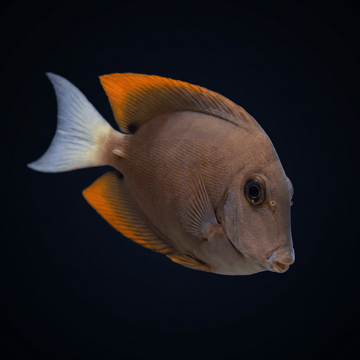
    Juvenile Whitetail Bristletooth Tangs are often confused with Tomini and Kole tangs. Look for these key traits: (1) a distinctly white tail that is solid and sharply contrasted against the darker body, not cream or yellowish; (2) a gray‑brown to charcoal body with very fine, closely spaced horizontal lines and tiny golden spots on the head; (3) bristle‑like teeth visible when it grazes glass or rocks; and (4) no strong orange/yellow on the dorsal and anal fins like a Tomini. If the tail is anything other than a clear, clean white, it is likely another Ctenochaetus species or a hybrid.
  • My Whitetail Bristletooth Tang constantly grazes but still looks thin. How do I adjust its diet to keep it properly filled out without overpolluting my reef tank?
    This species is a high‑metabolism detritivore and microalgae grazer that needs frequent, low‑volume feeding. Provide: (1) continuous film algae access on rock and glass (do not overclean your rockwork and back glass); (2) a daily clip of nori (red or green) in small, frequently replaced pieces so it can graze multiple times rather than gorge once; (3) 2–3 small feedings per day of fine particle foods like high‑quality herbivore pellets, spirulina flakes, and frozen mysis mixed with spirulina or marine algae; and (4) occasional feeds of foods with added vitamins and HUFA (e.g., Selcon‑soaked pellets) to support weight and coloration. Monitor belly profile from the side: it should be gently rounded, not pinched behind the head. If nutrients rise, add or increase skimming and mechanical filtration rather than cutting back the tang’s grazing opportunities.
  • My Whitetail Bristletooth Tang is flicking against rocks and showing small spots, but other tangs in the tank look fine. Are Whitetail Bristletooths more sensitive to external parasites, and how should I handle quarantine and treatment?
    Whitetail Bristletooth Tangs, like other Ctenochaetus, can be particularly sensitive to external parasites such as Cryptocaryon and flukes, and they sometimes show signs earlier than more robust tangs. Ideally, quarantine them for 4–6 weeks before entering the display tank. In quarantine: (1) run prophylactic treatments such as chelated copper or a controlled tank transfer method for ich; (2) use praziquantel at least once to address flukes; and (3) provide PVC or rock for grazing to reduce stress. Watch for heavy breathing, excess mucus, and rapid scratching. During treatment, maintain strong aeration and stable pH, as Ctenochaetus can react poorly to swings. In the display tank, prevention is key: keep stocking moderate, maintain low stress, and avoid adding unquarantined tankmates, since this species often acts as the “indicator” for parasite outbreaks.
  • My Whitetail Bristletooth Tang is chasing and tail‑slapping my Kole Tang but ignores other fish. Is it normal for this species to be especially aggressive toward similar tangs, and can they ever be kept together peacefully?
    Whitetail Bristletooth Tangs are often peaceful toward non‑tang tankmates but can be very territorial with other Ctenochaetus, especially those with similar body shape and grazing habits such as Kole and Tomini tangs. In many home aquariums, especially under 150–180 gallons, mixing them is risky. If attempted, success is more likely when: (1) the tank is at least 5–6 feet long with complex rockwork and multiple grazing “zones”; (2) all Ctenochaetus tangs are added at the same time as small juveniles; (3) there is constant availability of algae and nori so they are not food‑competing; and (4) you have an acclimation box for new additions so existing tangs can see but not physically attack them for a week. Even then, combinations may fail, and you must be prepared to remove one tang if persistent chasing, torn fins, or refusal to eat is observed.
  • My Whitetail Bristletooth Tang spends a lot of time picking at the sand bed and stirring it up. Is this normal behavior, and will it harm or benefit my coral reef system?
    This is normal for a Whitetail Bristletooth Tang. Unlike many other tangs, Ctenochaetus species target detritus and microalgae in and around the sand as well as on rock and glass. Light sand picking can be beneficial by helping keep the upper sand layer clean and consuming leftover food and film algae. Problems arise only if: (1) the fish is so focused on the sand that it constantly clouds the water, which may indicate it is underfed on algae; or (2) it uproots very shallow‑based corals or frags placed too close to the sand. To keep the behavior beneficial, ensure the tank has good film algae growth on rock and glass, feed nori and herbivore foods regularly, and mount corals securely on rock or on slightly elevated frag racks rather than directly on loose sand.