Nori
Mysis
Finely Chopped Seafood
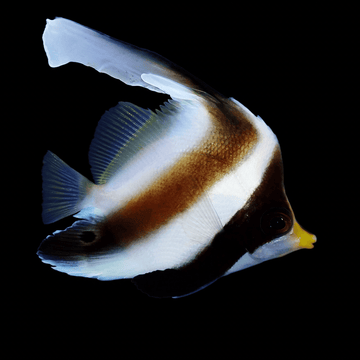
Tinker's Butterflyfish exhibits graceful swimming patterns, often seen gliding through coral reefs. They are typically found in pairs or small groups, indicating a social nature. This species is moderately territorial, defending its space against intruders. They coexist peacefully with other non-aggressive fish species but may become aggressive towards other butterflyfish, especially in confined spaces. Compatibility with other fish is generally high, provided ample space and hiding spots are available to reduce stress and territorial disputes.
FAQ
Frequently Asked Questions
About the Tinker’s Butterflyfish
-
Can a Tinker’s Butterflyfish safely be kept in a reef tank, and if so, what specific corals are most at risk?
Tinker’s Butterflyfish are generally not considered reef safe. They are strong pickers and will typically nip at fleshy LPS (Acanthastrea, Trachyphyllia, Scolymia), zoanthids, and many soft corals (especially Xenia and Clove polyps). SPS (Acropora, Montipora) and leather corals sometimes fare better, but individual fish vary—some will still nip at polyps or new growth tips. They also often go after ornamental feather dusters and fleshy clams (Tridacna). If you try one in a reef, prioritize hardy SPS and leathers, avoid high‑value fleshy LPS and clams, keep the fish well fed with frequent small meals, and be prepared to remove it if it starts damaging target corals. -
What is the minimum tank size and aquascape layout that Tinker’s Butterflyfish need to feel secure and show natural behavior?
A single Tinker’s Butterflyfish should be kept in at least a 120‑gallon (4 ft x 2 ft footprint) tank, though 150 gallons or larger is better. They come from deeper, rubble‑slope reef habitats and prefer plenty of vertical structure and caves rather than an open, bare layout. Build a rockscape with multiple arches, caves, and overhangs, leaving swim‑through tunnels and at least one open “runway” along the front for cruising. They like to weave in and out of rockwork, investigating crevices for food, so avoid a wall‑of‑rock design pushed flat against the back glass; instead, create separate bommies or islands with gaps between them for natural movement patterns and line‑of‑sight breaks. -
How can I successfully acclimate a deepwater Tinker’s Butterflyfish to aquarium lighting without stressing or damaging it?
Wild Tinker’s are usually collected from deeper water (often 100–300+ feet), so they are adapted to dim, blue‑shifted light. When new, keep the tank lights very dim or even off for the first day, using only room light. Over the next 2–3 weeks, slowly raise intensity: start your LEDs at 20–30% output with a blue‑heavy spectrum, then increase intensity by 5–10% per week while watching for stress signs (hiding constantly, rapid breathing, washed‑out color, frantic swimming at light‑on). Give them shaded areas by creating overhangs and caves and avoid sudden changes in photoperiod or spectrum. If you run very bright reef lighting, consider programming a long, gentle ramp up in the morning and keep a lower‑intensity zone where the fish can retreat. -
What diet and feeding routine works best long‑term for Tinker’s Butterflyfish, especially if it initially refuses frozen food?
Tinker’s Butterflyfish often start out as picky eaters. Begin by offering foods that move in the water column to trigger a hunting response: live blackworms (in FW dips before use), live brine shrimp, and frozen mysis “dusted” with live food. Once it starts striking reliably, mix in high‑quality frozen blends (mysis, chopped clams, sponge‑based angel formulas) and finely chopped seafood (shrimp, clam, scallop). Many individuals do well with nori sheets clipped near rockwork and high‑quality pellets once they recognize them as food. Feed small portions 3–4 times per day at first, reducing to 2–3 times daily once weight is stable. A Tinker’s with a gently rounded belly and active foraging behavior is usually getting enough; a pinched-in belly or reduced activity means you should increase feeding frequency or variety. -
How aggressive is a Tinker’s Butterflyfish toward other butterflies and angelfish, and what stocking strategy reduces conflict?
Tinker’s Butterflyfish are moderately assertive but not usually the worst bullies. They can be territorial, especially toward similarly shaped or colored butterflies. In tanks 150 gallons and larger, they often coexist with other butterflies if you: (1) add the Tinker’s after more timid species, or all at once; (2) avoid pairing it with very similar species (e.g., Burgess or Declivis butterflyfish) unless the tank is big and heavily structured; and (3) provide multiple feeding stations. With medium and large angelfish, introduce the Tinker’s before or alongside the angel so the angel does not claim the entire rockwork first. Use rock structures that break line of sight and have several caves so less dominant fish can retreat. Watch for continuous chasing beyond short, initial post‑introduction displays; if it doesn’t subside in a few days, you may need to rearrange rockwork or temporarily separate the aggressor.