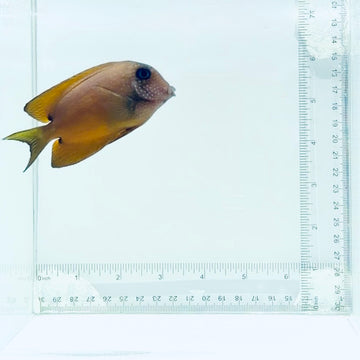
Powder Brown Tang

Overview:
The Powder Brown Tang, scientifically known as Acanthurus japonicus, thrives in a well-maintained marine aquarium that mimics its natural habitat. This species requires a tank size of at least 100 gallons to accommodate its active swimming behavior and territorial nature. The ideal water conditions include a temperature range of 72-78°F, a pH of 8.1-8.4, and a specific gravity of 1.020-1.025. Adequate water movement and high-quality filtration are essential to maintain water quality and oxygen levels. Providing ample live rock for grazing and hiding spots is crucial for their well-being.

Compatibility:
When considering tankmates for the Powder Brown Tang, choose species that are peaceful and non-aggressive. Avoid housing them with other tangs or similarly shaped fish to prevent territorial disputes. Suitable companions include clownfish, gobies, and wrasses. Ensure the tank is spacious enough to reduce stress and aggression. Introduce the Powder Brown Tang last to an established community to minimize territorial behavior. Monitor interactions closely, especially during the initial introduction period.

Health and Quarantine:
Powder Brown Tangs are susceptible to common marine diseases such as ich and marine velvet. Implement a quarantine period of at least 2-4 weeks for new arrivals to prevent the spread of disease. During quarantine, observe for signs of illness, such as white spots, rapid breathing, or lethargy. Maintain optimal water conditions and provide a varied diet to support their immune system. Regularly check water parameters and perform routine water changes to prevent stress-related health issues. If disease is detected, treat promptly with appropriate medications while ensuring the main display tank remains unaffected.

Nori Pellets Mysis
The Powder Brown Tang, or Acanthurus japonicus, is an active and semi-aggressive fish that requires a minimum tank size of 90 gallons to accommodate its swimming habits and reduce territorial behavior. It is reef-safe and can coexist with a variety of other fish, provided they are not similar in shape or color, to avoid perceived rivalry. This species is an omnivore and benefits from a diet that includes algae, nori, spirulina, and meaty frozen foods. Proper diet and environmental conditions are essential for maintaining its health and reducing aggression.

FAQ

Frequently Asked Questions

About the Powder Brown Tang

  • How can I reliably tell a true Powder Brown Tang (Acanthurus japonicus) from the Whitecheek Tang (Acanthurus nigricans) when buying one for my tank?
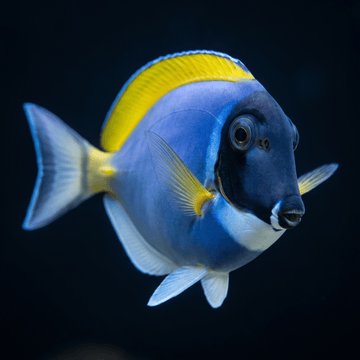
    Acanthurus japonicus and A. nigricans are often mislabeled, so careful ID is important. On a true Powder Brown Tang (A. japonicus), the white patch on the cheek is smaller and more “teardrop” shaped, and the yellow band in the dorsal fin is broader and more pronounced, typically running along more of the fin’s length. The body tends to have a more noticeable gradient from brown to lighter brown near the belly. In A. nigricans (often sold as Powder Brown or Whitecheek), the white cheek patch is larger and more oval, the dorsal fin’s yellow band is usually narrower and more sharply defined, and the overall body color is a slightly deeper, more uniform chocolate brown. When buying, ask for the scientific name on the invoice and compare live fish to reputable photos; avoid dim store lighting, and observe the fish from the side in a clear tank, as top-down viewing can distort colors and patterns.
  • My Powder Brown Tang constantly paces and scrapes on the rockwork in a 4-foot tank. Is this a space issue or a health problem, and what minimum tank dimensions really work long term?
    Both stress from insufficient space and early signs of health issues can cause this behavior. Powder Brown Tangs are very active, high-strung swimmers that do much better in at least a 5-foot (150 cm) long tank, with 6 feet being ideal for adults. A tank around 120 gallons is a practical minimum, but the length and unobstructed swimming lanes are more important than just volume. In undersized tanks they pace glass, become aggressive, and are more prone to disease. Also check for flukes, ich, or velvet if the fish is scraping on rock; watch for flashing, clamped fins, rapid breathing, or white spots or dust. Ensure strong, variable flow so it can “surf” currents, and arrange rockwork to create an open loop around the tank instead of a solid wall of rock; this reduces pacing and helps it feel more secure.
  • My Powder Brown Tang seems to ignore prepared foods and only nibbles algae from the rocks. What feeding strategy works to get this species eating reliably in captivity?
    Powder Brown Tangs often arrive stressed and may only graze at first. Start with high-quality dried nori or other marine algae sheets on a clip; place the clip near where the fish already picks at rock and leave it there for several hours. Use garlic-soaked nori or pellets only if needed to stimulate interest, not as a long-term staple. Offer multiple small feedings per day: a sheet of nori in the morning and again later, plus a mix of small, sinking pellets and frozen foods such as mysis, enriched brine, and finely chopped marine-based foods. Keep the skimmer running and export nutrients to handle frequent feeding. Many Powder Browns respond well if they see other fish eating; if possible, house them with peaceful, active eaters like fairy or flasher wrasses or anthias that rush to food, which can cue the tang to join in. Persistence and consistency are key; once it recognizes pellets or frozen as food, it usually becomes an enthusiastic eater.
  • How can I reduce aggression from my Powder Brown Tang toward other tangs and similarly shaped fish in a mixed reef tank?
    Powder Brown Tangs are in the Acanthurus group, which can be quite territorial. Aggression is strongest toward similarly shaped, similarly colored tangs and surgeonfish. To reduce conflict, introduce the Powder Brown later rather than first, or add all tangs at the same time to diffuse territorial behavior. Avoid combining it with other Acanthurus species of similar size (like Powder Blue, Achilles, Whitecheek) unless the tank is very large (6–8 feet or more) with multiple hiding zones and separate feeding sites. Use an acclimation box to let existing fish see but not fight a new tang for several days. Rearranging some rockwork just before introduction can disrupt established territories. Provide abundant nori stations at both ends of the tank so fish are not forced to compete at one spot. If one fish is being singled out, temporarily remove either the aggressor or the victim for a week or two, reintroducing via an acclimation box; in some cases, a particularly belligerent Powder Brown may have to be the one rehomed.
  • My Powder Brown Tang broke out with marine ich within a week of purchase. What treatment method is most effective for this species, and how can I prevent constant reinfection?
    Powder Brown Tangs are notoriously prone to Cryptocaryon (ich) and other parasites due to their thin slime coat and stress sensitivity. The most reliable approach is to move the fish (and any other fish) to a separate, fully cycled hospital or quarantine tank for treatment, and leave the display tank fallow (fishless) for at least 6–8 weeks so the parasite lifecycle is broken. In the hospital tank, use a proven method: copper (chelated copper at consistent therapeutic levels measured with a reliable test), chloroquine phosphate (if you can obtain it and measure accurately), or a tank-transfer method for ich specifically. Avoid mixing copper with live rock or sand, as it will bind to surfaces and become hard to control. Provide PVC pipes or inert hiding places, strong aeration, and stable parameters (especially pH and temperature). Do not treat with copper in the display tank. Long term, strict quarantine of all new fish, maintaining very stable water parameters, minimizing aggression, and ensuring top-tier nutrition (including algae and vitamin-enriched foods) are key to keeping Powder Browns from repeatedly succumbing to parasites.