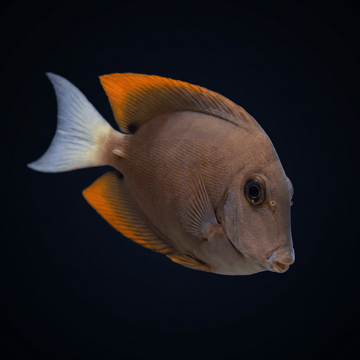
Powder Blue Tang

Overview:
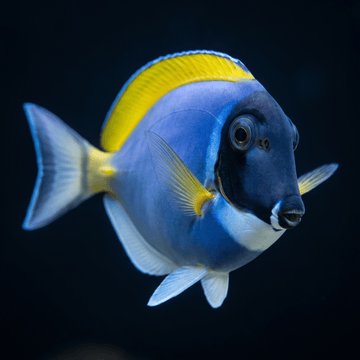
The Powder Blue Tang (Acanthurus leucosternon) is a vibrant marine fish known for its striking blue body and yellow dorsal fin. Native to the reefs of the Indian Ocean, this species thrives in well-established marine aquariums. They require a tank of at least 100 gallons to accommodate their active swimming behavior and territorial nature. Optimal water conditions include a temperature range of 75-82°F, a pH of 8.1-8.4, and a specific gravity of 1.020-1.025. A robust filtration system and regular water changes are essential to maintain water quality. Live rock structures provide hiding spots and grazing surfaces, mimicking their natural habitat.

Compatibility:
Powder Blue Tangs can be aggressive, especially towards other tangs and similarly shaped fish. It is advisable to keep only one Powder Blue Tang per tank unless the aquarium is exceptionally large. They can coexist with a variety of other marine species, such as clownfish, gobies, and wrasses, provided these tankmates are introduced first to establish territories. Avoid housing them with overly aggressive fish or those that may outcompete them for food. Introducing them to the tank last can help reduce territorial disputes.

Health and Quarantine:
Powder Blue Tangs are prone to marine ich and other parasitic infections, making quarantine a crucial step before introducing them to the main tank. A quarantine period of 2-4 weeks allows for observation and treatment of any health issues. Maintain pristine water conditions and provide a stress-free environment to prevent disease. Regularly monitor for signs of stress or illness, such as rapid breathing or loss of color. Supplementing their diet with vitamins and garlic can boost their immune system. If signs of disease appear, treat promptly with appropriate medications in a separate quarantine tank to avoid affecting other tank inhabitants.

Nori Pellets Mysis
The Powder Blue Tang is a vibrant and active fish known for its constant swimming and grazing habits. It requires a spacious environment, with a minimum tank size of 100 gallons, to accommodate its territorial nature. This species is aggressive, particularly towards other tangs or similarly shaped fish, and requires ample hiding spots and visual barriers to mitigate aggressive interactions. Despite its aggression, it is reef safe and does not harm corals or invertebrates. Its diet should include a mix of algae, such as nori and spirulina, and meaty frozen foods. Compatibility with other fish can be challenging, and it is best housed with non-aggressive species that do not resemble tangs. Introducing the Powder Blue Tang last in a community tank can help reduce territorial aggression. Overall, it is a visually stunning fish that requires careful consideration of tank mates and environment to thrive.

FAQ

Frequently Asked Questions

About the Powder Blue Tang

  • How large of a tank does a Powder Blue Tang really need long term, and does tank shape matter as much as volume?
    A single Powder Blue Tang should have at least a 6-foot (180 cm) long tank, with 120 gallons (450 L) as a realistic minimum for long-term care. The length and open swimming space are more important than raw volume. A 150–180 gallon tank is preferable, especially if you plan on keeping other active swimmers. Look for a tank that is long and wide (front to back), not just tall—something like 72" x 24" footprint or larger. They are constant cruisers, so long, unobstructed swim lanes with rockwork arranged around and behind that lane help reduce stress and aggression. Crowded, short tanks, even if they meet the volume number on paper, tend to cause pacing, territorial behavior, and disease flare-ups in this species.
  • Why do Powder Blue Tangs develop “ich” and “velvet” so easily, and what is the best way to manage this tendency from day one?
    Powder Blues are very prone to Cryptocaryon (marine ich) and Amyloodinium (velvet) because they have a thin slime coat and stress very easily. Stress from capture, transport, cramped tanks, and tankmate aggression weakens their immune response. The most reliable way to manage this is to: 1) Source the fish from a vendor that practices proper quarantine and conditioning. 2) Run your own quarantine tank (20–40 gallons bare-bottom with PVC hiding spots, sponge filter or cycled media, and stable parameters) for 4–6 weeks. 3) Proactively treat with copper or chloroquine (velvet/ich) and praziquantel (flukes/worms), observing correct dosing and test kits. 4) Keep salinity, temperature, and pH extremely stable—no big swings. 5) Only add the tang to a display that has been fallow or demonstrably parasite-free. Once in the display, strong nutrition, low aggression, high oxygenation, and minimal temperature and salinity swings are key. UV helps reduce parasite pressure, but it is not a substitute for proper quarantine and treatment.
  • My Powder Blue Tang is constantly chasing and nipping other fish—what specific stocking and aquascape strategies help reduce its aggression?
    Powder Blues are territorial, especially in mid-sized tanks, and they often bully other surgeonfish and similarly shaped or colored species. To reduce aggression: • Add the Powder Blue last, after other fish have established. • Avoid similar-shaped tangs (e.g., Achilles, Goldrim, other Acanthurus) and fish with similar body plan or coloration. If you must mix tangs, house them only in very large systems (8 ft+), introduce multiple tangs simultaneously, and prioritize different genera (e.g., Zebrasoma + Ctenochaetus). • Keep only one Powder Blue per tank unless you have an enormous system and introduce a group together as small juveniles—otherwise they will fight. • Break up sight lines with rockwork so chased fish can exit visual range quickly. Provide multiple caves, overhangs, and bolt-holes. • Maintain strong flow with varied patterns; this species thrives in higher-energy water, and it is harder for bullies to maintain dominance in constantly shifting currents. • Ensure the Powder Blue is well-fed with frequent small feedings of nori and prepared foods; hungry tangs are nastier. In extreme cases, time-outs in a socialization box or rearranging rockwork when reintroducing the tang can help reset territories.
  • What diet and feeding schedule best maintains a Powder Blue Tang’s color and minimizes head and lateral line erosion (HLLE)?
    Powder Blues are primarily herbivores that graze constantly in the wild, but they also benefit from mixed nutrition. To support color and minimize HLLE: • Provide daily sheets of dried nori (red and green) clipped to different tank locations. Replace and remove uneaten nori at least twice per day to keep it fresh and reduce pollution. • Offer high-quality frozen foods 1–2 times daily: spirulina-based blends, mysis, enriched brine (for variety), and herbivore formulas with marine algae. • Use pellet/flakes that include spirulina, whole fish, krill, and added vitamins (especially vitamin C and stabilized vitamins). • Soak foods in a vitamin supplement and occasionally in a high-quality omega-3 supplement; these help with immune function and skin/fin health. • Avoid a diet that is mostly meaty foods intended for predators—this can lead to fatty deposits and poor gut health. • Keep carbon use moderate and well-rinsed; dusty carbon and poor water quality are associated with HLLE. Stable, low-nutrient water (but not stripped of all nutrients), strong flow, and varied herbivore-based feeding are the core of preventing HLLE in this species.
  • My Powder Blue Tang is breathing fast, hanging in the flow, and its color looks slightly dull—how can I tell if this is normal adjustment stress or the start of a serious problem?
    This species often shows visible stress in the first weeks after introduction, but there are specific signs to watch: Normal adjustment: • Increased time in high-flow areas, exploring rockwork. • Slightly paler or blotchy color that improves after feeding. • Moderate increase in respiration that settles within a day or two. Warning signs: • Rapid breathing that does not calm within 24–48 hours. • Scratching or flashing against rocks or sand. • Fine dusting on the skin (gold or white) or distinct white spots on fins and body. • Clamped fins, hiding constantly, refusal to eat. • Mucus on gills or gasping at the surface. If you see warning signs, act quickly: verify temperature, salinity, and ammonia immediately; increase aeration; and consider moving the fish back to a prepared quarantine tank for treatment (copper or chloroquine for parasites, antibiotic if you suspect bacterial infection). Powder Blues can decline very rapidly once parasites or severe stress take hold, so early observation and action make the difference between recovery and loss.