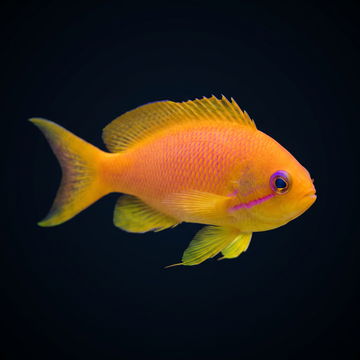
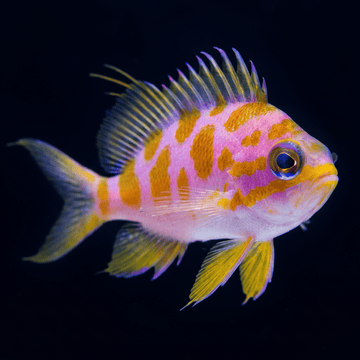
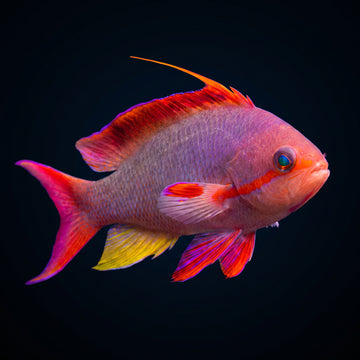
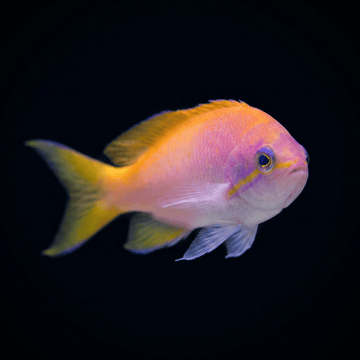
The Pictilis Anthias is a planktivore. In the aquarium, the main foods should be marine animal preparations that move through the water at a size the fish can readily take. Release small portions upstream of the fish so they disperse across the feeding lane.
Start with two to three small meals during the light period. Adjust the portion size to the amount swallowed, body condition, and the system’s ability to export waste. Offer food at several points if fast tankmates monopolize the first portion.
Confirm feeding at each introduction. Allow a long, open feeding lane and rock cover at each end. Watch for a dominant fish controlling the central current. Newly arrived fish may take live or frozen food before accepting dry preparations. Keep portions small and offer a complete marine food as part of the rotation once the fish is eating reliably.
Watch for a pinched belly, repeated spitting, or a fish that misses meals when tankmates approach. Change food size or delivery position early, and make sure each fish can reach food at its preferred depth. Remove leftovers that settle in sheltered areas before the next feeding.
A single fish or a carefully managed group can work. In larger groups, provide several females per established male when appropriate and avoid housing rival mature males together in limited space.
Signs of incompatibility include a fish that repeatedly misses meals, stays in one corner, shows damaged fins, or is chased from shelter. Use rockwork to break up sight lines and provide a second feeding location beyond the dominant fish’s range. Keep a divider or alternate space available if the problem persists.
Choose a larger aquarium for a group and verify feeding access beyond the dominant fish.


FAQ
Frequently Asked Questions
About the Pictilis Anthias
-
What tank size does the Pictilis Anthias need?
Allow at least 125 gallons for adult housing. Up to 5.3 inches (13.5 cm). -
What does the Pictilis Anthias eat?
Offer small drifting marine animal foods. Start with two to three small meals during the light period. -
Is the Pictilis Anthias reef safe?
The Pictilis Anthias is Reef Safe with corals and typical reef invertebrates. It feeds on small animal prey in the water column. Keep an open feeding lane above the reef as colonies grow.