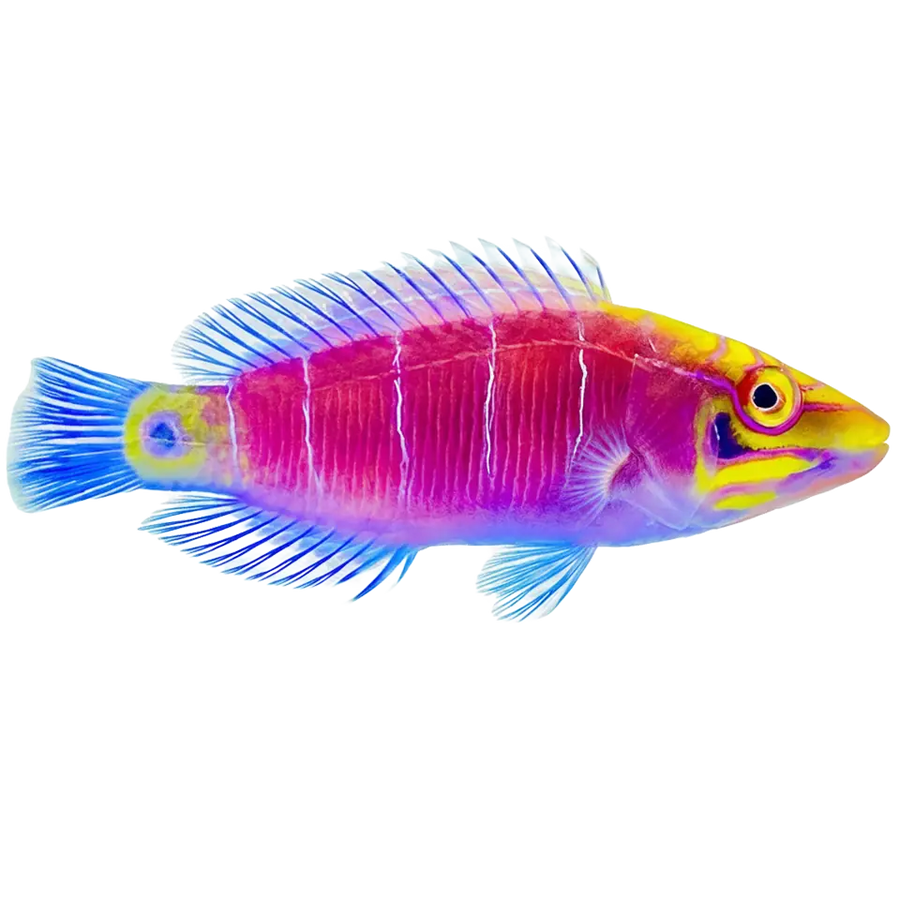
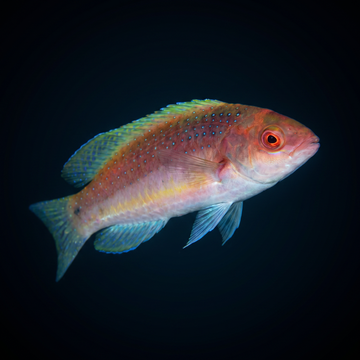
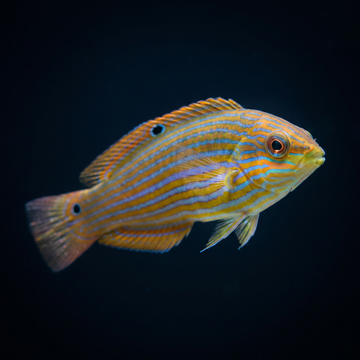
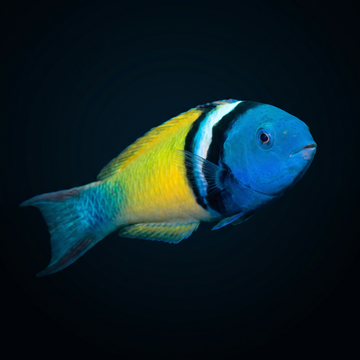
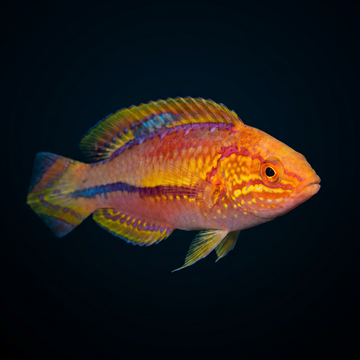
Kuteri Wrasse saltwater fish care guide

Overview:
The Kuteri Wrasse is a vibrant and active marine fish known for its striking colors and dynamic behavior. This species thrives in a well-established saltwater aquarium with a minimum capacity of 75 gallons. The ideal habitat for the Kuteri Wrasse includes plenty of live rock for hiding and foraging, as well as open swimming spaces. Water parameters should be stable, with a temperature range of 72-78°F, pH between 8.1-8.4, and specific gravity of 1.020-1.025. A moderate water flow and strong filtration system are essential to maintain water quality and mimic their natural environment.

Compatibility:
Kuteri Wrasses are generally peaceful but can be territorial, especially towards other wrasses. They are best kept with similarly sized, non-aggressive tankmates. Ideal companions include clownfish, tangs, and other peaceful reef fish. Avoid housing them with overly aggressive species or those that may outcompete them for food. It is advisable to introduce the Kuteri Wrasse to the aquarium before more dominant species to reduce stress and establish their territory.

Health and Quarantine:
Maintaining the health of the Kuteri Wrasse involves regular monitoring of water quality and ensuring a balanced diet. They are susceptible to common marine diseases such as ich and marine velvet, so it is crucial to quarantine new arrivals for at least 2-4 weeks before introducing them to the main tank. During quarantine, observe for any signs of illness, such as white spots, rapid breathing, or lethargy. Preventive care includes maintaining optimal water conditions, providing a stress-free environment, and ensuring a nutritious diet. Regular health checks and prompt treatment of any issues will help keep the Kuteri Wrasse thriving in your aquarium.

Pellets Mysis Finely Chopped Seafood
Kuteri Wrasse exhibits active swimming habits, often exploring various tank levels. It displays peaceful social behavior, generally coexisting well with other non-aggressive species. While not overtly territorial, it may show mild aggression if threatened. Caution is advised when keeping it in reef tanks, as it might nip at invertebrates. Ideally housed with similarly sized, non-aggressive tank mates, it thrives in a stable environment with plenty of hiding spots and open swimming areas.

FAQ

Frequently Asked Questions

About the Kuteri Wrasse

  • How can I tell a male Kuteri Wrasse from a female, and will a lone male lose his coloration in my reef tank?
    Male Kuteri Wrasses show a more intense orange-red body with stronger purple or magenta highlights on the head and dorsal area, and their dorsal and anal fins are more elongated with brighter edging. Females and juveniles tend to be smaller, with more subdued orange to pink tones and less fin extension. A lone male will usually retain good coloration if kept in a stress‑free environment with high water quality, low aggression, and frequent small feedings. However, his colors are at their best when he courts females; a mixed harem (one male with several females) typically brings out more frequent display colors and flashing behavior.
  • What tank size and aquascape layout best suit a Kuteri Wrasse so it feels secure and shows natural behavior?
    For a single Kuteri Wrasse, a minimum of 55 gallons is recommended, with more space if you plan on adding a harem or other wrasses. They do best in a tank with plenty of rockwork broken into “islands,” forming caves, arches, and shaded crevices, plus ample open water above for mid‑water swimming. Avoid a wall of rock; instead, create multiple paths and channels where the fish can dart in and out. While they don’t absolutely need a deep sand bed like burying Halichoeres wrasses, a thin layer of fine sand is beneficial for foraging and comfort. A tight‑fitting lid is mandatory, as Kuteri Wrasses are strong jumpers, especially during the first weeks after introduction or when startled.
  • My Kuteri Wrasse is pacing the glass and constantly flashing at its reflection. Is this harmful, and how can I reduce this behavior?
    Persistent flashing at the glass usually means the wrasse is seeing its own reflection as a rival male. Short-term, this is not usually harmful, but prolonged, intense displaying can cause stress and minor fin damage. To reduce it, adjust room and tank lighting so the glass is less reflective (e.g., avoid bright light behind the tank, add a dark background, or lower side lighting). Adding more rock along the glass panels can break up the reflective surface. In some cases, increasing the number of peaceful tankmates helps the wrasse focus on natural social cues instead of its reflection. Over time, many individuals adapt and flash less frequently as they settle.
  • How should I introduce a Kuteri Wrasse to a tank that already has other fairy wrasses, and what specific aggression signs should I watch for?
    Introduce a Kuteri Wrasse to an established wrasse community using an acclimation box for 2–5 days. This allows existing wrasses to see but not attack the newcomer, and lets you gauge compatibility. Avoid mixing with very similar-looking Cirrhilabrus species from the same complex, as that can heighten rivalry. After release, watch for intense tail-slapping chases that don’t stop, fin-nipping with torn fins by the next day, or the Kuteri hiding continuously and refusing food. Short chases with no physical damage and intermittent flaring are normal as they establish a hierarchy. If you see severe aggression, remove the aggressor, rearrange rockwork to reset territories, and reintroduce using the acclimation box again.
  • My Kuteri Wrasse only shows its brightest colors right before lights out. Is this normal, and can I adjust my lighting schedule to see these displays more often?
    This is normal. Male Kuteri Wrasses perform dusk courtship displays, intensifying their colors and “flashing” short bursts of brighter patterning toward females or perceived rivals as the light level drops. To enjoy these displays, program your lights with a gradual ramp-down in the evening, extending the low‑intensity “dusk” period by 30–60 minutes rather than an abrupt shutoff. Keep blue channels on slightly longer than white to mimic a natural sunset. Avoid rapid, repeated on/off cycling, which can stress the fish and actually reduce display behavior over time. With a consistent schedule, you should see predictable evening displays once the fish is fully settled and conditioned.