Gem Tang

Overview:
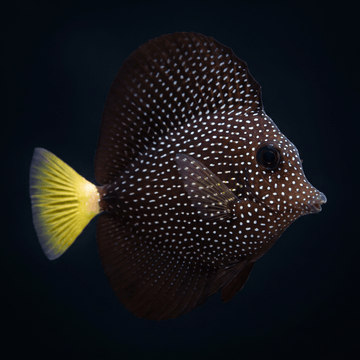
The Gem Tang (Zebrasoma gemmatum) is a striking marine fish known for its deep black body adorned with white spots. It thrives in a well-established aquarium with a minimum size of 180 gallons, providing ample swimming space and live rock for grazing and hiding. Optimal water conditions include a temperature range of 72-78°F, salinity between 1.020-1.025, and a pH of 8.1-8.4. Strong water movement and efficient filtration are essential to mimic its natural reef environment and maintain water quality.

Compatibility:
Gem Tangs are generally peaceful but can exhibit territorial behavior, especially towards other tangs or fish with similar body shapes. They are best kept with a mix of other non-aggressive species. Avoid housing them with other Zebrasoma species unless in a very large tank to reduce aggression. Suitable tankmates include clownfish, wrasses, gobies, and other peaceful reef fish. Introduce the Gem Tang last to an established community to minimize territorial disputes.

Health and Quarantine:
Gem Tangs are susceptible to common marine diseases such as ich and marine velvet. A quarantine period of at least four weeks is recommended before introducing them to the main tank. During quarantine, monitor for signs of stress or illness and treat as necessary. Maintain excellent water quality and a varied diet to boost their immune system. Regularly check for signs of disease, such as white spots or rapid breathing, and address any issues promptly. Providing a stress-free environment with plenty of hiding spots will help prevent health problems and ensure a long, healthy life for your Gem Tang.

Nori Pellets Mysis
The Gem Tang (Zebrasoma gemmatum) is an active swimmer that gracefully navigates through the aquarium, making use of the entire tank space. It thrives in a reef-safe environment, utilizing rock formations and coral structures for exploration. This species exhibits semi-aggressive behavior, especially towards similar-looking tangs, necessitating a minimum tank size of 100 gallons to reduce territorial disputes. Socially, it is best introduced as one of the last fish in a community tank to prevent dominance issues. Compatible with a variety of reef-safe fish, the Gem Tang poses no threat to invertebrates and corals. Its omnivorous diet includes algae/nori, spirulina, and meaty foods, which are essential for maintaining its health and vibrant coloration. With proper care, the Gem Tang can be a stunning and dynamic addition to a marine aquarium.

FAQ

Frequently Asked Questions

About the Gem Tang

  • How large of a tank does a Gem Tang really need long-term, and does aquascape design matter for this species?
    An adult Gem Tang (Zebrasoma gemmatum) reaches about 8–9 inches and is very active, so 180 gallons (6-foot tank) is the practical minimum; 240+ gallons is better for long-term success. They need long, unobstructed swimming space along the front and back glass more than just raw water volume. Use an aquascape with open “runways” and arches they can weave through, plus several caves or overhangs for retreat. Vertical rock faces and broad surfaces are useful for natural grazing behavior. Avoid cramped, wall-to-wall rock structures that turn the tank into a maze of dead-ends, as this can increase stress and territorial disputes, especially if other tangs are present.
  • Gem Tangs are known to be expensive and delicate—what specific quarantine and disease-prevention steps are recommended for this species?
    Gem Tangs are prone to Cryptocaryon (marine ich) and other parasites, and due to their cost, a strict quarantine protocol is wise. Quarantine for 4–6 weeks in a 30–40+ gallon tank with strong aeration and stable parameters (SG 1.024–1.026, temp 24–26 °C / 75–79 °F). Prophylactic treatment options include: copper-based treatment (maintain therapeutic level with a reliable test kit) or tank transfer method for ich, plus a separate course of praziquantel for flukes. Provide PVC or inert hiding spots and constant nori to reduce stress. Observe for flashing, rapid breathing, or fin erosion. Only move the fish to the display once it is eating aggressively, has maintained body weight, and has shown no symptoms for at least 2 weeks. Always keep the display tank fallow for 6–8+ weeks if you’ve had an ich outbreak before adding a Gem Tang.
  • What diet keeps a Gem Tang’s color vibrant and prevents long-term health issues like head and lateral line erosion (HLLE)?
    Gem Tangs are primarily herbivorous grazers. Base the diet on high-quality marine algae and seaweed: daily sheets of nori (red and green varieties), and foods rich in marine algae such as Ocean Nutrition Formula Two, NLS AlgaeMax, or similar. Supplement 3–4 times per week with spirulina-based pellets or flakes and occasional frozen herbivore blends. Offer small amounts of high-quality meaty foods (mysis, enriched brine, clam) 1–2 times per week, but avoid making meaty foods the staple. To reduce HLLE risk, use vitamin-soaked foods (vitamins including C and HUFA like Selcon), avoid old or crumbling activated carbon (or use high-quality low-dust carbon in a reactor), maintain excellent water quality, and provide constant grazing opportunities on live rock and macroalgae.
  • How aggressive are Gem Tangs toward other tangs, and what is the best stocking and introduction strategy in a mixed-tang reef?
    Gem Tangs are moderately aggressive, especially toward conspecifics and similar-shaped Zebrasoma and Acanthurus species. In a mixed-tang tank, the safest approach is: introduce the Gem Tang last, or among the last group of tangs; prioritize size staggering (Gem Tang either smaller or larger than existing tangs to break symmetry); avoid housing it with other Zebrasoma (Yellow, Purple, Sailfin, etc.) unless the tank is 300+ gallons with abundant territory. Use acclimation boxes so existing fish can see but not attack the newcomer for several days. Rearrange some rockwork right before release to reset territories. Heavy, frequent feeding during introduction also spreads out aggression. Watch closely for sustained chasing, fin damage, or refusal to eat; if that occurs, the aggressor may need to be removed and reintroduced later.
  • My Gem Tang’s white spots and body pattern look faded compared to photos online—what specific conditions influence their coloration in captivity?
    Color intensity in Gem Tangs is influenced by several factors: • Lighting: Under very bright, cool-white or blue-heavy reef lighting, spots can appear less crisp; moderate intensity with a balanced spectrum (including some warmer channels) often shows pattern better. • Diet: A poor or low-algae diet quickly dulls their white spots and yellow caudal area. Ensure daily nori, spirulina, and vitamin-enriched herbivore foods. • Stress and hierarchy: Subordinate or stressed individuals often mute their pattern; aggression from tankmates, lack of hiding places, or frequent disturbances can cause chronic stress. • Water quality: Stable, low-nutrient but not “ultra-sterile” conditions (NO3 around 5–15 ppm, PO4 around 0.03–0.08 ppm) help maintain color; large parameter swings or chronic low pH can cause a washed-out appearance. With proper diet, stable water chemistry, suitable tank mates, and a comfortable environment, the white spots typically become sharper and the yellow tail more vivid over several weeks to months.