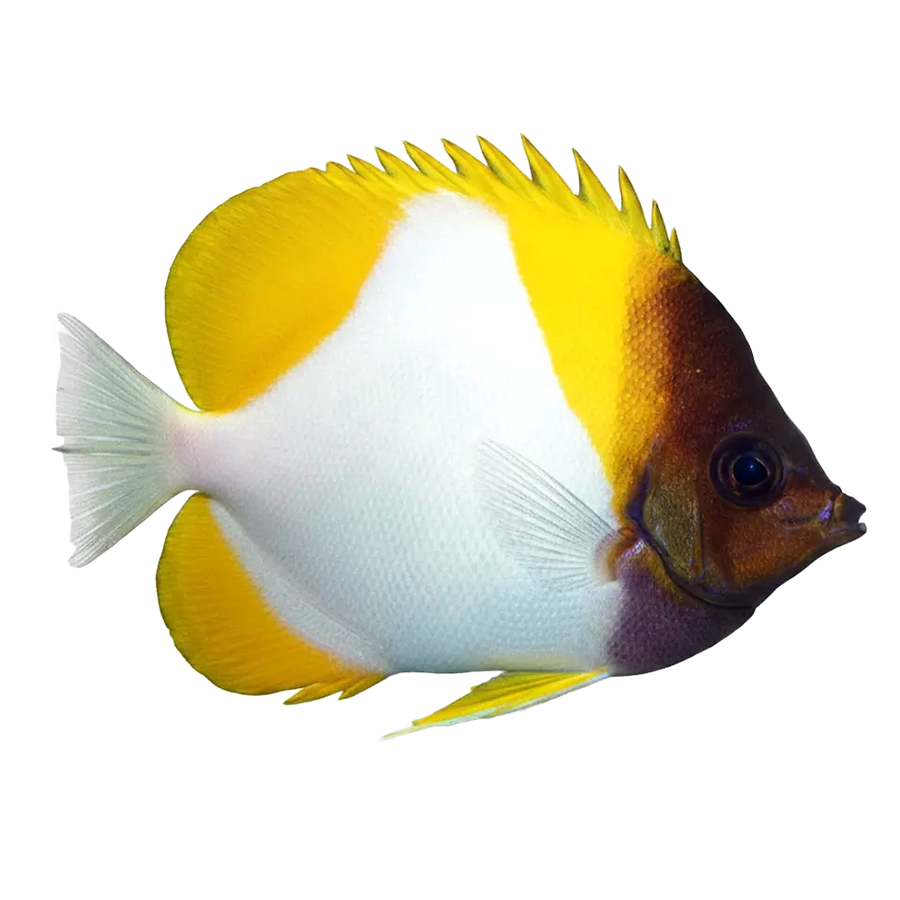
Copperband Butterflyfish

Overview:
The Copperband Butterflyfish (Chelmon rostratus) is a captivating marine species known for its striking appearance and delicate nature. This species thrives in a well-established aquarium with a minimum size of 75 gallons, offering ample swimming space and hiding spots. The ideal habitat should mimic its natural environment, featuring live rock formations and a variety of coral structures. Water conditions should be stable, with a temperature range of 75-82°F, pH between 8.1-8.4, and specific gravity of 1.020-1.025. Regular water changes and efficient filtration are essential to maintain pristine water quality, as Copperband Butterflyfish are sensitive to fluctuations.

Compatibility:
Copperband Butterflyfish are generally peaceful but can be shy, making them suitable for a community tank with non-aggressive species. They should not be housed with overly aggressive or territorial fish that may outcompete them for food. Ideal tankmates include peaceful species such as gobies, blennies, and other non-aggressive butterflyfish. Caution is advised when housing them with corals, as they may nip at certain types, particularly soft corals and polyps. Introducing them to the tank before more dominant species can help them acclimate and establish territory.

Health and Quarantine:
Copperband Butterflyfish are prone to stress-related illnesses, making quarantine a vital step before introducing them to the main tank. A quarantine period of at least 2-4 weeks allows for observation and treatment of potential diseases such as marine ich or flukes. Maintaining optimal water quality and a stress-free environment is crucial for their health. Regular monitoring for signs of illness, such as changes in appetite or behavior, is important. Providing a varied diet and ensuring they are eating well can help bolster their immune system. If health issues arise, consulting with a marine veterinarian for appropriate treatments is recommended.

Mysis Finely Chopped Seafood Aiptasia
Copperband Butterflyfish swim gracefully with deliberate movements. They are often solitary or form loose pairs, displaying moderate territorial behavior. Generally peaceful, they can coexist with non-aggressive species but may be bullied by more dominant fish. They prefer to explore rock crevices and coral reefs, using their long snouts to forage for food. In aquariums, they require ample space and hiding spots to feel secure. Their compatibility is best with other peaceful species, avoiding those that are aggressive or similar in appearance to prevent stress or conflict.

FAQ

Frequently Asked Questions

About the Copperband Butterflyfish

  • Why do Copperband Butterflyfish so often refuse prepared foods in captivity, and what is a step-by-step plan to convert a wild-caught specimen onto a stable diet?
    Copperbands are specialized pickers that naturally hunt small worms, crustaceans, and coral polyps throughout the day, so many arrive only recognizing tiny moving prey on hard surfaces. Converting one takes patience and sequence: 1) Start with live foods that trigger hunting: live blackworms, live brine shrimp, pods, or small chunks of clam on the half-shell placed on the rock. 2) Present food near where the fish already pecks (rockwork, glass, clam shells) rather than “in the water column” like for other fish. 3) Once it takes live food reliably, switch to frozen mysis (especially high-quality brands with intact shrimp), bloodworms, and finely chopped clam, still presented on rock or in a feeding dish near its grazing areas. 4) Gradually add more “still” foods and slightly larger pieces, mixing them with its accepted items. 5) Feed small portions multiple times per day; Copperbands have small stomachs and are adapted to continuous grazing. 6) Keep tankmates calm and not overly aggressive feeders; use a feeding tube, pipette, or turkey baster to target-feed the Copperband so it gets a fair share. Over weeks, most will accept frozen mysis, brine, clam, and sometimes quality pellets or flakes, but many never accept dry foods, so plan for a long-term frozen-food diet.
  • Can a Copperband Butterflyfish be reliably used to control Aiptasia and Majano anemones, and what factors affect whether it will actually eat them?
    Some Copperbands become excellent Aiptasia consumers, but results are inconsistent and individual-dependent. Key factors: 1) Origin and collection: Individuals collected from areas with abundant small anemones and hydroids seem more likely to recognize Aiptasia as food. 2) Hunger and competition: A fish that quickly adapts to heavy prepared feeding may ignore Aiptasia; moderate, not extreme, hunger sometimes encourages sampling pests. Never starve it trying to “force” Aiptasia eating—this kills more Copperbands than it trains. 3) Tank layout: Aiptasia in crevices and shaded areas may be ignored. Specimens often go after easy, exposed targets first. 4) Individual personality: Some Copperbands never touch Aiptasia, some nibble occasionally, and a minority methodically wipe them out. 5) Alternative prey: Access to tubeworms, feather dusters, and other natural prey can distract from Aiptasia. So, a Copperband should be kept primarily for its own sake, not purchased as a guaranteed pest solution. If it does eat Aiptasia, treat that as a bonus, not the main plan.
  • How do you minimize aggression and feeding competition when introducing a Copperband Butterflyfish into an established reef with tangs, wrasses, and angelfish?
    Copperbands are shy, deliberate feeders and are easily outcompeted. To improve their odds: 1) Choose tankmates carefully: Avoid hyper-aggressive tangs (like large Sohal, Clown, or mature Powder Blue) and very boisterous wrasses that constantly rush food. 2) Rearrange rockwork before introduction to break up established territories, especially for tangs and dwarf angels. 3) Use an acclimation box or clear “time-out” box for the Copperband for several days so other fish see it but can’t attack it. This prevents immediate chasing and gives the Copperband time to recognize prepared foods. 4) Target-feed: Use a long pipette or turkey baster to deliver food directly in front of the Copperband or into a feeding station that slower fish can use. 5) Stagger feeding: First distract aggressive fish with sheets of nori or a broadcast of pellets at one end of the tank, then target-feed the Copperband at the other end with mysis and clam. 6) Maintain high water quality and stable parameters to reduce overall stress; stressed tangs and angels are more likely to bully. Watching body condition (sunken belly, pinched in behind head) is essential; if weight drops despite these measures, consider rehoming tank bullies or the Copperband.
  • Are Copperband Butterflyfish actually “reef safe,” and what specific invertebrates and corals are at the highest risk of being eaten?
    Copperbands are often described as “reef safe with caution” because their natural diet overlaps with many reef invertebrates. Individual variation is huge, but high-risk targets include: 1) Feather duster worms and Christmas tree worms: These are almost always at risk; many Copperbands will systematically pick them off. 2) Small tube worms and fan worms: Frequently consumed as a staple protein source. 3) Certain LPS corals, especially fleshy types: Some individuals pick at open brains (Trachyphyllia, Lobophyllia), Scolymia, and sometimes Acanthastrea or Micromussa polyps. 4) Clam mantles (Tridacna): Some Copperbands ignore them; others repeatedly nip mantles, causing clams to stay closed and eventually decline. 5) Soft corals and zoanthids: Generally lower risk, but there are reports of occasional picking, especially on smaller polyps or if other food is limited. SPS corals, most soft corals, and many zoas are often left alone, but nothing is guaranteed. If you keep prized feather dusters, ornamental worms, or expensive fleshy LPS, be prepared that a Copperband may decide they are food. Careful observation in the first few weeks is essential.
  • What tank size, aquascape style, and water conditions are realistically needed for a Copperband Butterflyfish to thrive long-term, not just survive?
    For long-term success: 1) Tank size: Minimum of 75 gallons, but 100+ gallons is far better. Copperbands are constant cruisers and need both swimming room and plenty of rock surface to pick at. 2) Aquascape: Create a rock structure with many ledges, caves, and overhangs, plus plenty of vertical and angled surfaces. This maximizes foraging area for pods, worms, and sponges and gives hiding spots to reduce stress. Avoid sparse scapes with little rock; these limit natural grazing. 3) Flow: Moderate, varied flow. Too little reduces oxygen and food distribution; too much direct blast discourages their delicate snout-feeding behavior. 4) Water quality: Stable and clean—salinity 1.024–1.026, temperature 24–26°C (75–79°F), ammonia and nitrite 0, nitrate ideally under ~20 ppm, and stable pH and alkalinity. Sudden swings are more dangerous than slightly imperfect numbers. 5) Maturity: A well-established tank (6–12 months or more) with natural microfauna, sponges, and worms gives a big survival advantage, especially during the initial acclimation and feeding period. 6) Lighting: Normal reef lighting is fine; provide shaded areas and caves so the fish can retreat from intense light and activity. Meeting these environmental needs, combined with careful feeding and tankmate selection, drastically improves long-term outcomes for this species.