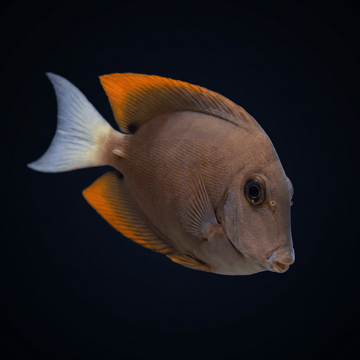
Black Longnose Tang

Overview:
The Black Longnose Tang, also known as Zebrasoma rostratum, is a striking marine fish known for its elongated snout and deep black coloration. Native to the coral reefs of the South Pacific, this species thrives in well-established marine aquariums with ample swimming space. A tank of at least 125 gallons is recommended to accommodate their active nature. The ideal habitat should mimic their natural environment, featuring live rock formations for grazing and hiding. Maintain water conditions with a temperature of 72-78°F, pH of 8.1-8.4, and specific gravity of 1.020-1.025. Strong water movement and efficient filtration are crucial to replicate ocean currents and maintain water quality.

Compatibility:
When considering tankmates, Black Longnose Tangs are generally peaceful but can exhibit territorial behavior towards other tangs or fish with similar body shapes. It's best to house them with a mix of non-aggressive species that occupy different areas of the tank. Suitable companions include clownfish, gobies, and wrasses. Avoid housing them with overly aggressive species or other tangs unless the tank is large enough to provide ample territory for each fish. Introducing all tangs simultaneously can help reduce aggression.

Health and Quarantine:
Black Longnose Tangs are susceptible to common marine diseases such as ich and marine velvet. Quarantine new additions for at least two weeks to monitor for signs of illness and prevent the spread of disease. Regularly check water parameters and perform routine maintenance to prevent stress-related health issues. A varied diet and stable environment will contribute to their overall well-being. If signs of illness appear, such as white spots or labored breathing, promptly address with appropriate treatments. Regular observation and preventive care are key to maintaining the health of this species.

Nori Pellets Mysis
The Black Longnose Tang is an active and graceful swimmer that requires a minimum of 100 gallons of tank space to thrive. It enjoys exploring various levels of the tank and needs ample room to reduce stress. While this species can be somewhat solitary, it may interact with other fish if introduced at a young age. Known for its semi-aggressive temperament, the Black Longnose Tang can exhibit territorial behavior, particularly towards other tangs or similar-shaped fish. To minimize aggression, it is advisable to introduce this tang as one of the last additions to the tank and provide plenty of hiding spaces and visual barriers. It is generally reef safe and compatible with non-aggressive species and those that do not resemble its shape or size. A varied diet of algae, seaweed, mysis, and brine shrimp is essential for maintaining its health and reducing stress-induced aggression. With appropriate care, this species can add beauty and dynamic movement to a marine aquarium.

FAQ

Frequently Asked Questions

About the Black Longnose Tang

  • How can I tell a true Black Longnose Tang (Zebrasoma rostratum) from similar species like the Scopas Tang or Black Scopas hybrids when buying one?
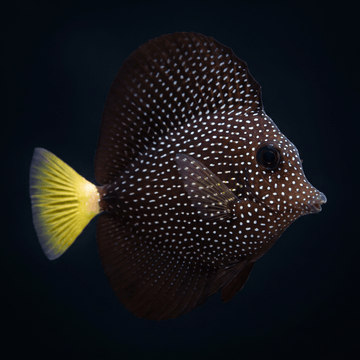
    A true Black Longnose Tang is jet black to very dark brown with an evenly elongated, narrow snout and a clean, uniform coloration over the whole body, including the fins. There should be no mottling, patchiness, or lighter “dirty” areas on the sides or tail, and no yellow or tan highlights on the body. The snout is noticeably more extended and tubular than a Scopas Tang, giving the head a more “pointed” appearance. The eye area should not show the pale mask often seen in Scopas or hybrid fish. Under strong light, a pure Z. rostratum may show a very subtle dark olive sheen but will still read as solid black overall. Request photos/video in white light (not heavy blue) and, if possible, ask for collection locality (central/south Pacific) since this species does not come from Indo/Red Sea sources that primarily supply Scopas.
  • What minimum tank size and aquascape style are realistically needed for a Black Longnose Tang to thrive long term, not just survive?
    For long-term success, aim for at least a 5-foot (150 cm) tank and around 120 gallons (450 L) minimum; 6-foot systems (180+ gallons) are much better. This species is an active cruiser that spends much of the day browsing rock and glass, so horizontal swimming space matters more than sheer volume. Provide long, open “runways” front and center with rockwork arranged in islands or ridges that rise up but don’t form a continuous wall. Create multiple arches and passes through the rock so the fish can circle and weave without feeling cornered. Avoid sharp overhangs and very tight caves where it could wedge its extended snout. The more linear swimming distance you can create along the front and back glass, the less likely you’ll see pacing or aggression.
  • My Black Longnose Tang is constantly picking at the glass and rocks but seems uninterested in the algae sheets I add. How do I get it to eat prepared foods reliably?
    Many Black Longnose Tangs are heavy “grazers by habit” and may ignore static nori at first. Start by clipping very thin, narrow strips of nori (½–1 cm wide) and roughing them up so they flutter and fray. Place the clip low on the glass near areas where it already picks. If it still ignores the sheet, rubber-band small nori strips to rubble rock and place that in its preferred grazing zones; this feels more natural than a plastic clip. You can also soak nori in a little thawed mysis or brine shrimp juice so it carries an animal scent. Introduce tiny amounts of high-quality pellets (e.g., spirulina-based) by dropping them into strong flow so they “chase” along the current; some individuals respond better to moving targets. Feed small portions 3–4 times daily at first, matching their near-constant foraging behavior. Over a week or two, most will begin taking sheets and pellets more confidently as they associate them with grazing.
  • Are Black Longnose Tangs safe in mixed-reef systems with fleshy LPS, clams, and SPS, or do they have a tendency to nip corals?
    As primarily herbivorous browsers, Black Longnose Tangs are generally reef-safe with SPS and most soft corals, and they rarely cause structural damage. However, individual behavior varies. Some individuals may occasionally sample fleshy LPS (especially open brains, acans, and trachys) or pick at clam mantles, particularly if natural algae and film growth are limited or the fish is underfed. To reduce risk, keep the fish well-fed with varied macroalgae (nori, gracilaria, ulva), high-quality herbivore pellets, and some frozen foods, and allow moderate film algae growth on at least one pane or in the sump/refugium. Introduce any expensive fleshy LPS and clams after the tang has settled, is eating aggressively, and is not hyper-focused on every new object placed in the tank. Monitor closely for the first week after adding new inverts; if you see repeated nipping at the same coral or clam, that individual may not be a safe candidate for that particular piece.
  • My established Yellow Tang is aggressively harassing a newly added Black Longnose Tang. What introduction strategy works best for this species combination?
    Zebrasoma species often clash when similar in shape but different in color, and a resident Yellow Tang tends to be territorial. A proven strategy is (1) rearrange rockwork to disrupt established territories just before introduction, (2) use an acclimation box to confine the new Black Longnose Tang within the main display for 3–7 days so both fish see and smell each other without physical contact, and (3) feed more frequently and heavily during this period to lower aggression. When you release the Black Longnose, do it at dusk with lights dimmed or in “moonlight” mode so vision is reduced. Having the newcomer slightly larger than the Yellow Tang can help, but avoid a massive size mismatch either way. Multiple feedings, some nori on opposite sides of the tank, and adding visual barriers (extra rock or tall coral structures) give the new fish more escape routes. If serious, persistent chasing and tail-slapping continue beyond a few days, you may need to temporarily remove the Yellow Tang, let the Black Longnose fully settle as the “resident,” then reintroduce the Yellow after a week or more.