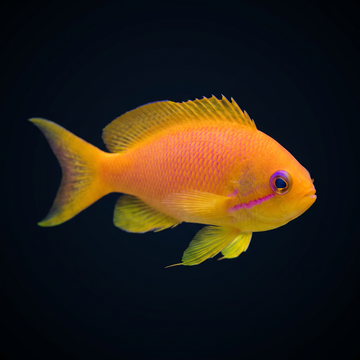
Bartlett’s Anthias

Overview:
Bartlett’s Anthias, scientifically known as Pseudanthias bartlettorum, are vibrant and active fish that thrive in well-maintained reef aquariums. They require a tank size of at least 70 gallons to accommodate their active swimming behavior and social nature. The ideal habitat for Bartlett’s Anthias includes plenty of live rock formations for hiding and swimming through, as well as open water space. They prefer a stable water temperature between 72-78°F, a pH level of 8.1-8.4, and a specific gravity of 1.020-1.025. Strong water movement and efficient filtration are essential to replicate their natural environment and maintain water quality.

Compatibility:
Bartlett’s Anthias are generally peaceful and do well in a community tank setting. They are best kept in groups of at least three individuals, with one male and multiple females, as they exhibit a social hierarchy. This setup helps reduce aggression and stress among the group. When selecting tankmates, choose other peaceful species that are not overly aggressive or territorial. Ideal companions include other anthias species, small wrasses, gobies, and reef-safe invertebrates. Avoid housing them with large, predatory fish that may see them as prey.

Health and Quarantine:
Bartlett’s Anthias are susceptible to common marine diseases such as ich and marine velvet, so maintaining excellent water quality is crucial. Regular monitoring of water parameters and prompt removal of uneaten food and waste can help prevent disease outbreaks. Quarantining new arrivals for 2-4 weeks before introducing them to the main tank is highly recommended to prevent the spread of pathogens. During quarantine, observe for signs of illness and treat as necessary. Providing a stress-free environment with stable conditions and a nutritious diet will bolster their immune system, reducing the likelihood of disease. Regular health checks and prompt attention to any signs of distress or illness will ensure the long-term well-being of Bartlett’s Anthias in captivity.

Pellets Mysis Finely Chopped Seafood
Bartlett’s Anthias are active swimmers, often seen in mid-water, darting in groups. They exhibit strong social behavior, forming harems with one dominant male and several females. They are generally non-territorial but may become aggressive if their hierarchy is threatened. In a community tank, they are compatible with peaceful species but can be intimidated by larger, aggressive fish. They thrive in a stable environment with plenty of swimming space and hiding spots, requiring regular feeding due to their high metabolism.

FAQ

Frequently Asked Questions

About the Bartlett’s Anthias

  • How many Bartlett’s Anthias should I keep together, and what’s the best male-to-female ratio to reduce aggression and sex-changing conflicts?
    Bartlett’s Anthias do best in small harems: 1 male with 3–6 females in tanks of 75 gallons or larger. If you start with all females (5–7) in a 75–120 gallon tank, the dominant one will turn male naturally. Avoid more than one established male in tanks under 180 gallons, as they will fight, harass subordinates, and stress the group. If you’re adding a new group to an existing tank, introduce all females at once and add the male last or let the group form its own male; sudden introduction of a mature male to a tank with a developing sub-male is one of the most common triggers for constant chasing and hiding.
  • Why is my Bartlett’s Anthias turning yellow on the back and losing its purple coloration, and is this a sign of poor health?
    Color shift in Bartlett’s is usually hormonal and social, not a health issue. Males show bright yellow dorsally with magenta to purple on the lower body and a more extended dorsal fin. Females are more uniformly pinkish with less intense yellow. When a female begins to transition to male due to social dominance (for example, if the male dies or there is no clear male), you’ll see the yellow spreading along the back, intensified purple on the lower body, and fin changes over several weeks. If the fish is still eating well, swimming confidently in the water column, and you don’t see clamped fins, frayed edges, spots, or rapid breathing, the color change is normal sexual transition, not disease.
  • My Bartlett’s Anthias spends most of the day hiding under rock ledges instead of schooling in the open. What specific environmental factors cause this behavior?
    Constant hiding in Bartlett’s is often due to a combination of three factors: excessive flow, harsh top-down lighting, and lack of midwater cover. Bartlett’s like strong but diffuse flow and will avoid narrow, blasting streams. They also dislike intense, unshaded light; bare, open rockscapes under bright LEDs make them feel exposed. Provide overhangs, caves with open faces, and branching rock structures that create vertical “walls” they can hover beside. Add moderate flow that alternates and breaks around rock, and aim for a shaded-to-bright gradient across the tank. A few peaceful, active midwater fish (such as fairy or flasher wrasses) can help them feel more secure, whereas boisterous tankmates like large tangs or dottybacks will push them into hiding.
  • What feeding schedule and food types are ideal for maintaining the weight and coloration of Bartlett’s Anthias in a mixed reef tank?
    Bartlett’s Anthias have high metabolisms and do best with multiple small feedings daily: 2–4 times a day is ideal. Use a mix of fine meaty foods: enriched frozen mysis, finely chopped krill, small calanus, enriched brine, and quality marine pellets in the 0.5–1 mm range. Add a planktonic component such as frozen cyclops or copepod-based foods to mimic their natural diet of zooplankton. Soak foods periodically in vitamin and HUFA supplements to support immune health and color. In heavy coral tanks, use a high-quality automatic feeder for small pellets to maintain frequent feedings without major nutrient spikes, and balance feeding by increasing export (skimming, refugium, or regular water changes).
  • Can Bartlett’s Anthias be kept successfully in a nano or small reef tank long-term if I only keep a single fish, and what special care would that require?
    A single Bartlett’s Anthias can live in a 40–50 gallon tank, but this is a compromise and not ideal. In small tanks, keep just one specimen to avoid hierarchy stress. Provide high-quality filtration, stable temperatures (76–78°F), and strong but diffused flow. Because they are very active swimmers, ensure at least 3 feet of horizontal swimming space and a tightly covered top—they are prone to jumping when startled. Feed at least twice daily with small meaty items and tiny pellets; in smaller volumes, this requires diligent nutrient management (regular water changes and efficient skimming). Give it visual shelter with rockwork and avoid aggressive tankmates such as large clownfish or dottybacks; peaceful wrasses or small gobies are better companions. While this setup can work, Bartlett’s display their most natural behavior and colors in larger tanks with a small group.