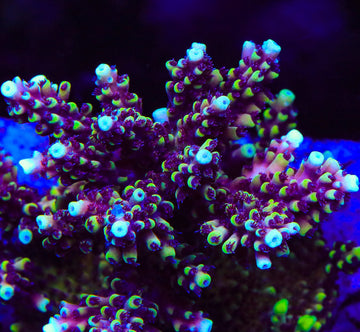
TSA Carolina Reaper Acropora Coral

TSA Carolina Reaper Acropora Coral

Acropora SPS

Overview

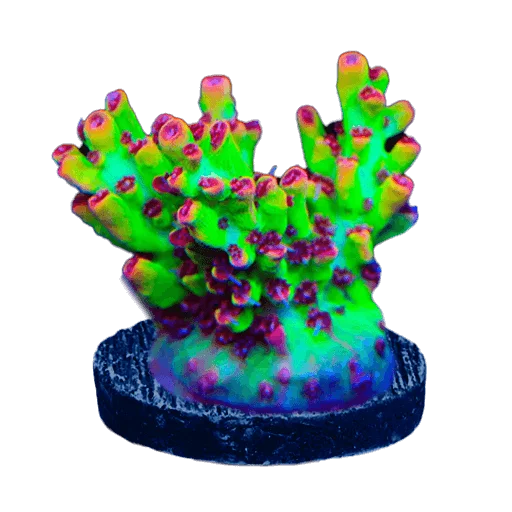
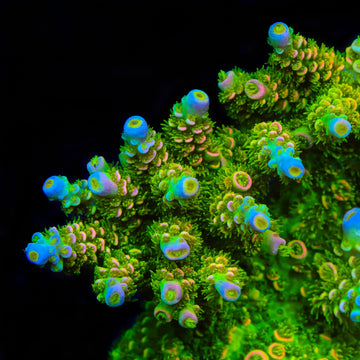
Carolina Reaper Acropora Coral displays vivid branch tips with compact axial corallites and contrasting polyps. Acropora tenuis is a branching stony coral; it prefers strong light and moderate to high, turbulent water flow. Primarily photosynthetic via symbiotic algae, it also benefits from occasional small particle foods, which can support growth and maintain color. Place high on stable rock with ample space from stinging neighbors, and keep parameters steady to prevent tissue loss.

Quick Facts

Care Difficult
Lighting High
Flow High
Placement High
Temperament Peaceful (2–3 inches spacing)

Recommended Parameters

Temp 76–80°F
pH 8.1–8.4
Salinity 1.025–1.026
Calcium 420–450 ppm
AlkAlkalinity 7.5–9 dKH
Magnesium 1280–1350 ppm
Feeding photosynthetic (primary), microplankton, phytoplankton, rotifers, copepod nauplii, marine snow, coral-specific powdered foods, amino acid supplements

Care & Placement

Carolina Reaper Acropora Coral (Acropora tenuis) thrives under high, stable conditions. Provide strong, blue-weighted lighting at 250–350 PAR and vigorous, random flow that keeps polyps moving without sandblasting; this prevents detritus buildup and supports color. Maintain temp 75–78°F (24–26°C), salinity 1.025–1.026, pH 8.1–8.4, alkalinity 8–9 dKH, calcium 420–460 ppm, magnesium 1300–1400 ppm, nitrate 2–10 ppm, and phosphate 0.02–0.08 ppm. Stability is key—avoid rapid swings; use an auto top-off and test alk daily when new, then several times weekly. Feed lightly 1–2 times per week with small-particle coral foods or amino acids during evening polyp extension; do not overfeed.Place frags mid-to-high on the rockwork with strong crossflow, spacing 3–6 inches from neighbors to avoid shading and sting-prone LPS. Mount securely on a clean, stable surface and keep the base free of detritus. Acclimate by dipping and quarantining to screen for pests (AEFW, red bugs), then light-acclimate over 2–3 weeks by starting lower or using screen and gradually increasing intensity. Common issues: bleaching from sudden light increase, and tissue recession from alkalinity swings or pests. If tips pale, lower PAR and verify nutrients. For recession, stabilize parameters, increase turbulent flow, inspect for pests, and consider fragging healthy sections. Regular ICP or cross-checks with quality test kits help catch trace imbalances early.

FAQ

Frequently Asked Questions

About the TSA Carolina Reaper Acropora Coral

  • How do I keep the “Carolina Reaper” red/orange tones from fading in Acropora tenuis?
    Maintain stable alkalinity (7.5–8.5 dKH), slightly measurable nutrients (NO3 5–15 ppm, PO4 0.03–0.08 ppm), and strong blue/violet with a modest red channel (620–660 nm) to support warm pigments. PAR 250–350 is typical. Avoid ultra-low nutrients with high alk, which bleaches tips and washes out reds. Periodic small K and Fe checks help; don’t dose blindly. Ramp lighting after moves.
  • Why do inner branches brown while tips stay colorful on this tenuis?
    Dense, bushy growth shades the interior. Increase cross-flow and create chaotic turbulence to push light deeper and keep detritus off the base. Strategic pruning of a few inner branches opens the colony without stalling growth. Ensure phosphates aren’t bottoming out—starved bases brown quickly. Rotate the frag/colony a quarter turn every few weeks to balance light exposure.
  • My Carolina Reaper tenuis pastels out even though PE is great—what’s the likely cause?
    Often high alk paired with near-zero nutrients and too much light. Lower PAR by 15–20%, raise nutrients into the low-but-present range, and let alk drift to 7.5–8.5 dKH. Add small, frequent feedings (amino acids or broadcast microfoods) at night when PE is best. Expect color depth to return over 2–4 weeks if stability is maintained.
  • Are there pest cues unique to this coral that I should watch for?
    Acropora-eating flatworms favor smooth to moderately textured Acros like tenuis. Look for crescent bite marks on shaded undersides and pale, sand-grain eggs on dead patches. Red bugs cause reduced PE and muted colors rather than rapid tissue loss. Night inspections with a white flashlight reveal more. Quarantine with dips (e.g., Bayer/IME) and consider in-tank wrasse guardians for ongoing pressure.