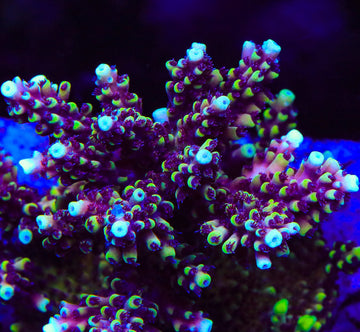
TSA Blue Ghost Acropora Coral

TSA Blue Ghost Acropora Coral

Acropora SPS

Overview

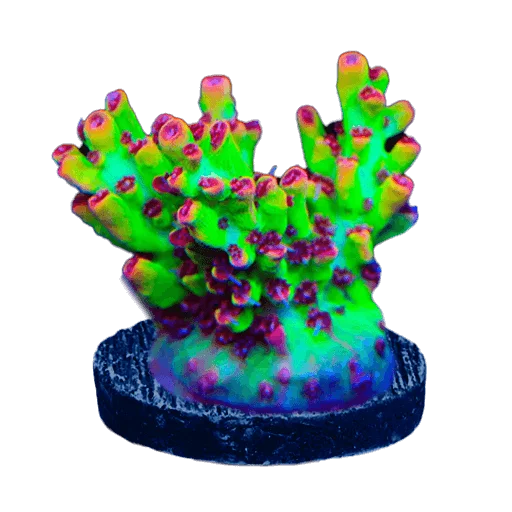
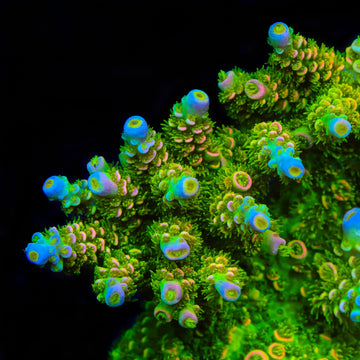
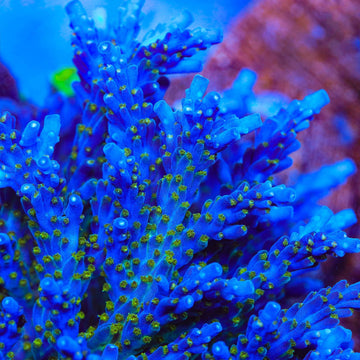
Blue Ghost Acropora Coral shows slender branching with pale blue tips and white growth edges. Acropora tenuis is a small-polyp stony branching coral that prefers strong light and high, turbulent water flow. It relies on symbiotic algae for most nutrition, but occasional small planktonic foods can support growth and color. Place high on stable rockwork with space from stinging neighbors, and keep alkalinity and temperature very stable.

Quick Facts

Care Difficult
Lighting High
Flow High
Placement High
Temperament Peaceful (3–4 inches spacing)

Recommended Parameters

Temp 77–79°F
pH 8.1–8.4
Salinity 1.025–1.026
Calcium 420–450 ppm
AlkAlkalinity 7–9 dKH
Magnesium 1280–1350 ppm
Feeding photosynthetic (primary), microzooplankton, rotifers, copepod nauplii, powdered coral foods, oyster eggs, bacterioplankton, amino acids

Care & Placement

Blue Ghost Acropora Coral (Acropora tenuis) thrives with bright, stable conditions and strong, shifting flow. Aim for PAR 250–350 with gradual light acclimation over 2–3 weeks; bleach risk rises with sudden jumps in intensity. Provide high, random flow to keep polyps supplied and prevent detritus from settling on branches—use alternating pumps or gyres rather than a constant blast. Target feed 1–2x weekly with fine particulate foods (reef roids, rotifers) or amino acids at night for better polyp response, but keep nutrients balanced. Keep temperature 75–79°F (24–26°C), salinity 1.025–1.026, pH 8.1–8.4, alkalinity 8.0–9.5 dKH (very stable), calcium 420–460 ppm, magnesium 1300–1400 ppm, nitrate 2–10 ppm, phosphate 0.02–0.08 ppm. Test alkalinity 2–4x weekly until consumption stabilizes; use automated dosing or a calcium reactor as colonies grow. Consider periodic ICP tests and run fresh carbon to reduce organics.Place mid to high in the rockwork where two flow paths cross; provide 3–4 inches of space from neighbors. Avoid aggressive LPS with long sweepers and soft corals that release toxins; Acropora can lose tissue when exposed to chemical warfare or swings in parameters. Dip and inspect new pieces for pests (AEFW, red bugs), quarantine when possible, and keep the base clean to prevent algae creep. Mount frags upright on stable, clean rock, and avoid large changes during maintenance. Warning signs: paling (too much light or too little nutrients), browning (excess nutrients/low light), tip burn (alk spikes), and recession (instability or pests). Stabilize first, then adjust light, flow, and nutrients in small steps.

FAQ

Frequently Asked Questions

About the TSA Blue Ghost Acropora Coral

  • Why does my Blue Ghost Acropora (Acropora tenuis) fade from deep blue to a pale “ghost” tone under strong LEDs?
    It’s often a mix of high PAR with ultra-low nutrients and/or low potassium. Aim for PAR ~250–350, nitrate 5–15 ppm, phosphate 0.03–0.10 ppm, and potassium 380–420 mg/L. Trim green/white channels and favor royal blue/UV. If tips look “burned,” lower alk to ~8–8.5 dKH and reduce PAR 15–20% while slowly restoring nutrients and K.
  • This tenuis keeps encrusting but won’t branch—how can I encourage vertical growth without losing color?
    Let it build a wide, healthy base first; branching follows once it secures footing. Provide strong, random flow to keep tissue clean. Keep alk steady at 8–8.5 dKH and calcium 420–450 mg/L. Avoid aggressive pruning and nutrient starvation—slightly “fed” systems hold color and push new axial tips more reliably than ultra-clean setups.
  • What pest issues are uniquely tricky with Blue Ghost tenuis, and how should I respond?
    AEFW and red bugs target tenuis readily. Look for crescent bites and pale patches between corallites; blast with a baster to check for flatworms. Use a wrasse (Halichoeres spp.) for pressure, manual baster rips weekly, and a measured dip schedule—tenuis can stress under harsh dips, so start mild and repeat. Quarantine frags; inspect bases and any shadowed tissue.
  • Which light spectrum best maintains the “ghosty” blue pop without washing it out?
    Emphasize royal blue/violet (400–470 nm) with restrained white and minimal green. Target PAR 250–350 (up to ~400 in mature, nutrient-stable tanks) and acclimate with screens or shorter photoperiods. If colors mute, reduce whites first. If tips scorch, pair a slight PAR drop with tighter alk control and a small nutrient bump rather than big spectrum changes.