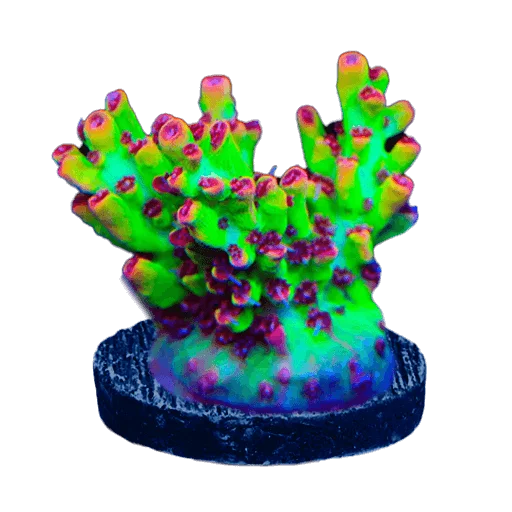
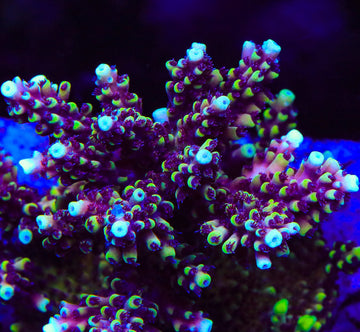
RR Rainbow Loom Acropora Coral
Overview
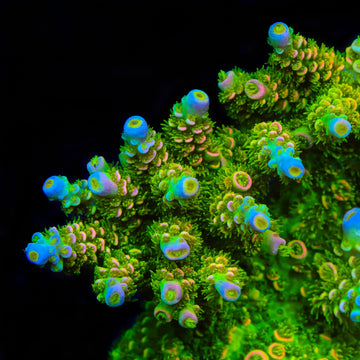
RR Rainbow Loom Acropora Coral displays multicolored branch tips with dense, short radial corallites. Acropora tenuis is a small-polyp stony branching coral that prefers strong light and brisk, turbulent flow. It is primarily photosynthetic through symbiotic algae, but occasional feeding of fine planktonic foods can support growth and help maintain color. Place high on stable rockwork with ample space from other corals, as it grows outward and can sting neighbors.
Quick Facts
Care
Difficult
Lighting
High
Flow
High, turbulent
Placement
High
Temperament
Semi-aggressive (2–4 inches spacing)
Recommended Parameters
Temp
76–80°F
pH
8.1–8.4
Salinity
1.025–1.026
Calcium
420–460 ppm
AlkAlkalinity
7.5–8.5 dKH
Magnesium
1280–1350 ppm
Feeding
photosynthetic (primary), microplankton, rotifers, copepod nauplii, coral-specific powdered foods, amino acid supplements
Care & Placement
FAQ
Frequently Asked Questions
About the RR Rainbow Loom Acropora Coral
-
Why does my RR Rainbow Loom (Acropora tenuis) shift from rainbow tips to greener or browner tones over time?
Color swings often track nutrient balance and spectrum. Aim for stable alk (8.0–8.6 dKH), NO3 around 5–15 ppm, PO4 0.03–0.08 ppm. Provide high, turbulent flow and PAR ~250–350 with a balanced spectrum—strong blue/violet plus some white. Excess nutrients, prolonged heavy blues without whites, or micro-shading at the base commonly mute pinks and yellows. -
My colony encrusts well but vertical branches stall. How can I encourage upward growth?
Ensure sustained high flow from multiple angles to prevent boundary-layer buildup, keep alk and Ca steady, and avoid frequent fragging of the leading edge. Slightly raising PAR (within range) and trimming nearby shading corals often triggers branching. Maintain trace elements—potassium ~390–420 ppm and manganese/iron at natural seawater levels—via regular water changes or ICP-guided dosing. -
How can I spot and address pests specific to tenuis, like AEFW or red bugs?
AEFW leave irregular bite marks and pale patches on lower surfaces; look for tan, oval worms or clusters of eggs on shaded undersides. Red bugs appear as tiny yellow/orange specks on polyps, reducing extension. Use a separate dip regimen (e.g., Bayer, iodine, or commercial dips) for new frags, inspect under white light, and consider in-tank treatment only after quarantine attempts fail. -
Why is the base receding while tips look great?
This often stems from micro-shading and low flow at the base. Reposition powerheads for cross-flow, increase spacing from neighboring corals, and raise the colony slightly off the rock to allow wash-through. Check for low-level pests, and verify phosphate isn’t bottoming out. A modest increase in whites and careful pruning around the base usually halts recession.