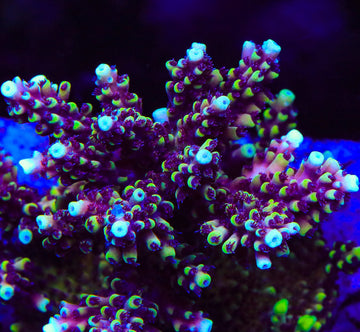
RMF Acid Trip Millepora Acropora Coral

RMF Acid Trip Millepora Acropora Coral

Acropora SPS

Overview

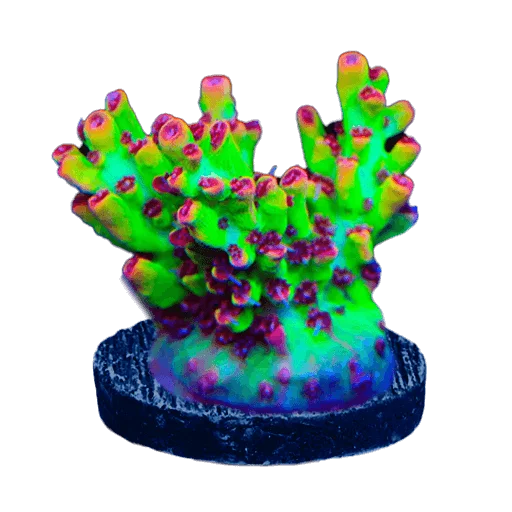
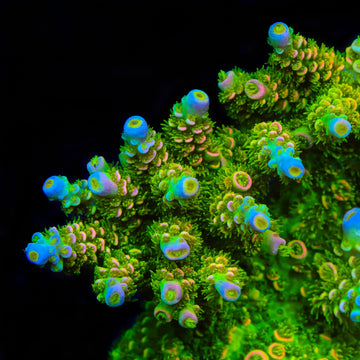
RMF Acid Trip Millepora Coral displays tightly spaced branching with small polyps that extend during the day. Acropora millepora is a small-polyp stony branching coral that prefers high light and strong, turbulent water flow. It relies mainly on symbiotic algae but can benefit from occasional small suspended foods to support growth and maintain color. Place high on stable rockwork with space to grow, keep distance from stinging or fast-growing neighbors, and avoid rapid swings in temperature, alkalinity, or nutrients.

Quick Facts

Care Difficult
Lighting High
Flow High
Placement High
Temperament Semi-aggressive (3–6 inches spacing)

Recommended Parameters

Temp 76–80°F
pH 8.1–8.4
Salinity 1.025–1.026
Calcium 420–450 ppm
AlkAlkalinity 7.5–9.0 dKH
Magnesium 1280–1350 ppm
Feeding photosynthetic (primary), microplankton, zooplankton, rotifers, copepod nauplii, coral-specific powdered foods, amino acid supplements

Care & Placement

RMF Acid Trip Millepora Coral (Acropora millepora) thrives in clean, stable, high-energy systems. Aim for strong, even light at 250–350 PAR and vigorous, random flow to keep polyps extended and prevent detritus from settling. Place frags high to mid‑high on stable rock with room to grow; avoid shadows and direct pump blast. Maintain temperature 75–79°F (24–26°C), salinity 1.025–1.026, pH 8.0–8.4, alkalinity 8–9 dKH, calcium 420–450 ppm, magnesium 1300–1400 ppm, nitrate 2–10 ppm, phosphate 0.02–0.07 ppm. Stability beats chasing targets; dose to keep levels steady and test 2–3 times weekly until consistent. Provide nutrition via photosynthesis plus 1–3 small feedings per week of fine particulate foods or amino acids; keep nutrients measurable to avoid pale tissue.Acclimate by dipping and quarantining to block pests (AEFW, red bugs). Light acclimate over 1–2 weeks by starting lower or reducing intensity, then ramping up. Space at least 3–4 inches from other corals; Acropora can sting on contact and are sensitive to neighbors’ chemicals. Signs of stress: bleaching or pale tips (too much light or too‑low nutrients), browning (low light/high nutrients), rapid tissue loss (alk swings or pests), burnt tips (high alk with low nutrients). Increase flow if detritus collects; adjust light height or intensity to tighten coloration; correct parameters slowly. Frag only with stable parameters and healed bases. Regular maintenance—clean pumps, strong skimming, and consistent water changes—supports growth and color.

FAQ

Frequently Asked Questions

About the RMF Acid Trip Millepora Acropora Coral

  • My RMF Acid Trip Millepora is browning or fading. What tuning keeps the neon pop?
    Aim for 250–350 PAR with strong 420–470 nm blues and moderate whites. Keep alk stable (8–9 dKH), calcium 420–460 ppm, and avoid near-zero nutrients (NO3 2–10 ppm, PO4 0.03–0.10 ppm). Rapid shifts, excess UV, or ultra-clean water wash out pigments. Gentle amino dosing and iron/iodide balance can help, but prioritize stability and spectrum.
  • How can I influence its growth form beyond basic placement?
    This millepora encrusts, then throws dense, bushy branches. Mount frags horizontally to encourage plating/bushy growth; mount vertically for taller branching. Provide strong, alternating crossflow to keep polyp tips thick and reduce tip burn. Avoid shading the base—use side lighting or trim neighbors to prevent basal recession as the canopy thickens.
  • Is “millepora” the same as fire coral? I’m worried about stings and care differences.
    No. This is Acropora millepora (an SPS coral), not Millepora (hydrozoan fire coral). Care aligns with Acropora: strong light, high, turbulent flow, stable chemistry. It won’t sting you like fire coral. Expect fuzzy polyp extension under good flow; manage pests and stability like other Acropora, not as a hydrozoan.
  • I’m seeing slow tissue loss at the base. What’s the likely cause and fix?
    Common triggers are shadowing, detritus accumulation, and mild nutrient starvation. Increase crossflow to the base, improve side illumination, and nudge nutrients out of “too clean.” Siphon debris, and consider trimming branches that shade the foot. If recession progresses, cut above the necrotic margin and remount healthy tips on fresh, clean plugs.