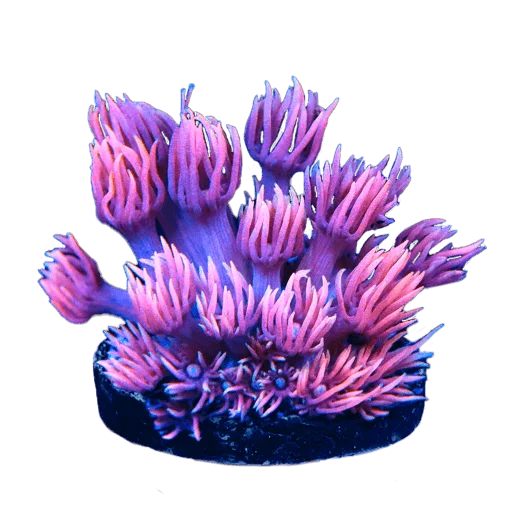
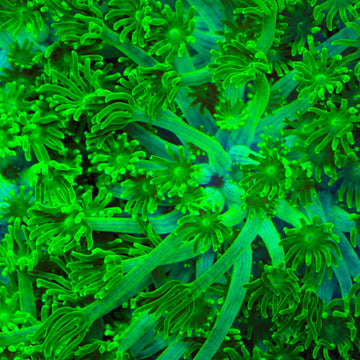
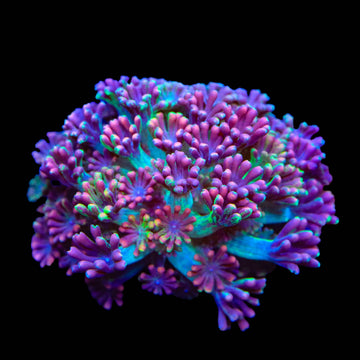
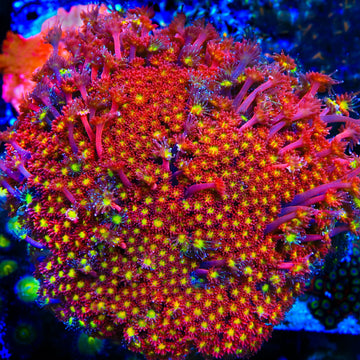
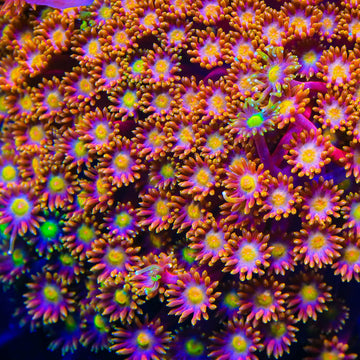
RC Mamba Goniopora Coral

RCA Mamba Goniopora Coral

Goniopora LPS

Overview

Flowerpot Coral shows long, waving polyps with daisy-like tips from a rounded skeletal base. Goniopora stokesi is a stony coral with free-living, dome-shaped colonies that prefers moderate light and gentle to moderate, indirect flow. It is photosynthetic with symbiotic algae, and small particulate foods can support growth and polyp extension. Place on sand or a stable area with room to expand, and keep distance from aggressive corals to prevent stings.

Quick Facts

Care Difficult
Lighting Low–Moderate
Flow Low–Moderate
Placement Low
Temperament Semi-aggressive (long reach; allow 6–8 inches spacing)

Recommended Parameters

Temp 76–80°F
pH 8.1–8.4
Salinity 1.025–1.026
Calcium 400–450 ppm
AlkAlkalinity 8–9 dKH
Magnesium 1300–1400 ppm
Feeding photosynthetic, phytoplankton, microplankton, zooplankton, rotifers, cyclops, copepods, baby brine shrimp, finely minced mysis, oyster eggs, powdered coral foods

Care & Placement

Flowerpot Coral (Goniopora stokesi) does best in a stable, mature system (6+ months). Provide moderate light at 80–150 PAR with indirect exposure; too much light can cause bleaching, too little leads to poor extension. Use gentle, random flow that keeps polyps swaying and detritus off the base without blasting the tissue. Feed 2–4 times weekly with fine foods (phytoplankton, rotifers, reef powders, enriched baby brine); light target feeding with pumps briefly off improves uptake. Maintain temperature 24–26°C/75–79°F, salinity 1.025–1.026, pH 8.1–8.4, alkalinity 8.0–9.5 dKH, calcium 420–460 ppm, magnesium 1300–1400 ppm, nitrate 5–15 ppm, phosphate 0.03–0.10 ppm. This species is sensitive to rapid swings; test weekly and dose small, consistent amounts. Low iron and manganese can limit growth; consider trace supplementation after testing.Place on the sandbed or low–mid rockwork with the base stable and free of detritus. Allow 3–4 inches (8–10 cm) spacing; polyps can sting nearby corals, and aggressive neighbors (Galaxea, Euphyllia) can injure it. Avoid nipping fish (many angelfish, butterflies). Acclimate with a 30–45 minute drip, dip for pests, and reduce light for the first week (use screen or shorter photoperiod). Common issues: tissue recession from starvation or dirt buildup—improve flow and feeding, siphon around the base; sudden paling—reduce light and check nutrients; brown jelly—frag away affected areas and use an iodine-based dip. Handle minimally and avoid exposing the fleshy base to sharp edges.

FAQ

Frequently Asked Questions

About the RCA Mamba Goniopora Coral

  • Why does my Flowerpot Coral retract for days after looking great, then recover suddenly?
    Goniopora stokesi can cycle polyp extension in response to subtle shifts in trace metals and flow. Check for alkalinity swings, low manganese/iron, or vermetid snails irritating tissue. Gentle, varied flow (not blasting tips) and small, frequent feedings of fine zooplankton usually restore extension. Avoid sudden spectrum/photoperiod changes; ramp adjustments over a week.
  • Is Goniopora stokesi better on sand or rock, and why?
    This species is often free-living on soft substrates in nature. Placing it on sand reduces abrasion from rock edges and allows polyps to sway evenly. Use a flat disc or shallow cup to prevent sinking and detritus trapping. If mounting on rock, ensure a smooth, wide base with epoxy to prevent tissue cuts at the skeleton margin.
  • What uncommon feeding or dosing tweaks help long-term success?
    Beyond standard microplankton, dose trace elements that support photosynthesis and polyp extension—especially manganese and iron—at tested, modest levels. Combine with occasional amino acids and very fine particulate foods. Feed small amounts 3–5 times weekly; overfeeding fuels brown jelly risk. Watch for improved extension and color saturation within 2–4 weeks, adjusting based on ICP and coral response.
  • My coral released individual polyps that drifted away—what happened?
    That’s polyp bailout, a stress response that can also seed new colonies. Common triggers include rapid temperature or alkalinity shifts, harsh flow, or bacterial insult. Gently collect polyps with a pipette and place in a shallow cup of sand under low flow and moderate light. Stabilize parameters and consider a broad-spectrum coral dip to reduce infection risk.