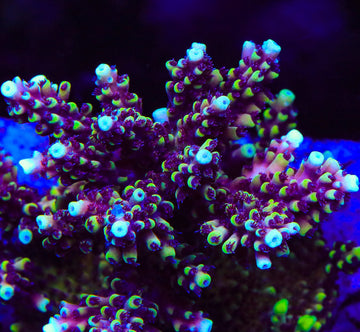
ORA Frogskin Acropora Coral
Overview
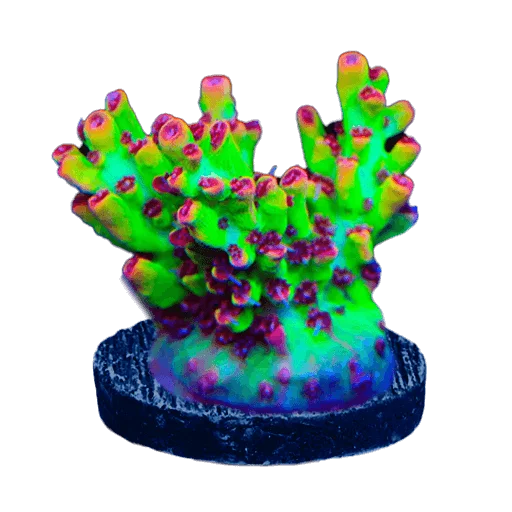
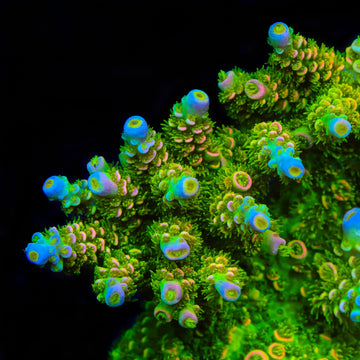
ORA Frogskin Acropora Coral shows a knobby, textured branching form with small polyps and contrasting tips. Classified as Acropora sp., it is a small-polyp stony branching coral that prefers strong, turbulent flow and moderate to high light. It relies on symbiotic algae for most nutrition but can benefit from occasional fine plankton or amino-rich feeds, supporting faster growth and stable coloration. Place high on rockwork with good flow, allow space from stinging neighbors, and acclimate to brighter light gradually.
Quick Facts
Care
Difficult
Lighting
High
Flow
High
Placement
High
Temperament
Semi-aggressive (3–6 inches spacing)
Recommended Parameters
Temp
77–80°F
pH
8.1–8.4
Salinity
1.025–1.026
Calcium
420–450 ppm
AlkAlkalinity
8–9 dKH
Magnesium
1280–1350 ppm
Feeding
photosynthetic (primary), microplankton, zooplankton, phytoplankton, rotifers, copepod nauplii, oyster eggs, powdered coral foods, amino acid supplements
Care & Placement
FAQ
Frequently Asked Questions
About the ORA Frogskin Acropora Coral
-
How does the “frogskin” texture affect placement and flow for ORA Frogskin Acropora?
Its smoother coenosteum and knobby branchlets trap less detritus than spiky Acros, but it still needs strong, randomized flow to keep tissue clean. It typically encrusts wide before sending up nubs, so plan space for lateral spread. Aim PAR 250–400 with alternating flow to prevent base shadowing; rotate or prune to avoid self-shade that can lead to slow tissue loss at the base. -
Why does mine shift from lime green to tan or develop purple tips only under blues?
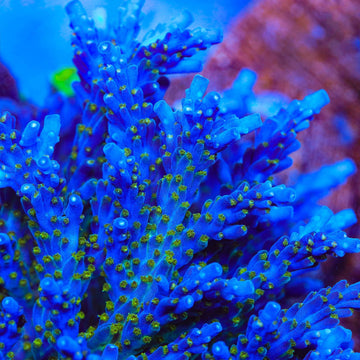
Color swings reflect spectrum and nutrient balance. High blue with stable NO3 2–10 ppm and PO4 0.03–0.08 supports green body with violet/blue tips. Warmer whites or elevated nutrients can mute green; ultra-low nutrients can wash out color. To reverse browning: stabilize alkalinity (8–9 dKH), reduce organics, increase PAR gradually, and maintain moderate nutrients rather than driving them to zero. -
What causes “burnt tips” or base STN on this coral, and how do I correct it?
Burnt/bald tips often follow alkalinity spikes or rapid nutrient drops under high light; base STN is frequently from self-shadowing and low flow around the encrusted skirt. Fix by stabilizing alk changes to <0.2 dKH/day, slightly raising nutrients if stripped, adding more random flow across the base, and pruning or repositioning to open light channels. Avoid major light increases without matching nutrient/alk stability. -
Are pests harder to spot on Frogskin, and what’s the best detection routine?
Yes—its smoother tissue can hide early AEFW bites and red bugs. Quarantine all Acropora. Inspect at night with a flashlight for uneven polyp extension and pale bite arcs. Use weekly turkey-baster blasts to dislodge flatworms for visual confirmation. Dip frags (e.g., Bayer/iodine per label) on intake and after any new addition; consider a 4–6 week observation with periodic dips before moving to the display.