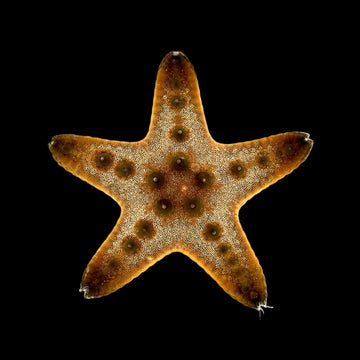
Sand Sifting Starfish PreBF

Overview:
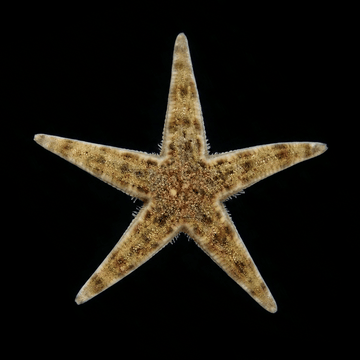
Sand Sifting Starfish (commonly Astropecten spp., often sold as Astropecten polyacanthus) are sand-bed predators that spend most of their time buried and moving under the substrate. Their success depends far more on a mature, biologically active sand bed than on “general reef” conditions. Provide a well-established aquarium (ideally 6+ months, longer is better) with a fine to medium aragonite sand bed at least 5–8 cm (2–3 in) deep; deeper is helpful in larger systems. They do poorly in bare-bottom tanks or shallow, sterile sand. Keep salinity stable (1.025–1.026), temperature steady (24–26 °C / 75–79 °F), pH 8.1–8.4, and avoid measurable ammonia/nitrite; nitrate should be low and stable. Moderate flow is fine, but ensure calm areas so the star can bury without being constantly uncovered. Sudden salinity swings, copper medications, and rapid parameter changes are common causes of decline.

Compatibility:
Best with peaceful fish and invertebrates that won’t pick at tube feet or flip the star. Avoid large wrasses, puffers, triggers, some crabs, and any predatory or “curious” species that nip echinoderms. It is generally safe with corals because it stays in the sand, but it may eat or disturb beneficial sand-bed fauna (including small snails, micro brittle stars, and worms). It can compete with other sand-dependent animals (sand-sifting gobies, dragonets reliant on pods) by reducing available microfauna. Keep one per tank unless the system is large with a very robust sand bed.

Health and Quarantine:
Echinoderms are highly sensitive to handling and osmotic shock. Acclimate slowly (drip acclimation 1–2 hours) and never expose to air if possible; move submerged in a container. Quarantine is tricky because sterile QT tanks lack natural food; if quarantining, use a dedicated, cycled tank with a sand tray from an established system and provide frequent meaty feedings. Do not use copper or harsh medications. Watch for arm tip erosion, lesions, rapid tissue loss, persistent floating, or inability to right itself; these often relate to poor water quality, salinity swings, starvation, or injury. Prevent issues with stable parameters, mature sand, gentle handling, and consistent supplemental feeding.

Despite the name, they are not “clean-up crew” algae eaters. Sand Sifting Starfish primarily consume small benthic animals (worms, tiny crustaceans, mollusks) and will steadily deplete sand-bed microfauna in smaller or newer tanks, leading to slow starvation. In most home aquariums, plan to supplement. Target-feed 2–4 times per week (more in smaller systems) by placing food on the sand near the star or gently under the edge of its body: thawed mysis, chopped shrimp, clam, scallop, squid, or sinking carnivore pellets. If the star stays buried, feeding after lights out can help. A healthy individual should remain responsive, move regularly, and maintain full, firm arm tissue; thinning arms and lethargy are red flags.

Microfauna Detritus Leftover Fish Food
Sand Sifting Starfish are active burrowers that spend most of their time beneath the sand surface, moving continuously as they search for food. Rather than remaining visible on rockwork, they travel just below the substrate, ingesting sand and extracting small worms, crustaceans, and other microfauna. This constant movement gives the appearance of a clean sandbed, but over time it significantly reduces beneficial sand-dwelling organisms. They are most active during the day, occasionally surfacing briefly before diving back into the substrate. As the available food source declines, their movement often slows, which can be an early sign of starvation in smaller or younger systems.

FAQ

Frequently Asked Questions

About the Sand Sifting Starfish

  • Do Sand Sifting Starfish really clean the sandbed?
    Yes, but with limitations. Sand Sifting Starfish continuously turn over the top layers of sand, which can help prevent surface buildup and compaction. At the same time, they consume beneficial microfauna living in the sandbed. In smaller or less mature tanks, this can reduce sandbed biodiversity rather than improve it.
  • Why do Sand Sifting Starfish often starve in aquariums?
    They rely heavily on naturally occurring organisms within the sandbed for food. In tanks with limited sand surface area or low biological diversity, these food sources are quickly depleted. This leads to slow starvation over time, even when water parameters appear stable.
  • What tank size is best for a Sand Sifting Starfish?
    Larger tanks with wide, mature sandbeds are essential. Systems with ample sand surface area can support ongoing feeding beneath the substrate. Smaller tanks rarely produce enough natural food to sustain them long-term.
  • Are Sand Sifting Starfish reef safe with corals and fish?
    Yes. They do not harm corals, fish, or common reef invertebrates. Their feeding behavior is limited to organisms and organic material within the sandbed, making them fully reef safe from a compatibility standpoint.
  • Can Sand Sifting Starfish be target fed?
    Direct feeding is generally unreliable. While they may accept occasional meaty foods placed on the sand, this does not replace their constant grazing on sandbed organisms. Long-term success depends on sandbed maturity and tank size rather than supplemental feeding.