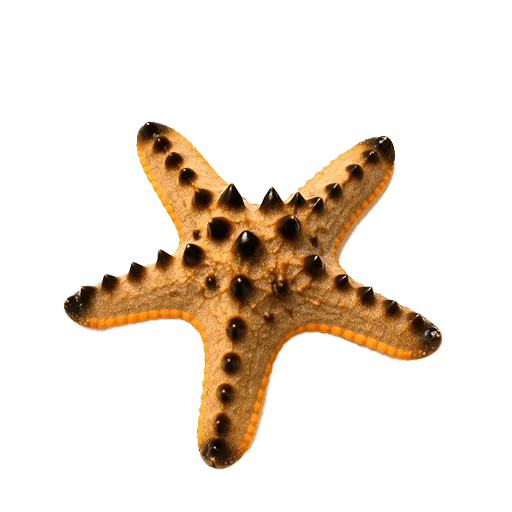
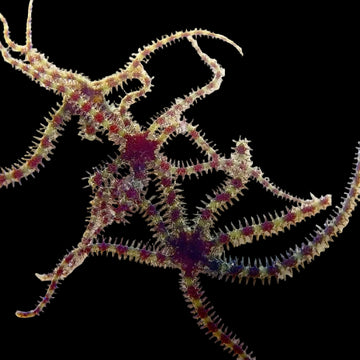
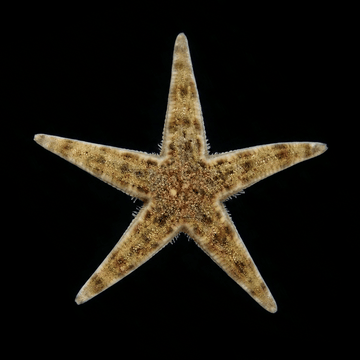
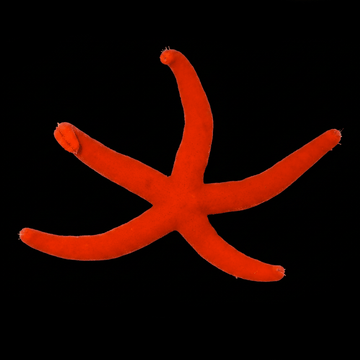
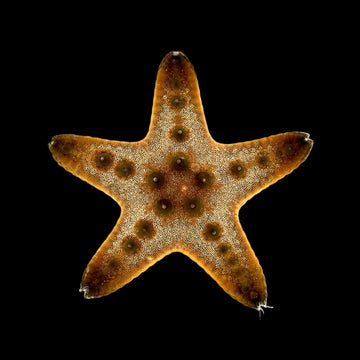
Red Biscuit Starfish – Asteroidea sp.

Overview:
The Red Biscuit Starfish is a small, colorful sea star best kept in a mature, stable marine aquarium with abundant live rock and established biofilm. It does poorly in new tanks because it relies on natural microfoods and consistent water chemistry. Provide a reef-style environment with strong biological filtration, low nutrients, and plenty of surfaces to graze. Keep temperature steady (about 24–26°C/75–79°F), salinity stable (around 1.025–1.026), and pH in the normal reef range (about 8.1–8.4). Sudden shifts in salinity, temperature, or alkalinity are common causes of stress. Moderate flow is ideal: enough to keep water oxygenated, but not so strong that the starfish struggles to hold position. Use a sand bed and rockwork with shaded areas; avoid sharp rock edges that can damage tube feet. Never expose the starfish to air during transfers if possible; move it submerged to reduce the risk of internal gas issues and stress.

Compatibility:
Best kept with peaceful reef fish and non-predatory invertebrates. Avoid harlequin shrimp, many large wrasses, puffers, triggers, some hawkfish, and any crab that actively hunts (including many “reef” crabs) as they may pick at tube feet or flip the starfish. Large hermits can harass it for food. Some cleaner shrimp may steal target-fed items, so feed strategically. Most corals are safe, but the starfish can wander over fleshy LPS and cause them to retract; provide space and stable rockwork so it cannot topple frags.

Health and Quarantine:
Common problems include slow wasting from starvation, bacterial infections after shipping stress, and injuries from rough handling. Warning signs: limp body, persistent curling, failure to cling, pale patches, lesions, or “melting” tissue. Quarantine is recommended in a cycled, reef-parameter holding tank (not a sterile bare QT) for 2–4 weeks to monitor for damage and recovery. Acclimate slowly (drip acclimation 60–120 minutes) and keep salinity changes minimal. Avoid copper and most standard fish medications; they are harmful to echinoderms. Strong aeration, pristine water, and stable parameters are the best preventive care.

Red Biscuit Starfish are primarily grazers and scavengers that benefit from a tank with natural growth (microalgae films, bacterial mats, and trapped detritus within rock pores). In cleaner systems they may slowly starve unless supplemented. Feed 2–3 times per week by placing small, meaty marine foods near the starfish: finely chopped clam, mussel, shrimp, squid, or quality sinking pellets/gel foods made for carnivorous invertebrates. Target feeding with tongs or a feeding dome helps prevent fish and shrimp from stealing food. Offer small portions and confirm the starfish begins to evert its stomach onto the food; remove leftovers to protect water quality. Iodine is not a “dose to fix” item—focus on regular water changes with a good salt mix rather than routine iodine additions.

Microfauna Biofilm Sponges
Red Biscuit Starfish are deliberate, surface-oriented grazers that spend most of their time slowly moving across live rock, reef structures, and hard surfaces. They are typically active during the day and are more visible than many other reef-safe starfish, often remaining out in the open for long periods. Rather than scavenging leftover food, they rely on naturally occurring biofilms, bacterial mats, and encrusting organisms that develop in mature reef systems. Their movement is steady but unhurried, and they may pause frequently while feeding. Red Biscuit Starfish are sensitive to environmental stress, and behavioral changes such as prolonged inactivity or withdrawal into shaded areas can indicate declining conditions. In stable aquariums, their calm, predictable behavior makes them an attractive display species, but they require patience and long-term system maturity to thrive.

FAQ

Frequently Asked Questions

About the Red Biscuit Starfish

  • Are Red Biscuit Starfish reef safe?
    No. Red Biscuit Starfish are not reef safe and should not be kept in coral reef aquariums. They naturally feed on sponges, biofilms, and other encrusting organisms that grow on live rock, and they may also damage corals over time. Even if corals are not immediately affected, long-term compatibility is unreliable.
  • What do Red Biscuit Starfish eat in aquariums?
    Red Biscuit Starfish primarily graze on naturally occurring food sources such as sponges, microbial films, and encrusting growth on live rock. These food sources are difficult to replace with prepared foods, which is why many specimens slowly starve in captivity despite appearing healthy initially.
  • Can Red Biscuit Starfish be target fed?
    Target feeding is generally ineffective. While they may occasionally accept food placed directly beneath them, this does not replicate their constant grazing behavior. Long-term survival depends far more on access to mature live rock with established biological growth than on supplemental feeding.
  • Why do Red Biscuit Starfish often decline after several months?
    In many aquariums, available grazing material becomes depleted over time. Once sponge and biofilm growth is reduced, the starfish may slowly starve even though water parameters remain stable. This delayed decline is common and often misinterpreted as a sudden health issue rather than nutritional depletion.
  • What type of aquarium is best for a Red Biscuit Starfish?
    Large, mature systems with extensive live rock are essential. Tanks must have enough surface area and biological diversity to continuously support grazing. Smaller or newer aquariums rarely provide adequate long-term nutrition, making these starfish a poor choice for most home systems.