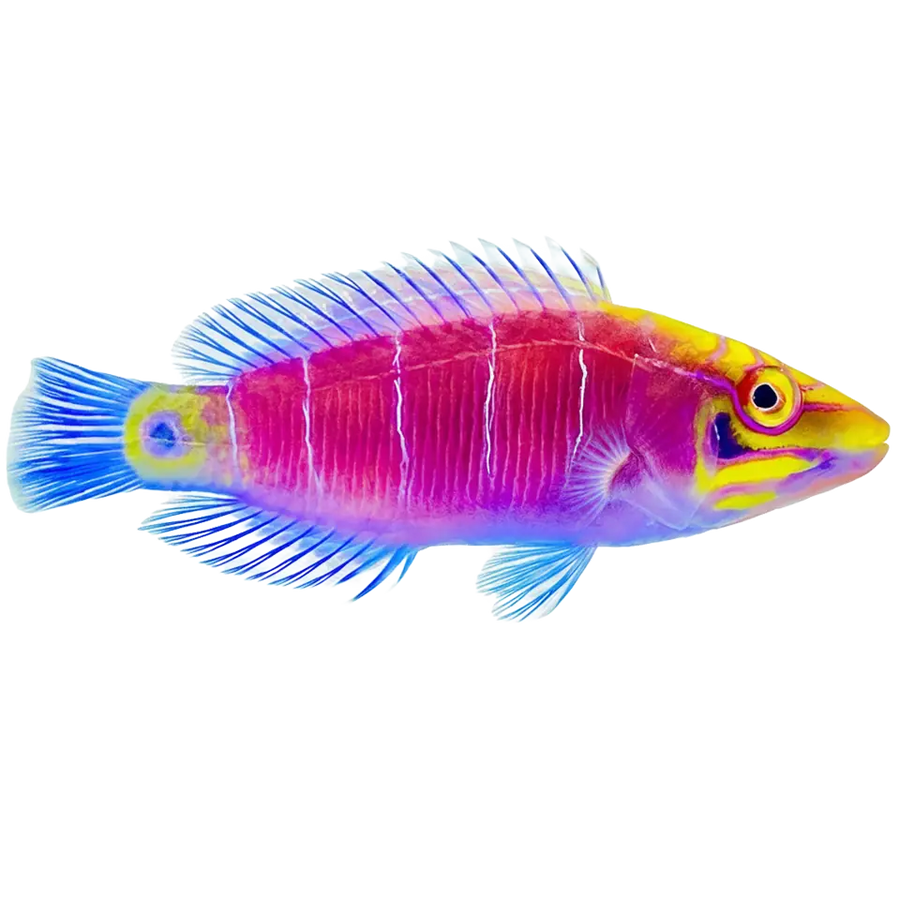
Rhomboid Fairy Wrasse

Overview:
The Rhomboid Fairy Wrasse, a vibrant and captivating marine species, thrives in well-maintained reef aquariums. They require a tank size of at least 55 gallons to accommodate their active swimming behavior. The ideal water conditions include a temperature range of 72-78°F, a pH level between 8.1-8.4, and a specific gravity of 1.020-1.025. These fish appreciate a habitat with ample live rock for hiding and exploring, as well as open swimming spaces. Moderate water flow and strong lighting mimic their natural reef environment, promoting their well-being.

Compatibility:
Rhomboid Fairy Wrasses are generally peaceful and can coexist with a variety of tankmates. They do well with other non-aggressive species, including other fairy wrasses, gobies, and clownfish. Avoid housing them with aggressive or territorial fish, as this can lead to stress and conflict. When introducing multiple wrasses, it is best to add them simultaneously to minimize territorial disputes. Ensure plenty of hiding spots and swimming space to accommodate their active nature and reduce stress.

Health and Quarantine:
Maintaining the health of Rhomboid Fairy Wrasses involves regular monitoring and preventive care. Quarantine new arrivals for at least 2-4 weeks to prevent the introduction of diseases into the main tank. Common health issues include marine ich and bacterial infections, which can be mitigated with proper quarantine and maintaining optimal water conditions. Regular water testing and changes help prevent stress-related illnesses. Observe your wrasse for signs of stress or illness, such as loss of appetite, unusual swimming patterns, or visible spots. Promptly address any health concerns with appropriate treatments to ensure their long-term well-being.

Pellets Mysis Brine Shrimp
The Rhomboid Fairy Wrasse is a peaceful, active swimmer, often seen darting around the mid to upper water column. It thrives in groups, displaying vibrant colors that intensify with social interactions. Non-territorial, it coexists well with other peaceful species, making it ideal for community tanks. It requires a tank with ample swimming space and hiding spots. This wrasse is reef-safe, posing no threat to corals or invertebrates, and feeds on a carnivorous diet, preferring mysis and brine shrimp.

FAQ

Frequently Asked Questions

About the Rhomboid Fairy Wrasse

  • Can a rhomboid fairy wrasse be kept with other Cirrhilabrus wrasses, and if so, what are the best pairing strategies to avoid aggression and fin damage?
    Rhomboid fairy wrasses can coexist with other Cirrhilabrus wrasses if you manage hierarchy and introductions carefully. They do best in harems (one male with two to four females) or as a single male with non-similar looking wrasses. Avoid mixing them with other yellow-bodied, similar-shaped species like golden rhomboid complex types or certain pintail or lineatus males, as visual similarity can trigger persistent chasing. Introduce multiple fairy wrasses at the same time, ideally via an acclimation box so they can see but not touch each other for several days. This allows the rhomboid male to display and establish rank without excessive nipping. Tanks under 90 gallons are usually too small for multiple adult males. Also avoid very boisterous wrasses (e.g., large Thalassoma) that may outcompete and stress rhomboids, causing them to hide constantly and lose color.
  • Why does my male rhomboid fairy wrasse lose its vivid yellow and purple coloration after a few weeks in my tank, and how can I maintain its full adult colors long term?
    Color fade in rhomboid fairy wrasses is often due to a combination of low-quality diet, insufficient social stimulus, and subdued lighting. To maintain bright yellow body and purple fins, provide a varied diet rich in carotenoids and marine proteins: mysis shrimp, enriched brine shrimp, finely chopped krill, high-quality marine pellets, and frozen blends with added astaxanthin. Feed small portions 2–3 times per day. Socially, males show their best colors in the presence of females or perceived rivals; a lone male may appear duller over time. A harem setup with one male and a few females encourages regular display behavior and peak coloration. Lighting should be strong enough in the blue and violet spectrum (typical reef LED ranges) but avoid overly yellow lighting that washes out color. Stable, low-stress conditions (no bullying tankmates and consistent parameters) also help them keep their intense hues.
  • My rhomboid fairy wrasse keeps diving into the rockwork and sometimes disappears for an entire day. Is this normal, and how can I make it feel secure enough to be visible more often?
    This behavior is normal, especially during the first weeks after introduction. Rhomboid fairy wrasses sleep and hide in crevices, as they do not create mucous cocoons like some other wrasse genera. They wedge themselves into tight spaces when spooked or during lights-off. To increase visible time, ensure there are plenty of branching rock structures and caves so the fish can choose secure spots rather than feeling exposed in open water. Use a gradual photoperiod ramp-up (dimming feature on LEDs or a room light on before the main lights) to avoid startling them at wake-up and lights-out. Avoid sudden movements near the glass and keep aggressive fish to a minimum. Over time, as the wrasse learns the tank is safe and recognizes feeding times, it will spend more of the day swimming in the mid-water column and less time buried in the rockwork.
  • What is the minimum practical tank size and aquascape layout for a single male rhomboid fairy wrasse to show natural swimming and display behavior?
    For a single adult male rhomboid fairy wrasse, a 75-gallon tank (4 feet in length) is the practical minimum if you want to see its full cruising and display behavior, though larger is better. They are very active mid-water swimmers that use the entire length of the tank. The aquascape should be open in the central swimming area with rock structures arranged as islands or a horseshoe, leaving at least 60–70% of the front viewing panel unobstructed. Include multiple caves, overhangs, and branching rock with vertical relief; rhomboids like to move up and down the rock faces as they patrol. Avoid overly dense rock walls that block flow and reduce swimming lanes. Strong, varied flow (wavemakers or gyres) will encourage natural darting and gliding patterns, and the fish will often display in high-flow zones near the top third of the tank.
  • Are rhomboid fairy wrasses particularly sensitive to shipping and quarantine medications, and how should I structure a safe quarantine protocol for this species?
    Rhomboid fairy wrasses are more delicate than many common wrasses and can react poorly to rough shipping and aggressive medication protocols. In quarantine, prioritize gentle acclimation: match temperature, then drip acclimate over 30–60 minutes. Provide PVC shelters and dim lighting for the first day. Avoid immediate, high-dose copper; instead, use a measured, gradual increase if copper treatment is necessary, targeting the lower end of the therapeutic range recommended for your specific product, and monitor closely for loss of appetite or erratic swimming. They generally tolerate praziquantel well, but space out treatments and keep oxygenation high. Many keepers run an observational quarantine for 2–4 weeks with frequent visual checks, active feeding assessment, and only medicate proactively for common parasites (like flukes and internal worms) rather than blanket-treating with multiple drugs at once. Good aeration, stable salinity, and a secure lid in quarantine are crucial, as stressed rhomboids are strong jumpers.