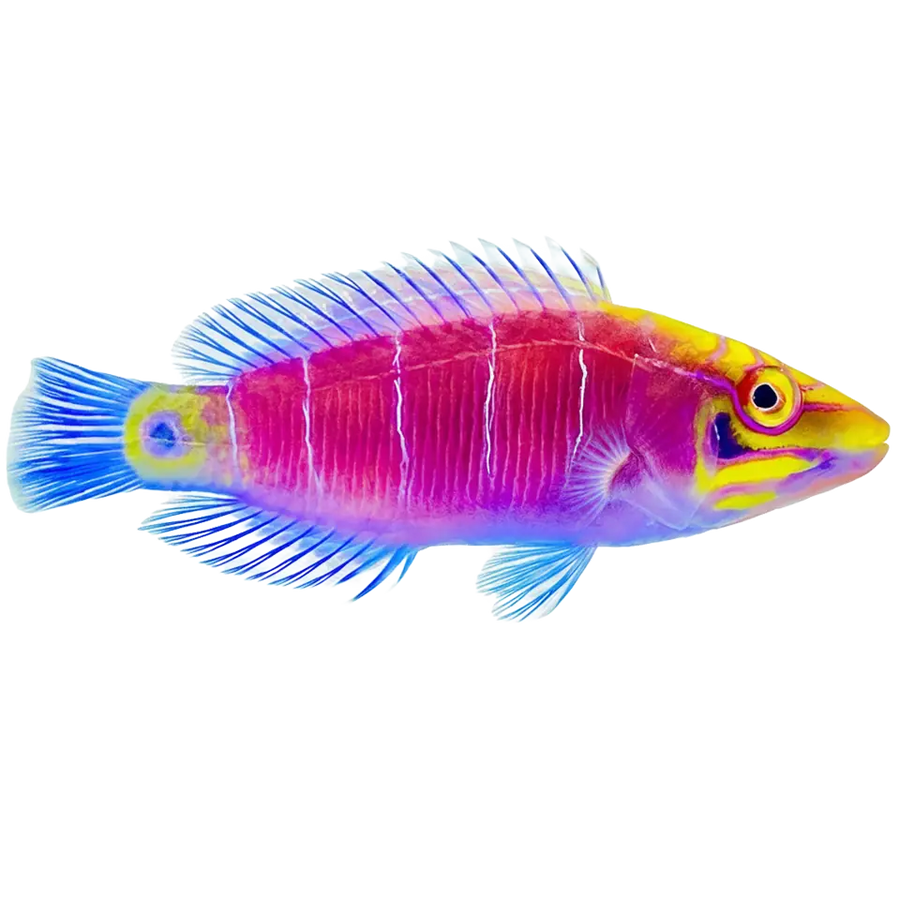
Red Eye Solor Fairy Wrasse

Overview:
The Red Eye Solor Fairy Wrasse, known for its vibrant colors and active nature, thrives in a well-maintained marine aquarium. This species requires a tank of at least 75 gallons, with plenty of live rock for hiding and foraging. A sandy substrate is ideal, as it mimics their natural habitat. Ensure stable water parameters: temperature between 72-78°F, pH 8.1-8.4, and specific gravity 1.020-1.025. Moderate water flow and strong lighting are recommended to support their active swimming and natural behaviors.

Compatibility:
This species is generally peaceful and can coexist with a variety of tankmates. Ideal companions include other peaceful wrasses, gobies, and tangs. Avoid housing them with aggressive or overly territorial species, as this can lead to stress and conflict. Red Eye Solor Fairy Wrasses may exhibit territorial behavior towards conspecifics, so it is best to keep them singly unless you have a large tank with ample hiding spaces. Introduce them to the tank after more aggressive species to reduce stress.

Health and Quarantine:
Maintaining optimal water quality is crucial for the health of the Red Eye Solor Fairy Wrasse. Regular water changes and monitoring of parameters help prevent common issues such as ich and marine velvet. Quarantine new arrivals for at least two weeks to observe for signs of disease and to acclimate them to captive conditions. Provide a stress-free environment by ensuring plenty of hiding spots and minimizing sudden changes in lighting or water conditions. Regularly inspect for signs of illness such as changes in color, appetite, or behavior, and address any issues promptly with appropriate treatments.

Pellets Mysis Finely Chopped Seafood
Cirrhilabrus solorensis is active, swimming throughout the tank's middle and upper levels. It is social, often forming small groups, and is non-aggressive, making it compatible with other peaceful fish. While not territorial, it may display dominance during feeding. It thrives in a community setting, particularly with other wrasses or similarly sized fish. Its peaceful nature and reef-safe status make it ideal for reef aquariums. Regular feeding of mysis shrimp and brine shrimp supports its carnivorous diet, ensuring vibrant health and coloration.

FAQ

Frequently Asked Questions

About the Red Eye Solor Fairy Wrasse

  • Can a Red Eye Solor Fairy Wrasse change color or pattern as it matures, and how can I tell if it’s developing proper adult coloration?
    Yes. Juveniles and females are usually duller with more translucent fins and less intense red/orange in the body and eye area. As males mature, the red “eye shadow” intensifies, the body gains stronger orange to reddish tones with iridescent blue or green highlights on the flanks and dorsal fin, and the tail often shows more defined edging. Good diet (meaty frozen foods, quality pellets, and copepods), low stress, and stable water (78–80 °F, SG 1.024–1.026, low nutrients but not ultra-sterile) help it color up fully. Faded or patchy color usually means stress, poor diet, or bullying, not normal maturation.
  • How aggressive is a male Red Eye Solor Fairy Wrasse toward other fairy wrasses, and what combinations are usually safe in a mixed wrasse tank?
    This species is mid-level in assertiveness: more pushy than very peaceful Cirrhilabrus (like lubbocki) but typically less intense than some complex members such as rubriventralis types. Males usually do well with other fairy wrasses of clearly different body shape and pattern, especially from other complexes, if the tank is at least 4 feet long with plenty of rockwork. Avoid putting it with similar-looking Cirrhilabrus males with orange/red bodies and eye markings in smaller tanks to reduce hybrid aggression. Introduce the Red Eye Solor last when possible, use an acclimation box for several days, and watch for tail nipping and repeated chasing beyond brief displays at dawn and dusk.
  • My Red Eye Solor Fairy Wrasse “disappears” into the rock and I can’t find it for days. Is this normal, and how long can it safely go without being seen?
    It’s common for new or stressed individuals to wedge themselves deep into rock crevices and slime-coat their bodies to sleep or hide. A newly introduced wrasse may vanish for 2–5 days, occasionally up to a week, if very stressed. As long as the tank is covered (no jump), ammonia is zero, and no tankmates are harassing it, this can be normal. Watch indirectly: check for disturbed sand, slightly cloudy water near the hiding zone, or a quick flash of movement at feeding times. Avoid ripping apart the aquascape; that often prolongs hiding. If it’s been over a week with no sign, check around and behind the stand and lids for a jumper, then test water and inspect the tank at lights ramp-up and just before lights out when they’re more likely to emerge.
  • What specific lid and flow configuration is best to prevent a Red Eye Solor Fairy Wrasse from jumping while still keeping it active and comfortable?
    Use a tight-fitting mesh lid (1/4" clear netting maximum; 1/8" is even better) that covers every gap, including around plumbing, light brackets, and overflows. This species is a strong, horizontal swimmer that often bolts upward when startled, especially at dawn/dusk light changes or during feeding. Aim strong, variable flow across the middle and upper water column using wavemakers on alternating or random modes, but avoid laminar jets aimed straight at the surface edges that can push it into the lid. Provide open swim space in front and above the rockwork and avoid sudden room light changes or banging around the tank during lights off, which frequently trigger jumps.
  • How can I reliably get a newly imported Red Eye Solor Fairy Wrasse to eat in quarantine, and what are the first signs that it’s starting to settle in?
    Start with very small, frequent feedings of live or highly enticing foods such as live blackworms, live or fresh-dead baby brine, and frozen mysis enriched with vitamins. Turn off strong flow during feeding so food lingers in the water column. Use dimmer lighting in QT at first and add pieces of PVC and small rock for cover so it feels secure. Once it starts to orient mid-water instead of hugging the corners or bottom, follows your movements, and makes short dashes for moving food, it’s starting to settle. Gradually mix in high-quality marine pellets (small size) and finely chopped seafood. A settled Red Eye Solor will show more intense eye and body color, perform short display “flares” of the fins, and maintain a regular sleep/wake routine—diving into a hide at night and emerging predictably after the lights ramp up.