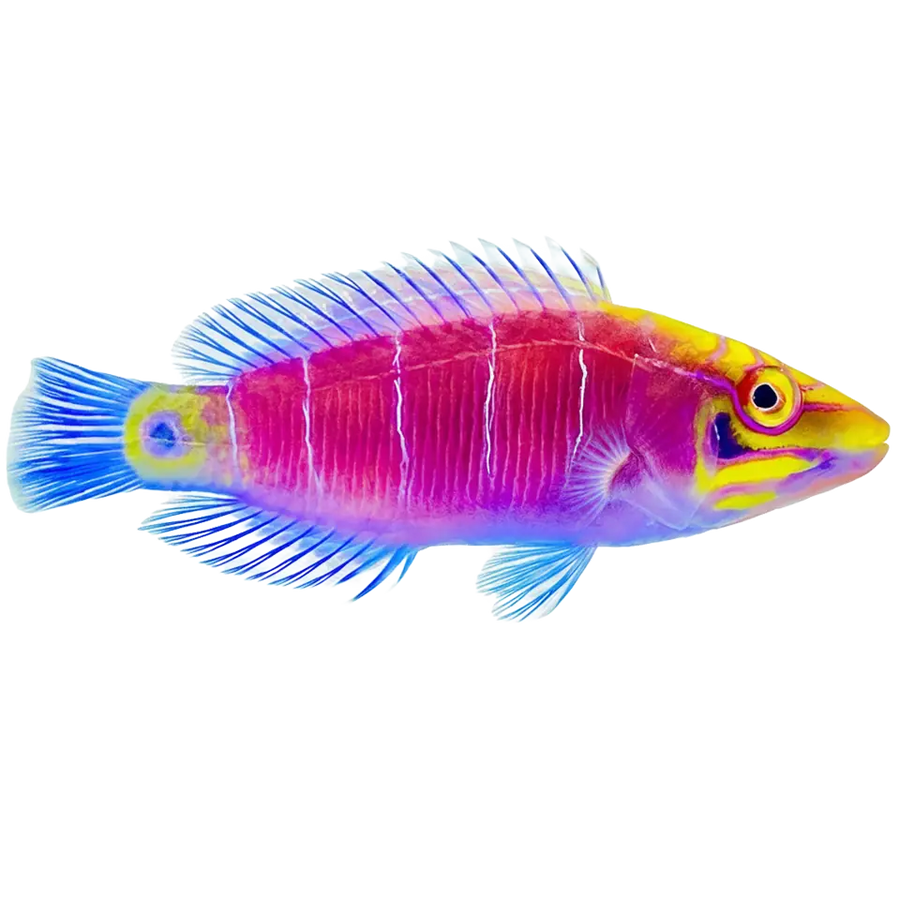
Melanurus Wrasse

Overview:
The Melanurus Wrasse, also known as the Hoeven's Wrasse, is a vibrant and active marine fish that thrives in well-maintained reef aquariums. This species requires a tank size of at least 50 gallons, with plenty of live rock for hiding and foraging. They prefer a sandy substrate to burrow in at night or when stressed. Water parameters should be stable, with temperatures between 72-78°F, pH levels of 8.1-8.4, and specific gravity of 1.020-1.025. A secure lid is essential, as they are known jumpers.

Compatibility:
Melanurus Wrasses are generally peaceful and can coexist with a variety of tankmates. They do well in community tanks with other peaceful or semi-aggressive fish. Avoid housing them with overly aggressive species or those that may outcompete them for food. They can coexist with other wrasses if introduced simultaneously and the tank is large enough to provide ample territory. Caution should be taken with invertebrates, as they may prey on smaller shrimp and crabs.

Health and Quarantine:
Maintaining optimal water quality and a stress-free environment is crucial for the health of Melanurus Wrasses. Regular monitoring of water parameters and prompt attention to any fluctuations can prevent common health issues. Quarantine new additions for at least two weeks to observe for signs of disease and to prevent the introduction of pathogens into the main tank. Watch for symptoms of marine ich or other parasitic infections, and treat promptly if detected. A varied diet and stable environment will support a strong immune system, reducing the likelihood of illness.

Pellets Mysis Finely Chopped Seafood
Melanurus Wrasse, Halichoeres melanurus, is a peaceful, active swimmer, often exploring the tank's mid to lower regions. It thrives in a 55-gallon tank, displaying vibrant colors. Social by nature, it generally coexists well with other peaceful species but may show aggression toward similar-looking wrasses. While considered reef safe with caution, it may nip at small invertebrates. Territorial disputes are rare, making it a suitable choice for community aquariums. Its carnivorous diet includes bristleworms and flatworms, aiding in natural pest control.

FAQ

Frequently Asked Questions

About the Melanurus Wrasse

  • Can a Melanurus Wrasse be kept with ornamental shrimp and crabs, or will it always hunt them?
    Melanurus Wrasses are active hunters of small crustaceans and are very likely to eat tiny ornamental shrimp (sexy shrimp, small cleaner shrimp, anemone shrimp), small hermits, and very small snails. Larger, established cleaner shrimp (Lysmata species) sometimes coexist, especially if added first, but there is always risk as the wrasse matures. They are generally safe with larger crabs (emerald crabs, big hermits) and snails of moderate size and up, but they will eat flatworms, small bristleworms, pods, and tiny hitchhiker crabs. If your priority is keeping small decorative shrimp, another wrasse species or a different fish might be a better choice.
  • Why does my Melanurus Wrasse disappear into the sand every evening, and how deep should the sand bed be for it to sleep safely?
    Melanurus Wrasses are sand-sleeping wrasses: they dive into the substrate at night and when stressed. This is completely normal behavior. To keep them comfortable and reduce stress injuries, provide at least 2–3 inches (5–7.5 cm) of soft, fine sand (sugar-fine or small grain aragonite), with a larger area ideally reaching 3–4 inches. Avoid sharp or very coarse substrates (crushed coral, large rubble), which can scratch or injure them as they dive. If the tank has only bare bottom or very shallow rough gravel, the fish may become stressed, hide more, or injure its mouth and scales.
  • My Melanurus Wrasse keeps hunting flatworms and pests—can it completely control a flatworm or vermetid snail infestation on its own?
    Melanurus Wrasses are excellent predators of many small pests: flatworms (especially planaria), small snails, some vermetid snail mucous feeders, and tiny crabs. They can dramatically reduce visible populations, particularly of flatworms, but rarely eliminate them entirely. Pests that live deep in rockwork, reproduce quickly, or are too large are often unaffected. Also, as the pest population declines, the wrasse will rely more on prepared foods and may stop seeking out the last few individuals. Think of this wrasse as a biological helper within a broader control strategy that can include manual removal, siphoning, nutrient control, and in severe cases, targeted treatments—never as a guaranteed single solution.
  • Why does the coloration of my Melanurus Wrasse look dull and washed out compared to photos online, and how can I improve its colors?
    Several factors affect this species’ coloration. Newly imported or recently moved individuals often show faded colors due to stress; full coloration can take weeks to months as they settle. Subdominant or bullied fish will show more subdued colors compared to a confident, well-established individual. Lighting spectrum matters too: blue-heavy reef lighting brings out blues and greens, while too yellow/white lighting can make them look dull. Nutrition is also key—feed a varied diet of quality frozen foods (mysis, brine enriched with spirulina, finely chopped seafood) plus small, meaty pellets and occasional vitamin- or carotenoid-rich foods. Finally, males and long-term, mature specimens naturally show stronger color and pattern than juveniles or females.
  • My Melanurus Wrasse keeps jumping out or hitting the lid—what is the safest tank setup to prevent injury or escape?
    Melanurus Wrasses are notorious jumpers, particularly during acclimation, after lights-out, and when startled by other fish or sudden movement. A completely covered top is essential: use a tight-fitting mesh screen with small openings (around 1/4 inch or less) or a full lid; avoid large gaps around plumbing, overflow boxes, and corners, as wrasses can find surprisingly small exits. Heavy glass tops must be secured so they cannot be pushed up. Also, avoid placing the tank in areas where people or pets frequently startle the fish. Provide rockwork and a proper sand bed so the wrasse has secure sleeping and retreat options, which reduces panic jumping. Over time, a settled, confident Melanurus Wrasse still has the potential to jump, so the lid should remain in place permanently.