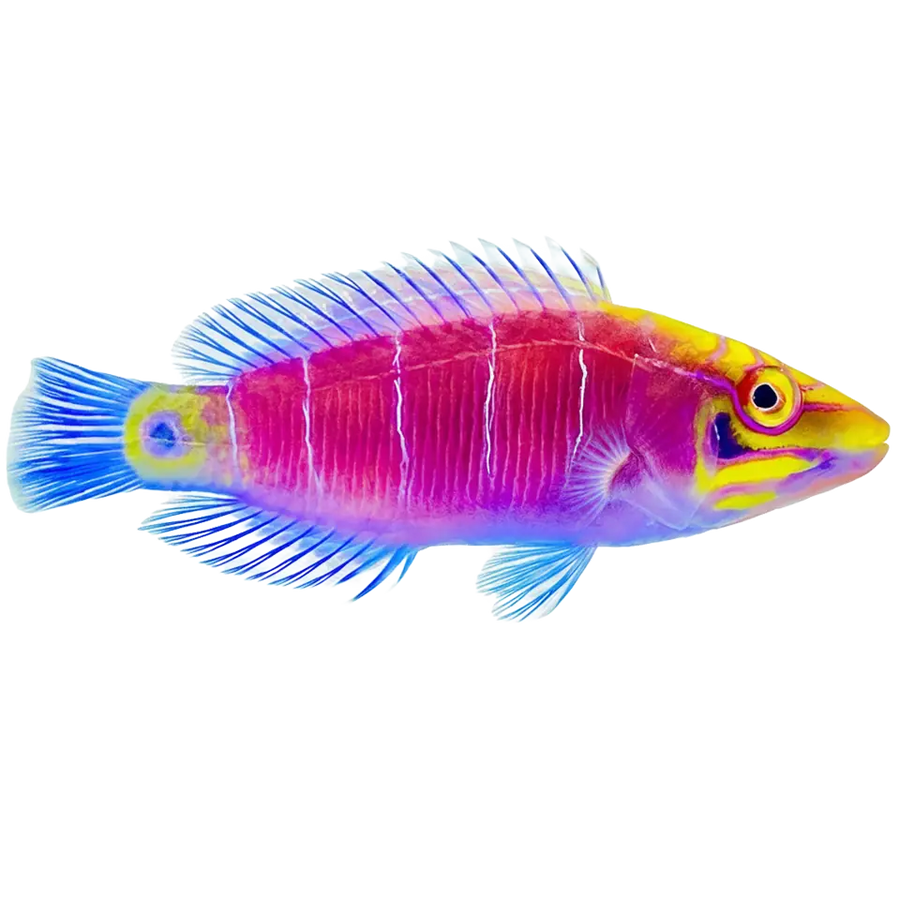
Dusky Brunneus Fairy Wrasse

Overview:
The Dusky Brunneus Fairy Wrasse is a vibrant and active marine fish known for its striking coloration and dynamic swimming patterns. To ensure optimal health, it requires a well-maintained aquarium with stable water conditions. Ideal parameters include a temperature range of 72-78°F, a pH of 8.1-8.4, and a specific gravity of 1.020-1.025. A tank of at least 55 gallons is recommended to provide ample swimming space. The tank should be aquascaped with live rock formations to mimic its natural reef habitat, offering both hiding spots and open areas for exploration.

Compatibility:
The Dusky Brunneus Fairy Wrasse is generally peaceful and can coexist with a variety of tankmates. Ideal companions include other peaceful wrasses, gobies, and blennies. Avoid housing with aggressive species or those significantly larger, as this can lead to stress and territorial disputes. It's important to introduce them to the tank simultaneously with other species to minimize hierarchy issues. Providing ample hiding spaces and territories can further reduce potential conflicts.

Health and Quarantine:
Maintaining the health of the Dusky Brunneus Fairy Wrasse involves regular monitoring of water quality and prompt attention to any signs of illness. Common health issues include marine ich and bacterial infections. A quarantine period of 2-4 weeks for new arrivals is crucial to prevent the introduction of diseases into the main tank. During quarantine, observe for signs of stress or illness and treat accordingly with appropriate medications. Regular water changes and maintaining a clean environment are essential preventive measures to ensure long-term health.

Pellets Mysis Finely Chopped Seafood
The Dusky Brunneus Fairy Wrasse, native to the Philippines, is a peaceful, reef-safe species reaching up to 3 inches. It thrives in a 50-gallon tank or larger. Known for its active swimming habits, it prefers mid-water levels. Socially inclined, it coexists well with other peaceful species, showing minimal territorial behavior. Compatible with other non-aggressive fish, it requires a carnivorous diet of mysis shrimp, brine shrimp, and finely chopped seafood. Ideal for community tanks, it adds vibrant movement without disrupting tank harmony.

FAQ

Frequently Asked Questions

About the Dusky Brunneus Fairy Wrasse

  • What minimum tank dimensions and aquascape layout are best for a single Dusky Brunneus Fairy Wrasse to show full coloration and natural behavior?
    Aim for at least a 3-foot (90 cm) long tank, even if total volume is only 40–50 gallons, because this species does short, fast bursts of swimming. Length matters more than height. Provide an open central swimming lane with rock structures pushed toward the back and sides. Build several arches, caves, and ledges with live rock, plus one or two shaded overhangs where it can retreat when startled. Avoid a completely bare scape; they are bolder and color up better when they have “escape routes” between rocks. Strong surface agitation and moderate, varied flow along the front of the rockwork suit them well.
  • How can I identify a true Dusky Brunneus Fairy Wrasse versus similar Cirrhilabrus species that are often mis-labeled in the trade?
    This species is often confused with other brunneus-type or dusky-colored fairy wrasses. Look for: • Overall body: Subtle dusky to pinkish-bronze body with a gentle gradient, not sharply banded. • Head: Softly shaded facial area without bold mask-like patterns. • Fins: Dorsal and anal fins tend to show muted, smoky edging rather than bright, neon margins, and the caudal fin usually has softer coloration instead of sharply defined lobes or lyre shapes. • Males vs females: Males display more intense blush on the body and more defined fin shading when excited, but still remain relatively subdued compared to “flashier” Cirrhilabrus. Ask for collection location and compare to known reference photos from reputable ID sources, since closely related species can appear very similar in store lighting and stress coloration.
  • What social structure (single, pair, or harem) works best for Dusky Brunneus Fairy Wrasse, and how do I manage transitions from female to male in the aquarium?
    n most home tanks, keeping a single male or a single female is easiest. A compatible pair or small harem (1 male, 2–3 females) is possible in tanks 4 feet (120 cm) or longer with ample hiding spots. If you start with multiple juveniles/females, the dominant one will usually transition to male over time, showing increased coloration and more assertive behavior. To manage this: • Add all individuals at the same time to reduce hierarchy disputes. • Provide multiple rock clusters so subordinates can retreat and avoid line-of-sight. • Watch for chronic chasing that prevents a fish from feeding; remove the aggressor if harassment is constant. Fairy wrasses can’t be “forced” to remain female long term; given enough time and space, one will typically change into a male.
  • Are Dusky Brunneus Fairy Wrasses safe with ornamental shrimp and small invertebrates, and are there any specific reef-compatibility quirks with this species?
    This wrasse is generally reef-safe with corals and clams and is typically safe with cleaner shrimp (Lysmata spp.), peppermint shrimp, and larger ornamental shrimp like blood shrimp. They primarily eat small planktonic foods in the water column and tiny benthic crustaceans from rock surfaces. However, newly molted, very small shrimp or tiny crabs may be at some risk if the wrasse learns to associate them with food, especially in tight quarters. They do not pick at coral polyps or clam mantles under normal conditions. Provide regular, varied feeding so they are less inclined to experiment with mobile invertebrates, and introduce prized shrimp once the wrasse is settled and well fed.
  • How do I design a covered top and daily routine to prevent jumping, especially during dusk when the Dusky Brunneus Fairy Wrasse becomes more active near the surface?
    Use a full coverage lid: either a fitted glass/acrylic top or a tight mesh screen (around 1/4" or 6 mm) with no gaps around plumbing, lights, or overflow boxes. This species will bolt upward when startled, particularly at lights on/off, sudden shadows, or aggressive tank mates. To reduce jump risk: • Use ramp-up/ramp-down lighting schedules if possible so the tank doesn’t go from bright to dark instantly. • Feed small amounts near “lights out” so the fish associates dusk with food instead of stress. • Avoid quick movements near the glass, especially early after introduction. • During maintenance, lower the water level slightly and keep lids or temporary covers over any exposed sections. Once settled, they still remain capable jumpers, so a permanent, secure cover is mandatory for long-term safety.