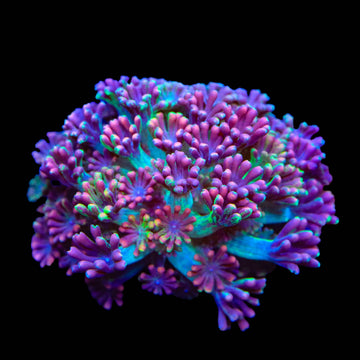
TSA Fantasy League Alveopora Coral
Overview
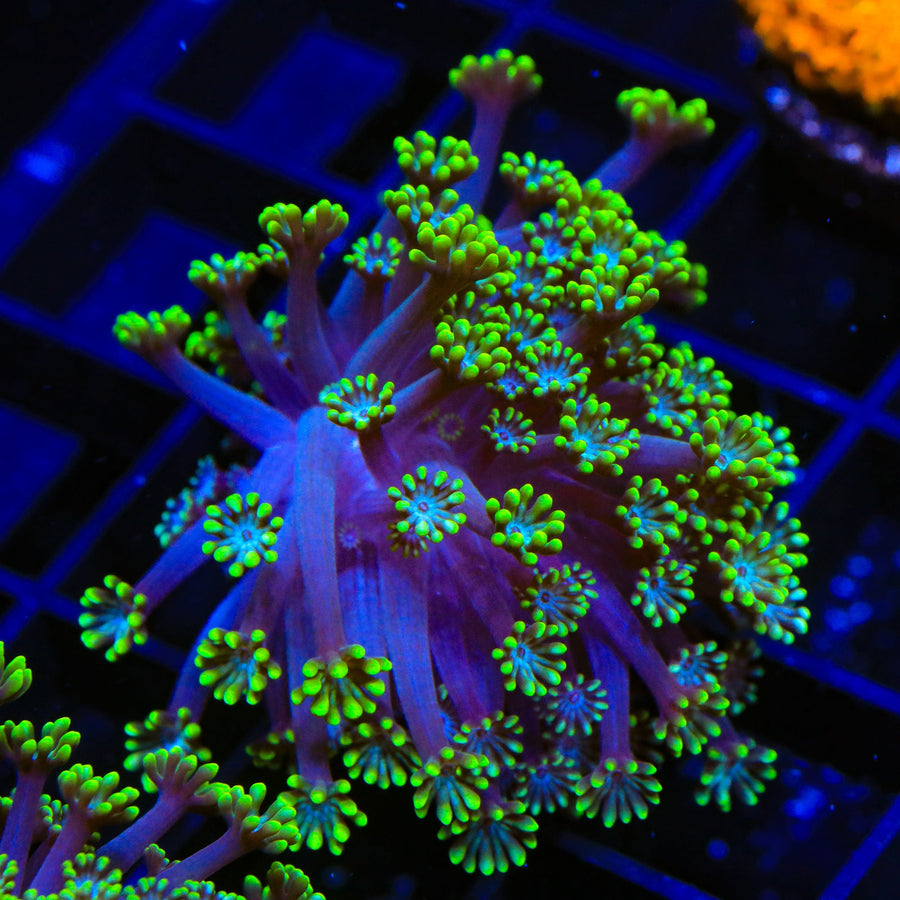
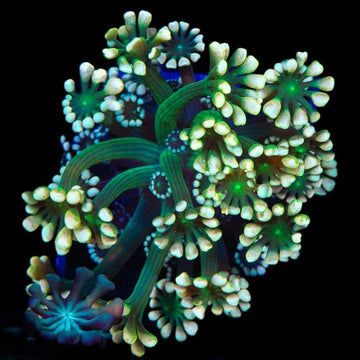
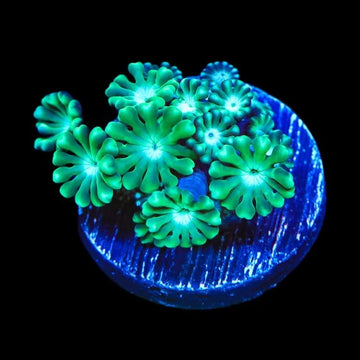
Fantasy League Alveopora Coral features long, daisy-like polyps extending from thin skeletal branches. Alveopora sp. is a large-polyp stony coral that prefers moderate light and gentle to moderate, indirect water flow. It is photosynthetic through symbiotic algae but benefits from occasional small particulate foods, supporting growth and polyp extension. Place on stable rock with space for expansion, avoid direct blasts of flow, and keep clear of more aggressive corals.
Quick Facts
Care
Moderate
Lighting
Moderate
Flow
Moderate, indirect
Placement
Low–Mid
Temperament
Semi-aggressive (3–6 inches spacing)
Recommended Parameters
Temp
76–80°F
pH
8.1–8.4
Salinity
1.025–1.026
Calcium
400–450 ppm
AlkAlkalinity
8–9 dKH
Magnesium
1250–1350 ppm
Feeding
photosynthetic, phytoplankton, zooplankton, microplankton, rotifers, baby brine shrimp (nauplii), copepod nauplii, marine snow, powdered coral foods
Care & Placement
FAQ
Frequently Asked Questions
About the TSA Fantasy League Alveopora Coral
-
How do I tell Fantasy League Alveopora Coral from similar Goniopora, and does that change my care approach?
Count tentacles: Alveopora polyps have 12 (vs ~24 on Goniopora). Alveopora’s skeleton is lighter and more porous, and it tolerates slightly “dirtier” water with suspended particulates. It generally accepts gentler flow and moderate light, with targeted micro-foods. It’s still sensitive to rapid changes—photoacclimate and stabilize alkalinity. Expect slower, bud-like growth from the base or small branching, rather than fast dome expansion. -
My Alveopora retracts mid-day but looks fine mornings and evenings—what’s causing this?
Mid-day retraction often links to peak light intensity, pulsing flow hitting the colony, pH spikes, or micro-irritants becoming active (vermetid snail webs, flatworms, amphipods). Nudge flow to a steady, indirect pattern and reduce midday PAR 10–20%. Check for vermetids and remove, and run fresh carbon to limit chemical irritants. Consistent pH and alkalinity usually restore full extension. -
Are color shifts in Alveopora permanent, and which conditions keep greens and pastels stable?
Many morphs hail from turbid, nutrient-present habitats, so ultra-low nutrients and high PAR can wash out pastels or push brown/olive tones. Aim for moderate PAR with strong blue spectrum, N 5–15 ppm and P 0.03–0.1 ppm, plus small, regular particulate feedings. Colors typically rebound over weeks after spectrum/nutrient corrections. Sudden spectrum swings cause paling—reacclimate over 2–3 weeks. -
Can clownfish or shrimp “host” Alveopora safely?
Persistent hosting often irritates tissue, causing retraction, thin tentacles, and eventual recession. If fish insist, reposition the coral away from their territory or add a decoy (e.g., long-tentacle leather) to distract them. Cleaner and peppermint shrimp may nip at mucus and food-laden polyps; feed shrimp first, run slightly higher flow around the coral, and consider a feeding dome during target feeds.