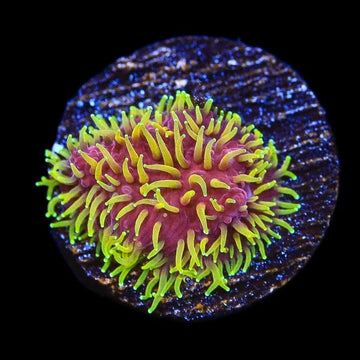
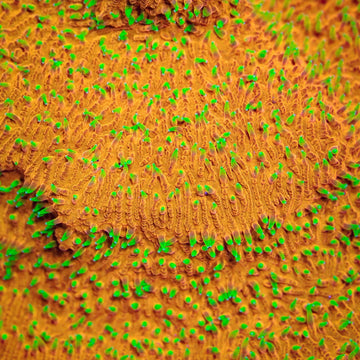
TSA Citrus Blast Grafted Lithophyllon Coral
Overview
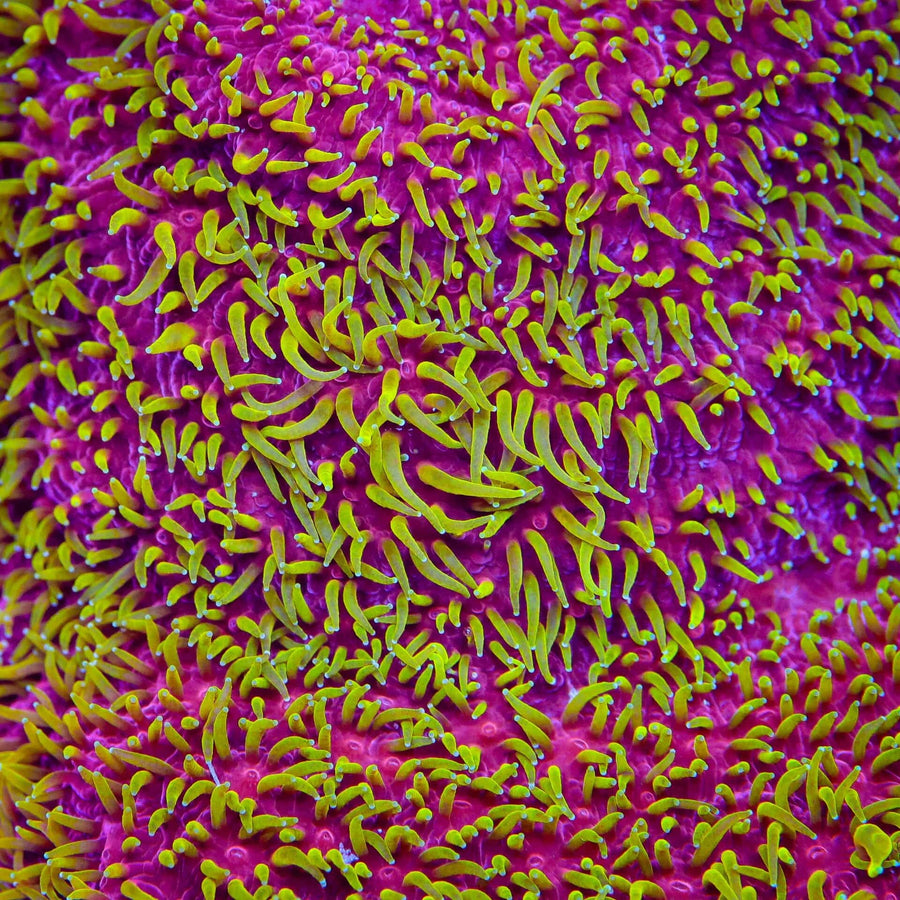
Chalice Coral shows a thin, undulating plate with raised ridges and small mouths across the surface. Known scientifically as Lithophyllon undulatum, it is a hard plating stony coral that prefers low to moderate light and gentle to moderate water flow. It relies on symbiotic algae for energy but accepts occasional small particulate foods, which can support growth and color. Place on a stable ledge with space around it, as edges can shade neighbors and some specimens may extend short stinging sweeper tentacles at night.
Quick Facts
Care
Moderate
Lighting
Low–Moderate
Flow
Low–Moderate
Placement
Low–Mid
Temperament
Semi-aggressive (3–6 inches spacing)
Recommended Parameters
Temp
76–80°F
pH
8.1–8.4
Salinity
1.025–1.026
Calcium
400–450 ppm
AlkAlkalinity
8–9.5 dKH
Magnesium
1280–1350 ppm
Feeding
photosynthetic, microplankton, zooplankton, rotifers, cyclops, finely chopped mysis shrimp, enriched brine shrimp, coral-specific powdered foods
Care & Placement
FAQ
Frequently Asked Questions
About the TSA Citrus Blast Grafted Lithophyllon Coral
-
Why does my Lithophyllon undulatum lose color at the rim while the center stays bright?
Rim paling often comes from light shock or shadowing dynamics. This species plates and creates self-shade; the edge may suddenly get higher PAR as it grows past the shade line. Reduce intensity 15–25% and extend photoperiod acclimation over 2–3 weeks. Keep NO3 5–15 ppm, PO4 0.03–0.08 ppm to prevent starvation fade. Amino feeds at lights-out can help re-pigment the margin. -
My chalice stings neighbors only at night—how far can Lithophyllon reach?
After dark it deploys short sweepers and occasional mesenterial filaments. Plan a 3–5 cm safety buffer for mellow LPS/zoas and 8–10 cm for aggressive corals. Flow can carry filaments farther, so reduce direct crossflow between rivals. If conflict starts, rotate the rock so the growth edge faces open water, and run a bit of fresh carbon to reduce allelopathic stress. -
The edge is receding even though parameters look stable—what hidden causes affect this species?
Edge recession often ties to alk micro-swings and contact irritation. Keep dKH changes under 0.2/day and avoid fresh epoxy or putty touching tissue (it can cause chemical burn). Check for detritus trapped under the lip; gently baste weekly. If bacterial slime appears, perform an iodine dip, increase flow across the rim, and run UV temporarily to curb opportunists. -
Does Lithophyllon respond to target feeding, or is light enough?
It’s photosynthetic but benefits from small-particle feeds. After lights out, offer rotifers, cyclops, or fine reef roids 1–2 times weekly; watch for subtle mouth puckering rather than long feeders. Consistent micro-feeding boosts rim growth and helps pigments under moderate light. Avoid heavy chunks that rot on the tissue, and keep export (skimming, mechanical) steady to prevent nutrient spikes.