TSA Candy Corn Clove Polyp Coral

TSA Candy Corn Clove Polyp Coral

Clove Polyp Soft Coral

Overview

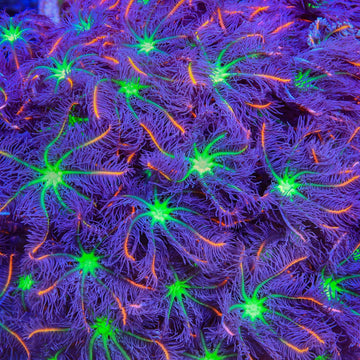
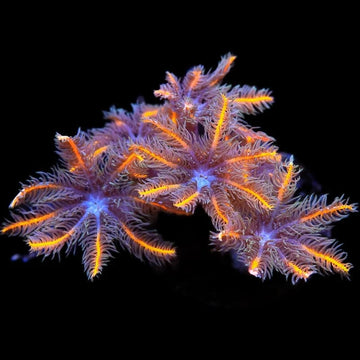
Candy Corn Clove Polyp Coral shows clove-shaped polyps with orange centers and pale tips arranged on a creeping mat. Clavularia sp. is a soft, colonial mat-forming coral that prefers moderate light and gentle to moderate, indirect flow. It is photosynthetic with symbiotic algae; occasional small particulate foods can boost growth and help maintain color. Place on an isolated rock to control spread, and provide space to prevent shading or contact with slower-growing corals.

Quick Facts

Care Easy
Lighting Low–Moderate
Flow Moderate
Placement Low–Mid
Temperament Semi-aggressive (fast-spreading; 3–6 inches spacing)

Recommended Parameters

Temp 76–80°F
pH 8.1–8.4
Salinity 1.025–1.026
Calcium 400–440 ppm
AlkAlkalinity 8–10 dKH
Magnesium 1250–1350 ppm
Feeding photosynthetic (primary), phytoplankton, microplankton, rotifers, marine snow, powdered coral foods, zooplankton suspensions

Care & Placement

Candy Corn Clove Polyp Coral (Clavularia sp.) is a hardy, fast-spreading soft coral that thrives with stable, moderate conditions. Provide moderate light (PAR ~60–120); start in lower light and move up slowly to prevent bleaching. Use moderate, varied flow that gently moves the polyps and keeps detritus off the mat; too much flow causes polyps to stay closed. It’s largely photosynthetic but benefits from occasional fine particulate foods (phytoplankton, rotifers, reef powders) 1–2 times weekly for growth and color. Target parameters: temperature 24–26°C/75–79°F, pH 8.1–8.4, salinity 1.025–1.026, calcium 400–450 ppm, alkalinity 8.0–9.5 dKH, magnesium 1250–1350 ppm, nitrate 2–10 ppm, phosphate 0.02–0.08 ppm. Test weekly, use a refractometer for salinity, and adjust slowly. This coral is peaceful but can overgrow neighbors; place on an isolated rock “island” on the sandbed to mid-level with 3–4 inches of space. Keep away from LPS with long sweepers, and trim the mat with a sharp blade if it spreads.Acclimate with a 30–45 minute drip and reduce light via a screen or photo acclimation mode for 1–2 weeks. Dip new frags to remove pests. Signs of trouble: pale or retracted polyps (light shock, high temp, low nutrients), melting mat (unstable alkalinity, bacterial film), closed heads with mucus (flow too strong or irritants). Improve stability, adjust light/flow, siphon detritus, and address algae or cyano on the mat promptly. Clean, stable water and gentle, consistent flow keep polyps extended and growing.

FAQ

Frequently Asked Questions

About the TSA Candy Corn Clove Polyp Coral

  • Why does my Candy Corn Clove Polyp Coral suddenly “melt” after looking fine for weeks?
    Rapid decline is often due to bacterial stress on the stolon mat or pest activity. Increase random flow to keep detritus off the mat, run fresh carbon, and perform an iodine dip to halt tissue loss. Inspect at night for nudibranchs and sundial snails. Stabilize nutrients (nitrate 2–10 ppm, phosphate 0.02–0.1) and avoid abrupt light jumps.
  • How can I control overgrowth without tearing down the aquascape?
    Isolate Clavularia sp. on a small “island” rock surrounded by sand, or create shadow barriers that halt runners. Trim runners with a sharp scalpel and remove any leftover stolon threads. Target-stipple kalk paste along unwanted edges, then siphon after it sets. Repeat as needed and maintain moderate, detritus-shedding flow.
  • My coral’s orange and yellow tones are fading—what helps color retention?
    This morph keeps its warm hues best under moderate PAR (80–150) with strong blue spectrum and stable, non-zero nutrients. Extremely low nitrate and phosphate can wash out yellows; very high nutrients can brown the mat. Consistent iodine and iron via regular water changes supports pigmentation; avoid aggressive carbon dosing swings.
  • Are there unique compatibility concerns with Clavularia sp. beyond basic spacing?
    Its sting is mild, but it wins by carpeting neighbors, especially slow LPS. Give extra space to acans, favias, and plates. Soft-coral allelopathy can mute extension; run carbon and ensure good skimming. Avoid high-contact areas for clownfish or hermits that trample polyps. Keep the mat free of filamentous algae, which can smother new growth.