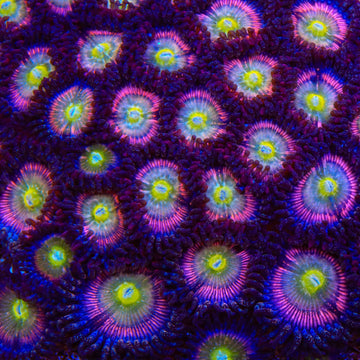
TSA Blue Eye Hornet Zoanthids Coral
Overview
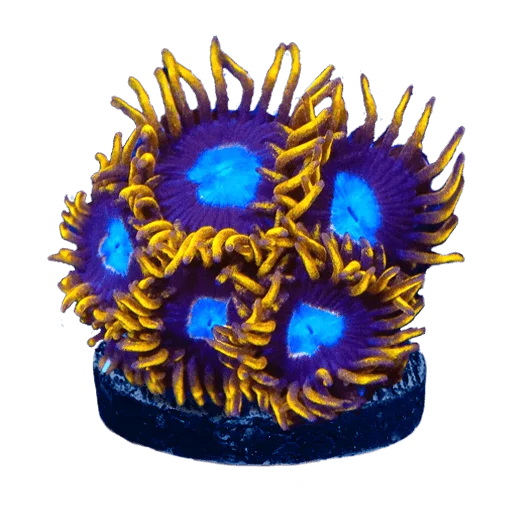
Blue Eye Hornet Zoanthids Coral shows small button polyps with bright blue centers and contrasting skirts. Classified as Zoanthus sp., this soft colonial polyp thrives under moderate light and low to moderate, variable flow. It relies mainly on symbiotic algae for energy, but occasional fine particulate foods can boost growth and maintain color. Place on isolated rock to manage spreading, and keep space from aggressive neighbors.
Quick Facts
Care
Moderate
Lighting
Low–Moderate
Flow
Moderate, indirect
Placement
Low–Mid
Temperament
Semi-aggressive (2–3 inches spacing)
Recommended Parameters
Temp
76–80°F
pH
8.1–8.4
Salinity
1.025–1.026
Calcium
400–450 ppm
AlkAlkalinity
8–10 dKH
Magnesium
1250–1350 ppm
Feeding
photosynthetic, phytoplankton, microplankton, rotifers, cyclops, copepod nauplii, powdered coral foods, marine snow
Care & Placement
FAQ
Frequently Asked Questions
About the TSA Blue Eye Hornet Zoanthids Coral
-
How do I keep the vivid blue “eye” and ring pattern from fading?
Aim for moderate PAR (80–150) with strong blue spectrum (peaking 420–460 nm). Too much white or very high PAR can wash rings; too little light dulls centers. Maintain modest nutrients (NO3 2–10 ppm, PO4 0.03–0.1 ppm). Stable alkalinity and salinity help polyp extension. Many hobbyists report improved blues with stable potassium and iodine levels; avoid sudden trace dosing swings. -
My colony is “melting” or showing tiny white pustules—what’s the fix?
Pustules suggest zoa pox; perform Furan‑2 dips per label for several sessions, with increased but indirect flow. For general melt, remove decaying polyps, improve aeration and flow, and check for pests. Verify nutrients aren’t bottomed out, and reduce light if recently increased. An iodine dip can aid recovery after trimming necrotic mat. -
Which pests target Blue Eye Hornets, and how do I eliminate them safely?
Common threats include zoa‑eating nudibranchs (and their egg spirals), sundial snails, and zoanthid spiders. Inspect after lights out with a flashlight. Manually remove adults, scrape eggs, and run a dip series (iodine or commercial coral dips) 2–3 times over a week. Rinse well. Maintain moderate flow to deter detritus that shelters pests. -
They spread fast—how do I control growth and avoid conflicts?
Mount on an isolated “island” rock or create an epoxy moat to limit creep. Trim the leading edge periodically. Keep distance from LPS with long sweepers (e.g., euphyllia, galaxea) that can sting and cause retraction. Avoid shading the colony as it expands; even lighting preserves ring symmetry and reduces patchy growth.