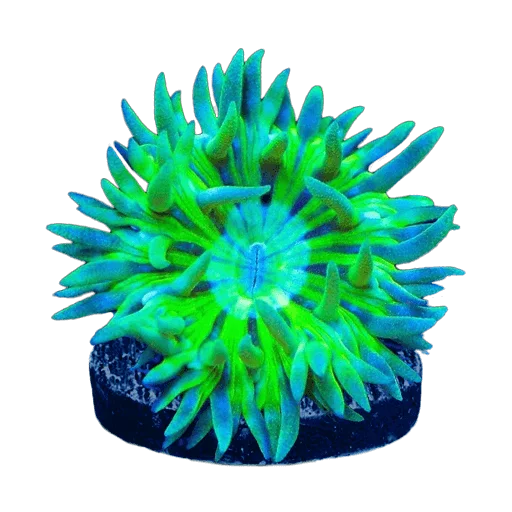
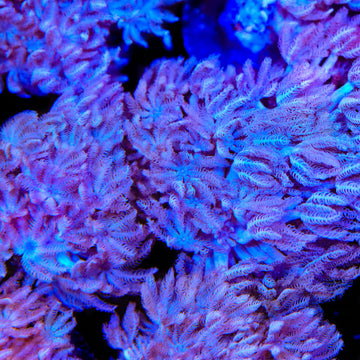
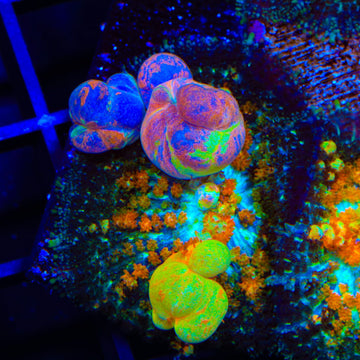
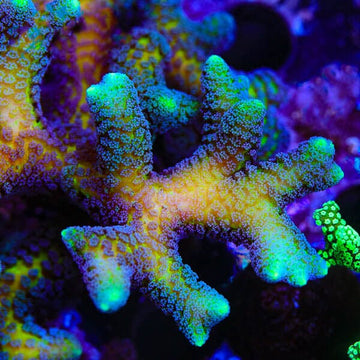
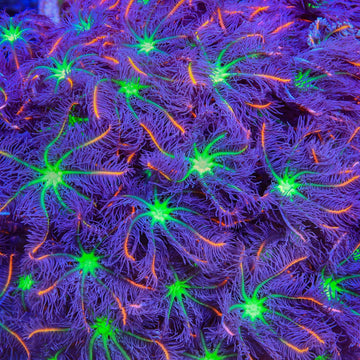
Alien Egg Zoanthids (Zoanthus sp.) are hardy, fast-growing soft corals suited to most reef tanks. Provide low to moderate light (approx. 60–120 PAR) and moderate, indirect flow that keeps detritus from settling without blasting the polyps. Place frags low to mid in the tank and start shaded, then slowly increase light over 1–2 weeks to avoid bleaching; stretching (“reaching”) signals too little light. Target feed small foods like reef roids, rotifers, or fine mysis once or twice weekly, but avoid heavy feeding that fuels algae. Maintain stable water: temp 75–79°F (24–26°C), salinity 1.024–1.026, pH 8.1–8.4, alkalinity 8.0–9.5 dKH, calcium 400–450 ppm, magnesium 1250–1350 ppm, nitrate 2–10 ppm, phosphate 0.02–0.08 ppm. Test weekly and use a refractometer for salinity. Zoas are generally peaceful but can spread quickly; give 2–3 inches of space and consider an isolated “island” rock to contain growth.Acclimate by floating to match temperature, drip 30–45 minutes, and dip for pests (zoa-eating nudibranchs, sundial snails, spiders). Handle with gloves and eye protection due to palytoxin risk. Closed polyps can indicate pests, low flow, unstable parameters, or irritation from nearby corals; inspect at night, adjust flow, and redip if needed. Recession or “melting” often follows swings in salinity or alkalinity—restore stability rather than chasing numbers. For color loss, reduce light intensity 20–30% and increase nutrients slightly within safe ranges. Regularly turkey-baste debris, keep algae off the mat, and frag back encroaching colonies to prevent overgrowth.