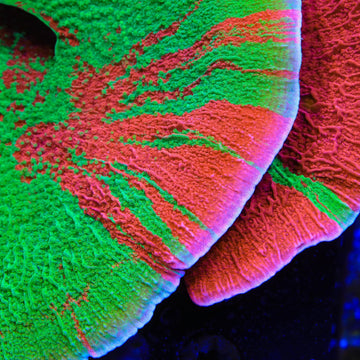
Rainbow Montipora Coral
Overview
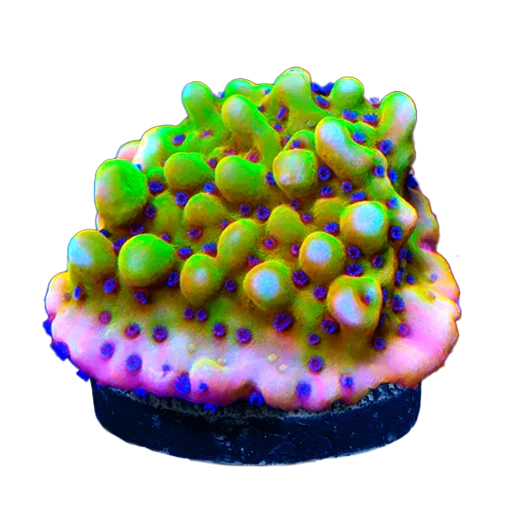
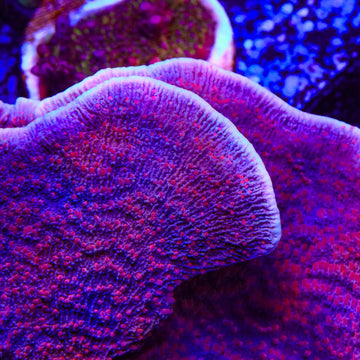
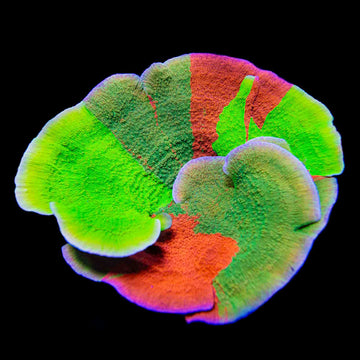
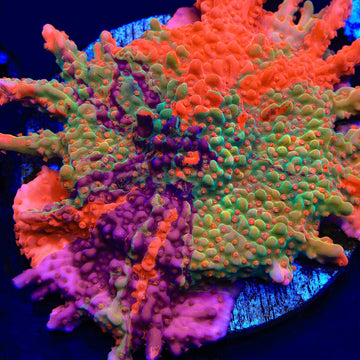
Rainbow Montipora Coral shows multi-colored plates with raised ridges and nodules. Montipora danae is a small polyp stony, plating/encrusting coral that does well under moderate to strong light and moderate to strong, turbulent flow. It is primarily photosynthetic through symbiotic algae, but occasional small-particle foods can support growth and maintain color. Place it high to mid in the rockwork with space from aggressive, stinging neighbors, and avoid shading as colonies spread.
Quick Facts
Care
Moderate
Lighting
Moderate–High
Flow
Moderate–High
Placement
Mid–High
Temperament
Peaceful (2–3 inches spacing)
Recommended Parameters
Temp
76–80°F
pH
8.1–8.4
Salinity
1.025–1.026
Calcium
400–450 ppm
AlkAlkalinity
8–9 dKH
Magnesium
1280–1350 ppm
Feeding
photosynthetic (primary), microplankton, phytoplankton, fine zooplankton, rotifers, copepod nauplii, marine snow, coral-specific powdered foods, amino acids
Care & Placement
FAQ
Frequently Asked Questions
About the Rainbow Montipora Coral
-
Why does my Rainbow Montipora danae lose its “rainbow” and turn a single color?
Color shifts often stem from light spectrum, nutrient balance, and trace element availability. Excess nitrate/phosphate can mute contrast; ultra-low nutrients can wash out pigments. Aim for moderate nutrients (e.g., NO3 5–15 ppm, PO4 0.03–0.08 ppm), stable alkalinity, and strong blue spectrum (around 420–470 nm). Potassium supports reds/pinks; iron/manganese influence greens. Give it high, turbulent flow to keep tissue clean and pigments vibrant. -
My colony is receding from the base while the rim looks fine—what’s going on?
Base recession usually indicates self-shading, unstable alkalinity, or pests. M. danae can encrust thickly and shade its underside. Increase cross-flow, prune adjacent growth to open light paths, and verify alk stability (avoid >0.5 dKH swing per day). Inspect at night for montipora-eating nudibranchs; look for bite marks and egg spirals. If present, isolate, dip repeatedly, and quarantine. -
How can I prevent plating or encrusting growth from smothering nearby corals?
Plan placement with its lateral spread in mind. Mount on a separate rock “island” or a removable tile, keeping a buffer from slow-growing SPS and corals with long sweepers. Periodically trim the advancing edge with bone cutters and remove frags to halt encroachment. Strong, randomized flow helps keep the growth rim thin and manageable while reducing detritus that fuels faster spread. -
Why does my Rainbow Monti look great under blues but dull under whites—should I change lighting?
The coral’s fluorescent proteins peak under blue/violet, so it will always pop more there. Under whiter spectrums, true pigment density is revealed. Rather than chasing whites, keep a balanced photoperiod with a strong blue-heavy window and moderate overall PAR (roughly 200–350 at the colony). Focus on stability, nutrient balance, and trace elements; as pigments build, it will retain better color even with added white.