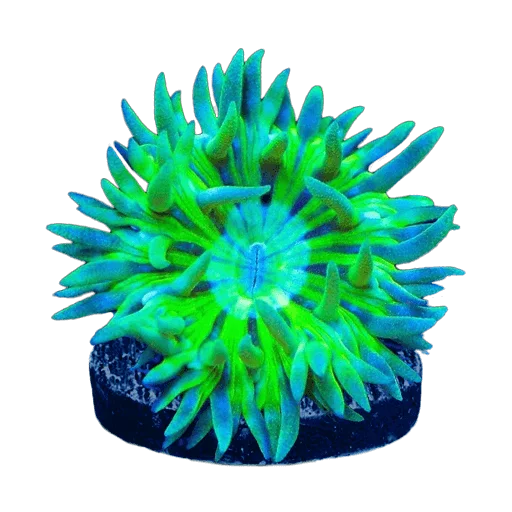
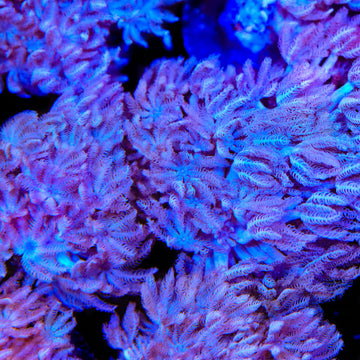
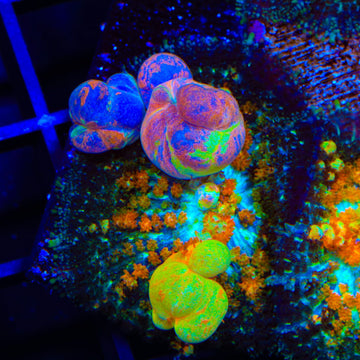
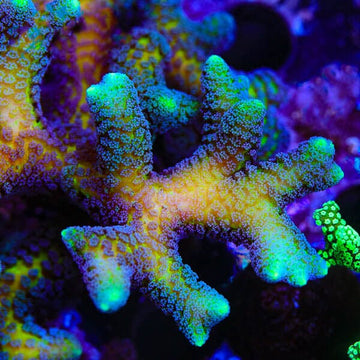
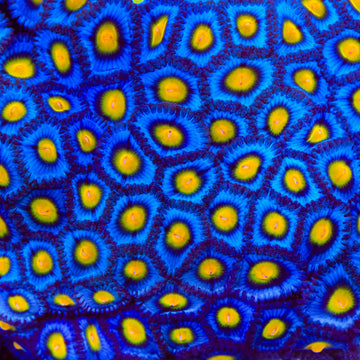
Purple Monsters Zoanthids Coral

Purple Monsters Zoanthids Coral

Beginner Corals Zoanthids Soft Coral

Overview

Purple Monster Zoanthids Coral displays tight button polyps with purple discs and contrasting mouths. Classified as Zoanthus sp., this soft colonial polyp spreads as a mat; it prefers moderate light and low to moderate, indirect flow. It is primarily photosynthetic via symbiotic algae but accepts small meaty foods or powdered coral foods, which can support faster growth and maintain color. Place on an isolated rock with room to expand, and monitor for overgrowth near slower corals.

Quick Facts

Care Easy
Lighting Moderate
Flow Moderate
Placement Mid–Low
Temperament Peaceful to semi-aggressive (2–3 inches spacing)

Recommended Parameters

Temp 76–82°F
pH 8.1–8.4
Salinity 1.025–1.026
Calcium 400–440 ppm
AlkAlkalinity 8–10 dKH
Magnesium 1250–1350 ppm
Feeding photosynthetic (primary), microplankton, rotifers, cyclops, phytoplankton, powdered coral foods, marine snow, finely minced meaty foods

Care & Placement

Purple Monster Zoanthids Coral (Zoanthus sp.) thrive with stable, moderate conditions. Provide moderate light (PAR 80–150) and acclimate slowly using screen or reduced photoperiod to avoid bleaching; increase light over 1–2 weeks to bring out color. Aim for moderate, random flow to keep detritus from settling between polyps, but avoid direct blasts that keep them closed. They are photosynthetic yet benefit from occasional feeding 1–2 times weekly with fine particulate foods (reef roids, powdered zooplankton) or amino supplements; target gently with pumps off for 10–15 minutes. Maintain temperature 76–80°F, salinity 1.024–1.026, pH 8.1–8.4, alkalinity 8.0–9.5 dKH, calcium 400–450 ppm, magnesium 1250–1350 ppm, nitrate 2–10 ppm, and phosphate 0.03–0.08 ppm. Use reliable test kits and a refractometer; prioritize stability over chasing exact numbers.Place frags low to mid in the tank and move upward only if color dulls. Mount on an isolated rock “island” to manage spread and leave 2–3 inches from neighbors; they can overgrow slower corals but are easily stung by aggressive LPS. Peaceful with most fish and inverts; avoid nippers. Dip and quarantine to prevent nudibranchs, sundial snails, and spiders. Acclimate by drip (30–45 minutes). If polyps stay closed, check for pests, excess light, low nutrients, or swings in alkalinity/salinity. “Melting” often follows instability; perform small, frequent water changes and correct parameters. Handle with care; some zoanthids can contain palytoxin—wear gloves/eye protection and avoid hot water or aerosolizing.

FAQ

Frequently Asked Questions

About the Purple Monsters Zoanthids Coral

  • My Purple Monster Zoanthids are losing their deep purple color—how can I keep the hue rich?
    Keep PAR in the moderate range (100–200) with strong blue spectrum; too much white can wash the purple. Maintain stable nutrients (nitrate 5–15 ppm, phosphate 0.03–0.1 ppm). Sudden drops make polyps small and pale. Trace balance helps—regular water changes often suffice. Avoid shading by fast growers; trim neighbors and ensure steady, indirect flow to keep detritus off the mat.
  • They’re “reaching” with long skirts and smaller heads—light too low or flow too low?
    Both can cause that look. If they tilt toward light or stretch, increase intensity slowly over 2–3 weeks or move them slightly higher. If skirts flutter weakly or detritus accumulates, raise indirect flow. Watch for improved posture: rounder discs, moderate skirt extension, and active daytime opening without constant leaning.
  • The colony is “melting” after looking fine for months—what rare issues should I check?
    Inspect at night for zoa-eating nudibranchs, sundial snails, or spiders; remove pests and dip weekly until clear. Verify alkalinity stability (avoid >0.5 dKH daily swings). Ultra-low nutrients can trigger tissue loss; gently raise nitrate/phosphate. Improve flow to prevent bacterial film on the mat. If only a section declines, frag healthy margins to save the strain.
  • Will nearby soft corals or clove polyps affect Purple Monster Zoanthids?
    Yes—chemical competition from leathers, xenia, or cloves can slow growth and reduce extension. Provide space and run fresh activated carbon, changing it regularly. Aim for cross-tank flow rather than direct blasts to avoid contact warfare. If proximity is unavoidable, rotate carbon more often and consider periodic water changes to keep allelopathic compounds low.