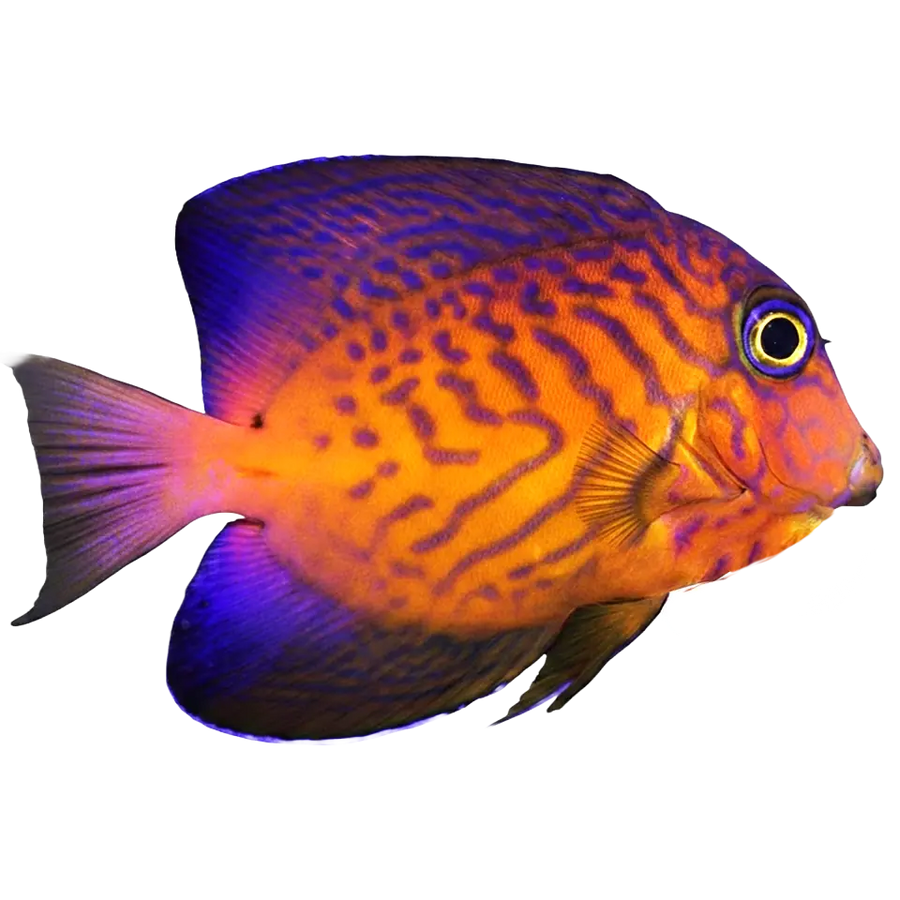
Sailfin Tang

Overview:
The Sailfin Tang, known scientifically as Zebrasoma veliferum, is a popular marine fish due to its striking appearance and active nature. This species thrives in a well-maintained saltwater aquarium that mimics its natural habitat, the coral-rich reefs of the Indo-Pacific. Ideal conditions include a tank size of at least 125 gallons, as Sailfin Tangs require ample swimming space. Water parameters should be kept stable, with a temperature range of 72-78°F, pH between 8.1-8.4, and specific gravity of 1.020-1.025. A well-aerated tank with strong water movement and plenty of live rock for grazing and hiding is essential for their well-being.

Compatibility:
Sailfin Tangs are generally peaceful but can become territorial, especially towards other tangs or similar-shaped fish. It's best to house them with other non-aggressive species that occupy different niches within the tank. Suitable tankmates include clownfish, gobies, and wrasses. If keeping multiple tangs, introduce them simultaneously to minimize aggression. Avoid housing them with aggressive species or those that may outcompete them for food. Providing plenty of hiding spaces and visual barriers can help reduce stress and territorial disputes.

Health and Quarantine:
Sailfin Tangs are susceptible to common marine diseases such as ich and marine velvet, often triggered by stress or poor water quality. Regular monitoring of water parameters and maintaining a clean environment are crucial preventive measures. Quarantine new additions for at least two weeks to observe for signs of illness and prevent the spread of disease. During quarantine, gradually acclimate them to the main tank's conditions. Regularly inspect for signs of stress or illness, such as changes in color, behavior, or appetite. Providing a balanced diet and maintaining optimal water conditions will support their immune system and overall health.

Nori Pellets Mysis
Sailfin Tangs are vigorous swimmers that require large tanks of at least 180 gallons to accommodate their active nature. They are semi-aggressive and can become territorial, especially towards other tangs or similarly shaped fish, but this behavior is less pronounced in larger tanks. They are reef safe and can coexist with a variety of fish, provided there is enough space and hiding spots. Their diet is omnivorous, consisting mainly of algae, nori, and spirulina flakes. These fish are best introduced after other territorial species have settled in to minimize conflicts.

FAQ

Frequently Asked Questions

About the Sailfin Tang

  • How can I tell a Desjardinii Sailfin Tang apart from a regular Sailfin Tang (Zebrasoma veliferum), and does that difference matter for home aquariums?
    Desjardinii Sailfin Tangs (Zebrasoma desjardinii) have dense spotting and scribbling on the rear half of the body and on the caudal fin, often forming vertical dotted lines, with orange to rust-colored spots on the lower body and tail. The classic Sailfin Tang (Z. veliferum) has clearer, broader vertical bands with less speckling and a mostly plain tail. For aquariums, the difference matters because Desjardinii generally reaches a solid 10–12 inches in captivity and tends to be more assertive, so they need more swimming space and careful tankmate selection. They also tolerate slightly cooler reef temperatures (76–78°F) well and often graze algae a bit more aggressively than veliferum.
  • What is the minimum realistic tank size and aquascape layout for a Desjardinii Sailfin Tang to avoid pacing and long-term stress?
    Realistically, a Desjardinii needs at least a 6-foot-long tank (180 gallons or more) for long-term care. The priority is linear swimming distance, not just volume. Use rockwork that creates a “C” or “U” shaped path around the tank with open channels rather than a solid wall of rock. Aim for: 1) at least 4–5 feet of uninterrupted open water in the front third of the tank; 2) multiple caves and arches through the rock where the fish can retreat; 3) a strong gyre or directional flow along the length of the tank to encourage continuous cruising. Tanks under 6 feet usually lead to pacing, fin wear from rubbing, and heightened aggression as the fish matures.
  • What feeding schedule and food types keep a Desjardinii Sailfin Tang’s coloration strong and reduce the risk of head and lateral line erosion (HLLE)?
    Feed primarily marine-based plant material with supplemental high-quality protein and avoid long gaps between meals. A good routine: 1) keep a sheet of nori (red or green seaweed) clipped in the tank for at least part of the day, replaced daily; 2) feed 2–3 times per day with varied foods such as spirulina flakes, pellets with marine algae, and frozen herbivore blends; 3) add occasional treats like mysis, finely chopped clam, or enriched brine, but keep meaty foods as a minority of the diet. To reduce HLLE risk, use high-quality carbon (or none if not needed), avoid dusty carbon in high-flow areas, maintain strong vitamin content (especially vitamin C and iodine, often via soaked foods), and keep nitrates and phosphates in a stable but non-zero range. This combination maintains deep banding, clear spotting, and solid fin condition.
  • How aggressive is a Desjardinii Sailfin Tang toward other tangs and similar-shaped fish, and what’s the safest introduction order?
    Desjardinii Sailfin Tangs are medium to high on the aggression scale, especially toward other Zebrasoma and disc-shaped tangs once established. They are usually less explosive than a mature Sohal or Clown Tang, but more assertive than a Yellow or Kole Tang. To minimize conflict: 1) introduce the Desjardinii after more timid species but before the most dominant tangs (like Achilles or Sohal), or add all tangs at the same time if possible; 2) avoid mixing with another Zebrasoma unless the tank is 8 feet or longer and rockwork breaks line of sight; 3) rearrange some rocks right before introduction to disrupt territories; 4) use acclimation boxes for new tangs so they can be seen but not attacked for 2–7 days. Watch for tail-slapping, pinned fins, and relentless chasing; if these persist beyond a few days, separation is often necessary.
  • Are Desjardinii Sailfin Tangs suitable for mixed reef tanks, and what specific coral or invertebrate issues do they sometimes cause?
    Desjardinii Sailfin Tangs are generally considered reef-compatible, but as large, constant grazers they can cause specific problems. They may nip at fleshy LPS corals (like open brains, scolies, and some chalices), especially if underfed or in tanks with minimal algae. They rarely bother SPS tissue but can irritate SPS by grazing closely and brushing polyps frequently. Zoanthids and soft corals are usually safe, though very small frags can be dislodged by their active foraging. They typically ignore clams’ mantles, but individuals with a taste for fleshy tissue may nip at clam edges. To reduce risk: 1) keep them well-fed on algae-based foods; 2) secure corals and frags firmly; 3) introduce the tang after key showpiece corals have settled; 4) observe for targeted, repeated nipping at a particular coral rather than incidental contact—if it becomes habitual, relocation of the coral or fish may be needed.