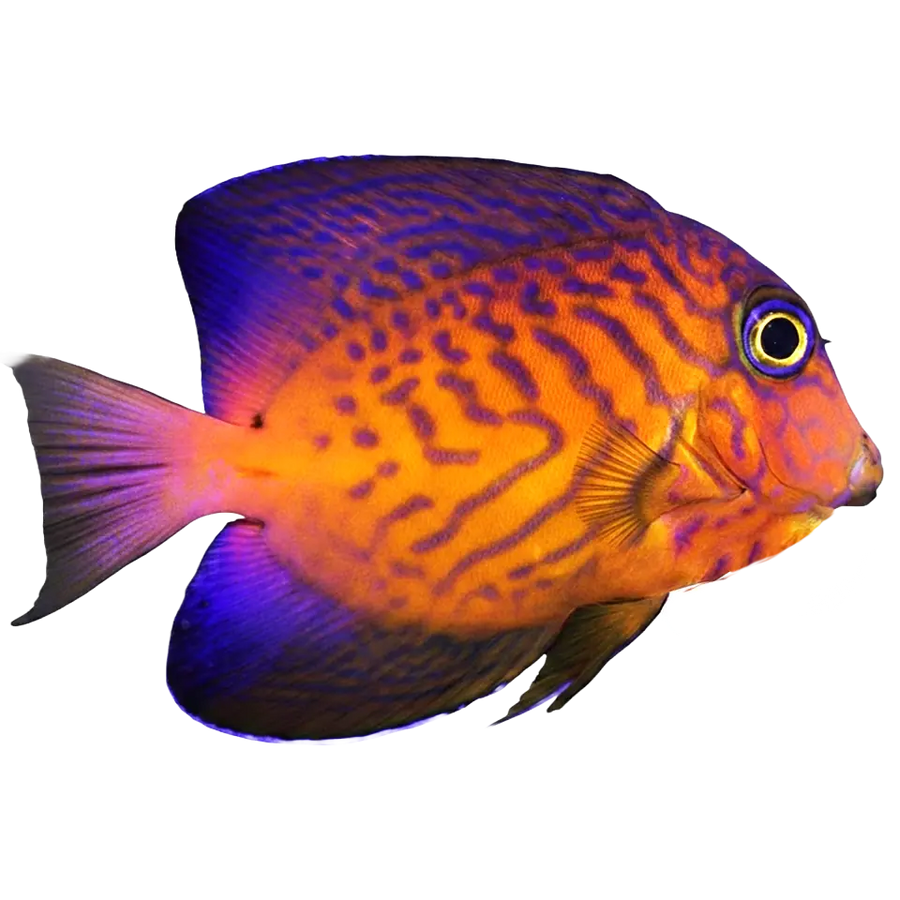
Purple Tang

Overview:
The Purple Tang, also known as Zebrasoma xanthurum, is a vibrant marine fish native to the reefs of the Red Sea and Arabian Sea. It thrives in well-established aquariums with a minimum size of 100 gallons to accommodate its active swimming needs. The ideal habitat includes ample live rock for grazing and hiding spots, with water parameters maintained at a temperature of 72-78°F, pH of 8.1-8.4, and specific gravity of 1.020-1.025. Strong water movement and efficient filtration are crucial to replicate its natural environment and maintain water quality.


Compatibility:
Purple Tangs are semi-aggressive and territorial, particularly towards other tangs or fish with similar body shapes. They are best housed with a mix of peaceful and semi-aggressive species, avoiding other tangs unless the tank is large enough to accommodate multiple territories. Introduce them as one of the last fish to the aquarium to reduce territorial disputes. Suitable tankmates include clownfish, wrasses, and angelfish. Monitor interactions closely, especially during the initial introduction phase, to ensure harmony within the tank.

Health and Quarantine:
Purple Tangs are susceptible to common marine diseases such as ich and marine velvet. A quarantine period of 2-4 weeks is recommended for new arrivals to monitor and treat any potential health issues before introducing them to the main display tank. Maintain optimal water quality and a varied diet to support their immune system. Regular observation for signs of stress, such as rapid breathing or changes in coloration, is essential. If disease is suspected, prompt treatment with appropriate medications in a separate hospital tank is advised to prevent outbreaks.

Nori Spirulina Mysis
The Purple Tang (Zebrasoma xanthurum) is an active swimmer that requires a minimum tank size of 100 gallons to accommodate its maximum size of 9 inches. It is known for its aggressive temperament, particularly towards other tangs and similarly shaped fish, due to its territorial nature. This species is reef safe, making it suitable for reef aquariums where it can help control algae growth. When introducing new tank mates, it is advisable to choose species that are either equally assertive or non-threatening, and to introduce the Purple Tang last to minimize territorial aggression. The tank should have plenty of hiding spaces and visual barriers to reduce stress and aggressive encounters. The Purple Tang is an omnivore with a preference for algae, and its diet should include algae or nori sheets, spirulina, and meaty frozen foods to ensure balanced nutrition.

FAQ

Frequently Asked Questions

About the Purple Tang

  • How can I reduce aggression when introducing a Purple Tang into an established reef tank with other tangs already present?
    Introduce the Purple Tang last or alongside similarly sized tangs to spread attention. Rearrange rockwork right before introduction to reset territories. Use an acclimation box for 2–7 days so existing fish see but can’t attack the new tang. Avoid mixing with other Zebrasoma species (Yellow, Sailfin, Gem) in smaller systems; in larger tanks (180+ gallons) introduce multiple Zebrasoma at the same time and ensure heavy feeding to blunt aggression. Dim the lights during first release, and feed nori immediately to distract. If a resident tang is particularly dominant, temporarily remove and reintroduce it after the new fish has settled.
  • Why does my Purple Tang constantly graze on live rock but ignore the sheet of nori I put in the tank?
    Purple Tangs are natural browsers and may prefer the texture, motion, and microfauna of live rock. They may ignore nori if the sheet is too stiff, unfamiliar, or poorly placed. Use high-quality dried seaweed (red or green), soak it briefly in tank water to soften, and secure it on a clip near where the fish already grazes or in higher flow so it “waves” naturally. Start with small pieces mixed with foods the tang already accepts (e.g., mysis stuck to the nori). Offer nori daily at the same time, remove uneaten portions after a few hours, and avoid garlic-heavy soaks that can make it taste odd.
  • My Purple Tang’s body turned darker and the yellow tail looks faded after a few months. Is this normal, and can the color be improved?
    Mild darkening with age is normal, but sudden or marked dulling usually points to stress, poor diet, or suboptimal water quality. Keep nitrates under ~20 ppm and phosphates under ~0.1 ppm with stable salinity and temperature. Provide a varied herbivore-heavy diet: multiple types of macroalgae/nori (red, green, brown), spirulina-based pellets, and occasional meaty foods for protein. Add vitamin and HUFA supplements (e.g., Selcon) a few times per week. Provide strong, consistent lighting and ample swimming space. Reduce bullying and ensure the tang is not competing excessively for food. With improved conditions, color typically brightens over several weeks.
  • What tank size and aquascape specifically suit a Purple Tang long term, considering their constant swimming behavior?
    For long-term housing, a minimum of 120 gallons with a 4-foot length is often cited, but 5–6 feet (150–180 gallons) is far better for sustained health and reduced aggression. Prioritize open swimming lanes along the front and back of the tank with rockwork concentrated in the center or ends, forming arches and channels. Avoid a solid wall of rock from glass to glass. Leave at least 4–6 inches of clearance between rock and glass for the fish to cruise around. Provide multiple caves and overhangs so the tang can retreat and sleep safely. Strong, broad-flow from multiple sources encourages natural, continuous swimming.
  • How can I tell if my Purple Tang is developing Head and Lateral Line Erosion (HLLE), and what husbandry changes help reverse it?
    Early HLLE appears as small pits or pale erosions around the eyes and along the lateral line, often with fraying of facial scales. It progresses to larger, shallow lesions if not corrected. Improve water quality (stable parameters, reduced dissolved organics, consistent carbon use in a reactor rather than loose bags, or temporarily remove carbon to see if it helps). Add high-quality algae-based foods, vitamin C, and fatty acid supplements several times per week. Use high-quality salt mix, perform regular water changes, and avoid stray voltage (check with a multimeter, use a grounding probe if needed). Provide high-quality, varied nutrition and a low-stress environment; mild to moderate HLLE often partially heals or stabilizes under better conditions.