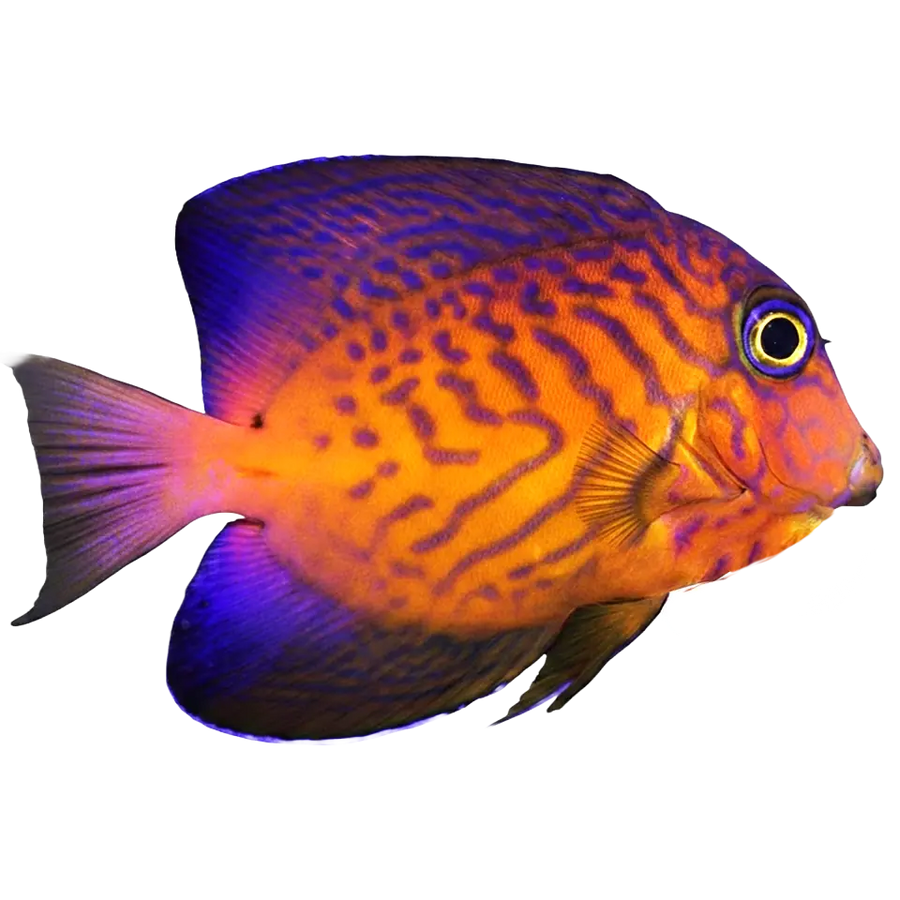
Yellow Tang

Overview:
The Yellow Tang (Zebrasoma flavescens) is a vibrant, hardy marine fish popular among aquarists. Native to the reefs of the Pacific Ocean, particularly around Hawaii, they thrive in well-maintained saltwater aquariums. Ideally, a tank of at least 75 gallons is recommended to accommodate their active swimming behavior and territorial nature. Water conditions should be stable, with a temperature range of 72-78°F, pH between 8.1-8.4, and specific gravity of 1.020-1.025. They require ample live rock for grazing and hiding, as well as open swimming space. Strong water movement and efficient filtration are essential to mimic their natural habitat and maintain water quality.

Diet and Feeding:
Yellow Tangs are primarily herbivores, feeding on algae in the wild. In captivity, their diet should consist mainly of marine-based algae and seaweed. Offer them dried seaweed sheets (nori) attached to a clip, and supplement with high-quality spirulina-based flakes or pellets. It is beneficial to provide a varied diet that includes occasional treats of mysis shrimp or brine shrimp. Feed them small amounts 2-3 times daily to ensure they receive adequate nutrition and to prevent overfeeding, which can lead to water quality issues.

Compatibility:
Yellow Tangs are generally peaceful but can exhibit territorial behavior, especially towards other tangs or fish with similar body shapes. They are best kept as the only tang in a tank unless the aquarium is large enough to accommodate multiple tangs with ample space to establish territories. They are compatible with a wide range of other marine species, including clownfish, gobies, and wrasses. Avoid housing them with overly aggressive species or those that may outcompete them for food. Introducing them last to an established community tank can help reduce territorial disputes.

Health and Quarantine:
Yellow Tangs are susceptible to common marine diseases such as ich and marine velvet. Quarantine new arrivals for at least 2-4 weeks before introducing them to the main tank to prevent disease transmission. During quarantine, observe for signs of stress or illness, such as rapid breathing, spots, or color changes. Maintain optimal water quality and provide a stress-free environment to support their immune system. Regularly check water parameters and perform routine water changes to prevent ammonia and nitrate buildup. Supplementing their diet with vitamins and garlic can enhance their immune response and overall health.

Nori Pellets Mysis
The Yellow Tang is an active swimmer that thrives in spacious environments, spending much of its time grazing on algae. It exhibits semi-aggressive behavior, showing territorial tendencies, especially towards conspecifics or similarly shaped fish. A minimum tank size of 75 gallons is recommended to reduce stress and aggression. While territorial, it can coexist with other reef-safe species if introduced carefully and if the tank is properly arranged with hiding spots and visual barriers. The Yellow Tang is omnivorous, with a diet that should include algae, nori, spirulina, and occasional mysis or brine shrimp. Despite its semi-aggressive nature, it is generally compatible with a variety of non-aggressive or similarly tempered fish, making it a vibrant and beneficial addition to a reef aquarium.

FAQ

Frequently Asked Questions

About the Yellow Tang

  • My new Yellow Tang is pacing and constantly glass-surfing in my 4-foot tank. Is this normal, or is the tank too small, and what minimum tank dimensions do they really need long term?
    Yellow Tangs are very active grazers with strong cruising behavior. In most cases, a 4-foot (roughly 55–75 gallon) tank is the absolute minimum for a small juvenile, and many adults show stress behaviors like glass-surfing in anything shorter than 4 feet. For long-term housing, aim for at least a standard 75–90 gallon tank with a 4-foot length and open swimming room, or preferably a 5–6-foot tank (120+ gallons) for a large adult. They need: - A strong, laminar swimming lane along the front and/or back glass - Rockwork pushed toward the back or sides to give hiding spots while keeping open space - High, variable flow that allows them to cruise constantly If pacing continues after a few weeks of settling, and water quality and tank mates are appropriate, the tank may be undersized or too cluttered. Rearranging rock to open up a “racetrack” route or upgrading to a longer tank usually reduces this behavior.
  • My Yellow Tang’s color is turning pale and blotchy at night and sometimes after I turn the lights on. Is this a sign of disease or normal for the species?
    Yellow Tangs naturally change color at night or when stressed. In darkness they often show: - A pale, grayish-yellow body - A whitish horizontal band along the midline or around the belly - Slightly darker mottling on the sides This is a normal nighttime “sleep” pattern and should resolve within 30–60 minutes after lights come on. Causes for concern are: - Persistent paleness during the day - Clamped fins, rapid breathing, hiding, or refusal to eat - Small white dots (ich), velvety dust (velvet), or frayed fins If daytime color is weak, check nutrition (especially seaweed and vitamin content), water quality (nitrate, phosphate, ammonia, pH), and stressors (aggression, overbright lighting without hiding spots). Normal: color shift only at night or right after strong stress, with a quick return to solid yellow.
  • How often and with what should I feed a Yellow Tang to keep it healthy and prevent head and lateral line erosion (HLLE)?
    Yellow Tangs are herbivores that graze almost constantly in the wild. To support gut health and help prevent HLLE, provide: - Dried seaweed (nori): At least once daily, ideally clipped so they can pick throughout the day. Use green, red, or brown sheets; avoid flavored or spiced products. - High-quality herbivore pellets/flakes: Containing marine algae, spirulina, and quality proteins (fish, krill, not just soy/wheat). Feed small amounts 2–3 times per day. - Occasional frozen foods: Such as mysis or enriched brine, but these should be supplemental, not the core diet. - Vitamin and HUFA supplements: Soak seaweed or frozen foods in vitamins (e.g., products with vitamin C) and omega-3 fatty acids a few times per week. Stable, very low nitrate and phosphate are good for corals but too sterile a system with poor nutrition can contribute to HLLE. Combine a varied herbivore-focused diet, regular vitamin additions, and excellent water quality (including carbon changed regularly or removed if suspected in HLLE cases).
  • My Yellow Tang is suddenly aggressive toward new tank mates, especially other algae grazers. Why is this happening and how can I reduce the aggression?
    Yellow Tangs are territorial, especially in established tanks. They often guard algae grazing areas and can be particularly hostile toward: - Other tangs, especially Zebrasoma species (Sailfin, Scopas, etc.) - Foxfaces, rabbitfish, and similar-shaped fish - New fish added to a tank where the Yellow Tang is already dominant To reduce aggression: - Rearrange rockwork right before adding new fish to break existing territories. - Add new tangs and similar fish at the same time, and ideally to a larger tank (5–6 feet). - Use acclimation boxes to let the Yellow Tang see but not attack new arrivals for several days. - Feed more frequently during the introduction period to distract and reduce competition. - Avoid housing more than one Zebrasoma species in smaller systems; mixing tangs works best in large, long tanks with multiple hiding spots and constant food sources. Persistent severe chasing, fin damage, or repeated ramming means the combination may not be safe, and one fish may need to be rehomed.
  • My Yellow Tang constantly nips at my LPS and soft corals when I reduce algae in the tank. Is this normal behavior, and how can I stop it from damaging corals?
    Yellow Tangs primarily eat algae, but in low-algae, ultra-clean reef tanks they may start sampling fleshy corals and polyps out of hunger or curiosity. This is more likely if: - Natural film algae and macroalgae are scarce - The tang is underfed or does not get enough seaweed - It has learned that corals are a food source To reduce coral nipping: - Increase seaweed availability: Provide multiple small pieces throughout the day rather than one big sheet that gets eaten quickly. - Add more algae-based prepared foods and feed 2–3 times daily. - Encourage safe algae growth: On a refugium, algae clip stations, or dedicated “grazing rocks” that you let grow film algae. - Ensure the tang has enough space and low stress; cramped, bored fish are more likely to pick at corals. Some individuals become persistent coral nippers despite good husbandry. In those cases, relocating the fish to a tank with more algae or fewer sensitive corals may be the only reliable solution.