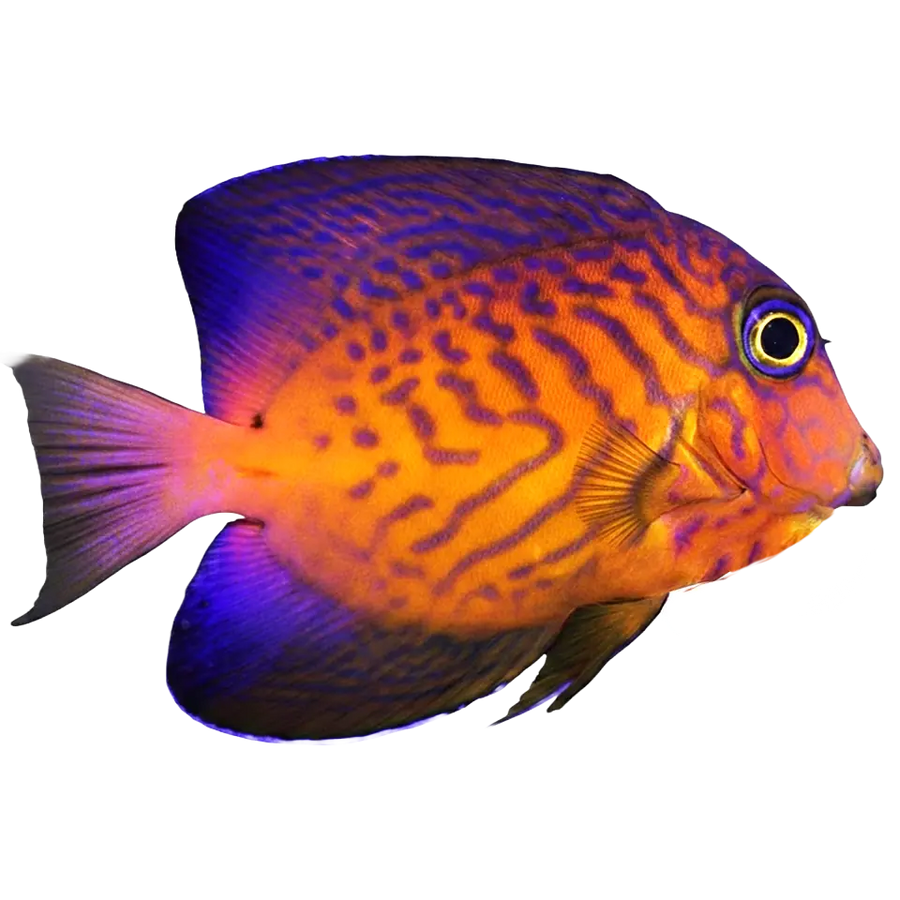
Vlamingii Tang

Overview:
The Vlamingii Tang, also known as Naso vlamingii, is a large, vibrant marine fish that requires a spacious aquarium due to its potential size of up to 24 inches. Ideally, they should be housed in a tank of at least 180 gallons, with ample swimming space and live rock for grazing. The water temperature should be maintained between 72-78°F, with a pH of 8.1-8.4 and specific gravity of 1.020-1.025. Strong water movement and efficient filtration are crucial to mimic their natural reef environment and maintain water quality.

Compatibility:
Vlamingii Tangs are generally peaceful but can exhibit territorial behavior, especially in smaller tanks. They are best kept with other non-aggressive species and should be the only tang in the aquarium to avoid conflicts. Suitable tankmates include other large, peaceful fish like angelfish, butterflyfish, and wrasses. Avoid housing them with aggressive species or other tangs to minimize stress and aggression.

Health and Quarantine:
Vlamingii Tangs are susceptible to common marine diseases such as ich and marine velvet. To prevent outbreaks, quarantine new arrivals for at least 2-4 weeks before introducing them to the main tank. Regularly monitor water quality and perform routine water changes to maintain a healthy environment. Provide a varied diet to boost their immune system and reduce stress by ensuring they have enough space and hiding spots. If signs of illness appear, such as white spots or rapid breathing, treat promptly with appropriate medications.

Nori Pellets Mysis
The Vlamingii Tang is an active swimmer requiring a large tank due to its size and energetic swimming habits. It is semi-aggressive, especially towards conspecifics and other tangs, displaying territorial behavior more prominently in smaller spaces. It is reef-safe, not harming corals or invertebrates, and grazes on macroalgae and nori while accepting meaty foods. Best housed with similarly sized and tempered species, it may intimidate smaller, more timid fish. With adequate space and careful tank mate selection, it thrives in large marine aquariums.

FAQ

Frequently Asked Questions

About the Vlamingii Tang

  • How fast do Vlamingii Tangs grow, and what tank size is realistically needed for an adult kept long term in a home aquarium?
    Vlamingii Tangs grow very quickly, especially during their first 2–3 years. A small juvenile (2.5–3") can easily hit 6–8" within 12–18 months under good conditions, and full adult size is commonly 14–16" in captivity (up to ~23" in the wild). Because of their length and constant swimming behavior, the limiting factor is not just gallons, but footprint and swimming length. Realistically, a permanent home should be at least 8 feet long and 24–30" wide, which usually means 300+ gallons for a single adult. Many people start them in a 180–220 gallon tank, but that should be treated as temporary housing for juveniles or subadults. If you cannot provide a long, high‑volume tank in the near future, it is better to choose a smaller tang species.
  • My Vlamingii Tang is changing color and its body spots and blue margins are becoming more obvious. Is this normal, and what does it signal about age and sex?
    Color and pattern shifts are very typical in Vlamingii Tangs and relate to size, maturity, and mood. Juveniles are more uniformly gray‑brown with faint spots and subtle blue margins. As they grow past about 6–8", the blue edging on the dorsal and anal fins becomes more vivid, the body spotting intensifies, and the face pattern becomes more pronounced. Dominant adults can develop a brighter bluish to purple wash, especially during feeding or territorial displays. Both males and females show these patterns, but males often show bolder facial markings and more contrast when mature. Sudden darkening or blotchy appearance can also indicate stress (poor water quality, aggression, or sudden lighting changes), but gradual intensification of the blue edges and spots over months is normal maturation.
  • How can I keep a large, active Vlamingii Tang well fed without causing chronic high nitrates and nuisance algae in a reef system?
    Balance heavy feeding with strong export. Vlamingii Tangs are big, constant grazers and need frequent, varied feeding, particularly of algae‑based foods. Use these strategies: • Feed smaller amounts 3–5 times per day rather than a few huge meals, emphasizing nori (red and green sheets), quality herbivore pellets, and frozen herbivore blends; supplement with small amounts of mysis or krill for protein. • Use a large, efficient skimmer rated well above your tank volume. • Run a robust refugium with fast‑growing macroalgae (chaeto, caulerpa) on a reverse light cycle to consume excess nutrients. • Employ regular mechanical filtration (roller mat or filter socks changed frequently) to remove particulate waste before it breaks down. • Maintain an aggressive water change schedule (e.g., 10–15% weekly) until you see where nitrate and phosphate settle. • Consider additional export like GFO or phosphate resin and/or carbon dosing if nutrients climb. This approach lets you feed enough to keep the fish’s belly rounded and behavior active while still maintaining low nutrients for corals.
  • Are Vlamingii Tangs safe with small reef fish and invertebrates, and what types of tankmates tend to work best or poorly with them?
    Vlamingii Tangs are generally peaceful herbivores toward smaller fish and are considered reef safe with respect to corals and most inverts. They do not usually nip at corals, clams, or ornamental shrimp. However, there are some considerations: Works well with: • Schools of anthias, chromis, and other planktivores that share the open water column. • Most wrasses, fairy wrasses, flasher wrasses, and halichoeres types. • Angelfish, butterflies, and rabbitfish, provided the tank is large and territories are clear. Potential issues: • Other large Naso tangs or similar‑shaped tangs can trigger competition; in most home systems it’s best to keep only one Naso species. • Very timid fish may be stressed by the constant movement and size of a mature Vlamingii. • In tight quarters, they may chase or intimidate new additions, especially other large herbivores. Introduce the Vlamingii after more delicate fish when possible, and in huge tanks if mixing with other large tangs or similar grazers. Provide lots of open water plus rock structures that break lines of sight.
  • My Vlamingii Tang constantly paces the glass and seems restless even though water parameters look fine. Is this normal behavior or a sign of a problem, and how can I reduce it?
    Some pacing is common in large, active pelagic fish kept in smaller or sparsely aquascaped tanks, but persistent glass‑surfing can indicate unmet space and environmental needs. Check for and address: • Tank size and swimming length: If the tank is under ~8 feet long or very narrow, pacing is often a sign the fish has outgrown the system. • Aquascape: Provide open “runways” for swimming plus tall rock structures and overhangs that reach toward the surface, which create visual breaks and reduce reflections. • Reflections and external movement: Strong side lighting or bare glass ends can cause the fish to react to its own reflection. Add background film, side panels, or adjust lighting to cut reflections. • Activity level: Increase environmental enrichment by using feeding clips placed in different areas, feeding multiple small meals, and occasionally changing flow patterns to mimic more natural conditions. • Water quality and flow: Ensure strong, varied flow and pristine water; even minor, chronic ammonia or high CO2 from poor gas exchange can make large, active fish restless. If pacing persists in an otherwise stable setup, it is often an indicator that a larger tank or different layout is needed for long‑term welfare.