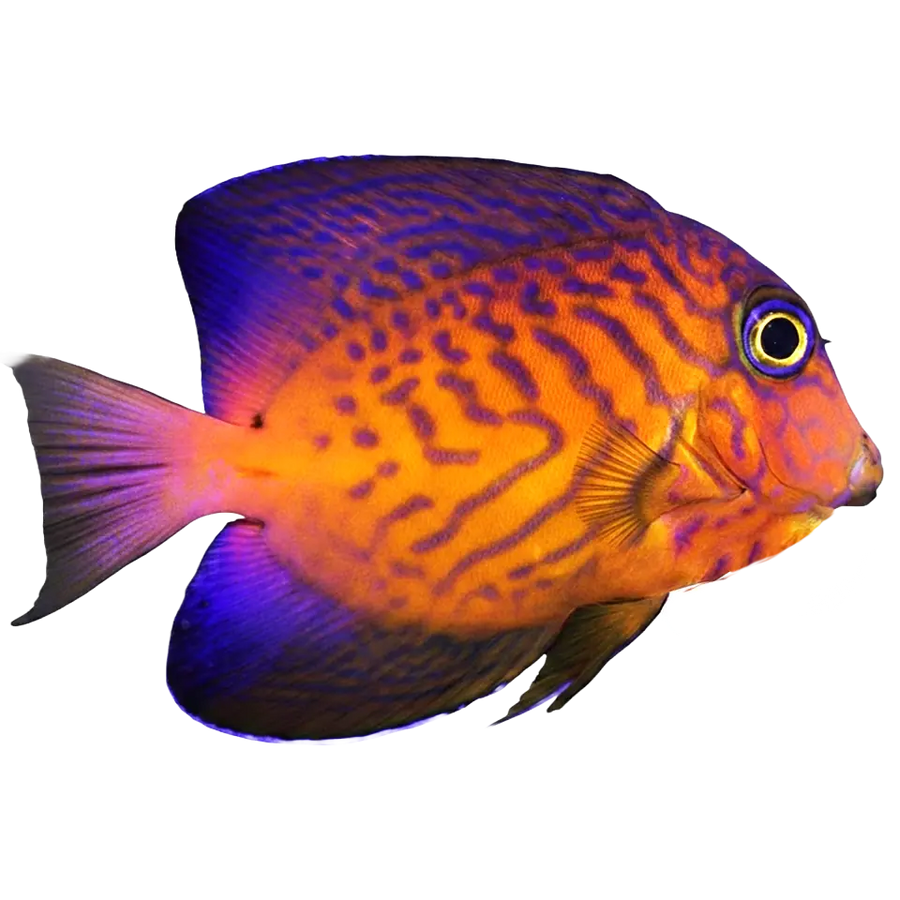
Scopas Tang

Overview:
The Scopas Tang, also known as the Brown Scopas Tang, is a hardy marine fish popular in saltwater aquariums. Originating from the Indo-Pacific region, it thrives in well-established tanks with a minimum size of 75 gallons. The ideal habitat for a Scopas Tang includes plenty of live rock for grazing and hiding, as well as open swimming spaces. Water conditions should be stable, with a temperature range of 72-78°F, pH between 8.1-8.4, and specific gravity of 1.020-1.025. Strong water movement and efficient filtration are essential to mimic their natural environment and maintain water quality.

Compatibility:
Scopas Tangs are generally peaceful but can be territorial, especially towards other tangs or similarly shaped fish. They are best kept with a mix of other peaceful community fish. Avoid housing them with aggressive species or other tangs unless the tank is large enough to accommodate multiple territories. Introducing them last into a community tank can help reduce territorial disputes. Ensure plenty of hiding spots and swimming space to minimize stress and aggression.

Health and Quarantine:
Scopas Tangs are susceptible to common marine diseases such as ich and marine velvet. Quarantine new arrivals for at least two weeks to monitor for signs of illness and prevent the spread of disease to the main tank. Maintain optimal water quality and a stress-free environment to support their immune system. Regularly observe for symptoms like white spots, rapid breathing, or changes in behavior. If illness occurs, treat promptly with appropriate medications. A varied diet and stable tank conditions are crucial in preventing nutritional deficiencies and promoting overall health.

Nori Pellets Mysis
The Scopas Tang (Zebrasoma scopas) exhibits semi-aggressive behavior, necessitating a minimum tank size of 75 gallons to accommodate its active swimming habits and potential territoriality. It is a reef-safe species that thrives in a structured environment with ample swimming space and live rock for grazing. While it can coexist with a variety of other fish, caution is advised when introducing it to a community setting, as it may exhibit aggression towards similarly shaped fish or other tangs. Its diet should consist primarily of algae, supplemented with spirulina and herbivore blends, to maintain its health and vibrant coloration. With proper care and attention to its social dynamics, the Scopas Tang can be a rewarding addition to a reef aquarium.

FAQ

Frequently Asked Questions

About the Scopas Tang

  • My Scopas Tang is turning almost completely dark brown and losing its lighter patterning. Is this normal, and is there anything I can do to maintain its coloration?
    Scopas Tangs naturally darken with age, often becoming uniformly brown as adults, especially in smaller aquariums with dim lighting and dark décor. This is normal and not a health issue by itself. To help keep more contrast in the pattern, use strong, full-spectrum reef lighting (including some blue spectrum), provide a light-colored aquascape in parts of the tank, and feed a varied, algae-rich diet with quality marine pellets, nori, and foods containing natural pigments (spirulina, krill meal, astaxanthin). Good water quality and low stress (few aggressive tankmates, stable parameters) also support better coloration, but you cannot completely prevent the natural darkening that occurs with maturity.
  • How large of a tank does a single Scopas Tang genuinely need long-term, and what tank dimensions are most important for its constant grazing and swimming behavior?
    For a single adult Scopas Tang, the practical minimum is 75–90 gallons, but the critical factor is length: at least 4 feet, with 5–6 feet strongly preferred. This species is an active grazer that patrols rockwork all day, and short, tall tanks do not provide the continuous swimming path it needs. Aim for: length 48–72 inches, width 18 inches or more, and significant live rock arranged in an open, looping layout with swim-throughs. In cramped or short tanks, Scopas Tangs are more prone to aggression, pacing, fin damage, and stress-related illnesses such as marine ich.
  • My Scopas Tang is bullying new fish, especially other algae grazers, even in a fairly large tank. How can I reduce its aggression when adding tankmates, particularly similar-shaped species?
    Scopas Tangs are among the more territorial Zebrasoma species and strongly defend their grazing area, especially against other tangs, rabbitfish, and similarly shaped fish. To reduce aggression when adding new fish: choose a large tank (at least 5 feet for multiple grazers), rearrange some rockwork just before introduction to “reset” territories, add the Scopas later rather than first when possible, and use an acclimation box to let the fish see each other without physical contact for a few days. Avoid adding other Zebrasoma, especially similar-colored ones, unless the system is very large; if you must, introduce them simultaneously and choose different body shapes (e.g., Ctenochaetus tangs) to spread aggression. Maintain high-quality feeding (multiple small meals with plenty of algae) so the Scopas feels less driven to defend food sources.
  • What is the best feeding schedule and diet for a Scopas Tang in a reef tank that already has some natural algae growth, and how do I prevent it from becoming obese or malnourished?
    Even in a reef tank with algae, a Scopas Tang needs regular supplementary feeding. Offer dried nori or other marine algae on a clip at least once daily, ideally in smaller portions twice a day so most is consumed within 15–20 minutes. Combine this with 1–2 small feedings of quality marine herbivore pellets or flakes, plus frozen herbivore blends that include marine algae and a bit of protein (mysis, brine, or plankton). Avoid over-relying on high-fat meaty foods like large mysis or whole krill, which can lead to excess weight and liver issues. Watch body shape: the fish should have a gently rounded, not sunken, belly and no bulging behind the head. If it grows very thick and sluggish, slightly cut back on high-calorie foods and prioritize algae-based items. Always supplement with vitamins and, if possible, foods containing garlic or beta-glucans to support immunity.
  • I want my Scopas Tang to help control nuisance algae, but it seems uninterested in hair algae and only picks at film algae on the rocks. Are there specific algae types they actually control, and how can I encourage better grazing behavior?
    Scopas Tangs are best at controlling film algae, diatoms, and short, fresh growths of green algae on rock and glass; they are much less effective on long, mature hair algae or tough macroalgae. To encourage better grazing, manually remove long hair algae first (scrub and siphon) so only short new tufts remain, which the tang is more likely to eat. Reduce excess nutrients (nitrate, phosphate) with good export methods so the tang can keep up with regrowth. Provide a consistent algae-rich diet (nori, spirulina-based foods) so the fish is healthy and active; underfed or stressed tangs may ignore less palatable algae. Keep in mind that no tang is a complete solution for problem algae—your Scopas is best used as part of an overall nutrient and maintenance strategy, mainly targeting film and early-stage growth.