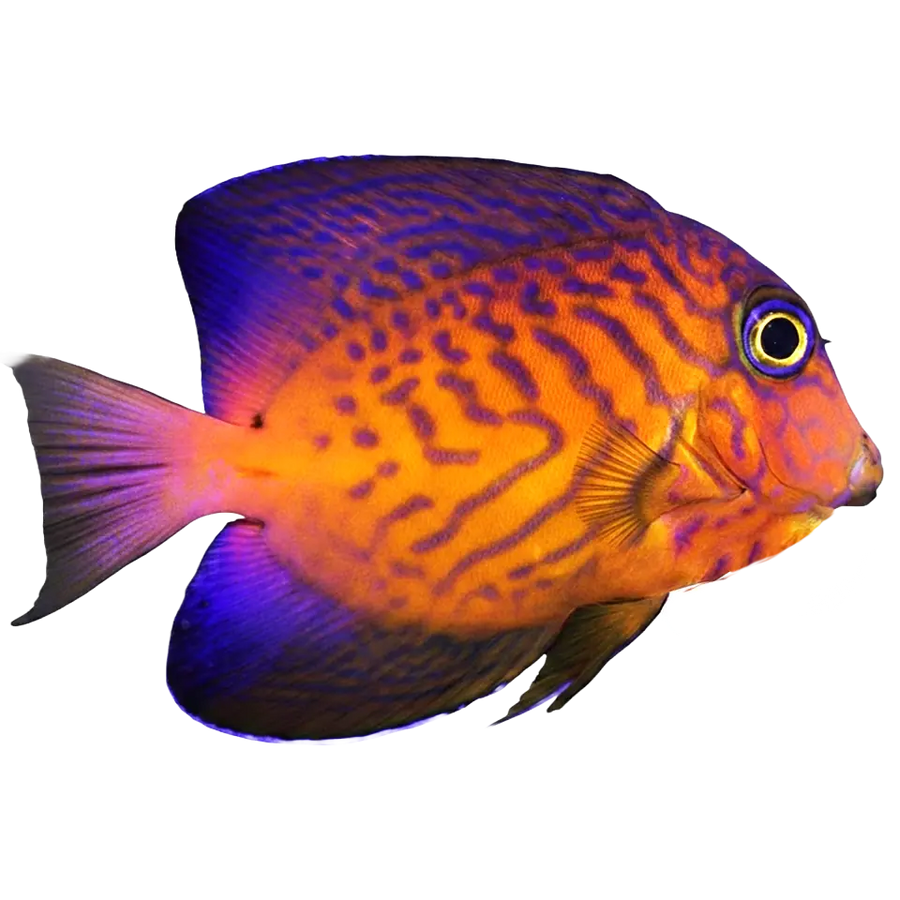
Lieutenant Tang

Overview:
The Lieutenant Tang, a vibrant marine fish, thrives in well-established aquariums with ample swimming space. Ideal conditions include a tank size of at least 100 gallons, with stable water parameters: temperature between 72-78°F, pH levels of 8.1-8.4, and specific gravity of 1.020-1.025. A reef-like environment with live rock for grazing and hiding spots is essential. Ensure efficient filtration and water movement to mimic their natural habitat, promoting their active lifestyle and reducing stress.

Compatibility:
Lieutenant Tangs are generally peaceful but can exhibit territorial behavior, especially towards similar species. They are best housed with other non-aggressive fish of different shapes and colors to minimize conflict. Avoid keeping them with other tangs unless the tank is large enough to accommodate multiple territories. Suitable tankmates include clownfish, gobies, and wrasses. Introduce them to the tank last to prevent territorial disputes and ensure a harmonious environment.

Health and Quarantine:
Maintaining optimal water quality is crucial for the health of Lieutenant Tangs, as they are susceptible to marine ich and other parasites. Regularly monitor water parameters and perform routine water changes. Quarantine new additions for at least two weeks to prevent the introduction of diseases. Observe for signs of stress or illness, such as rapid breathing or loss of color. Provide a varied diet and maintain a stress-free environment to bolster their immune system. If health issues arise, consult a marine veterinarian for appropriate treatment options.

Nori Pellets Mysis
The Lieutenant Tang (Acanthurus tennentii) is an active and semi-aggressive fish, requiring a minimum tank size of 150 gallons to accommodate its swimming habits and territorial nature. Originating from the Indian Ocean, it is reef-safe and can coexist with other semi-aggressive or peaceful species, provided there is ample space and hiding spots to minimize territorial disputes. The Lieutenant Tang thrives on an omnivorous diet, including algae, nori, spirulina, and meaty frozen foods, which helps maintain its health and reduce aggression related to competition for food.

FAQ

Frequently Asked Questions

About the Lieutenant Tang

  • How large does a Lieutenant Tang (Acanthurus tennenti) actually get in home aquariums, and what is the realistic minimum tank size for long‑term success?
    Lieutenant Tangs reach 9–10 inches (23–25 cm) in captivity, with a deep, tall body that needs significant horizontal swimming room. While juveniles are sometimes sold as “okay” for 75–90 gallons, that is not suitable long‑term. A realistic minimum is 6 feet of length and at least 125 gallons, with 180+ gallons strongly preferred for adults. This species is an active, continuous grazer and will pace and show stress colors in cramped systems. Providing open swimming space, high flow, and lots of rock with grazing surfaces is critical to keeping them stable and reducing aggression.
  • My Lieutenant Tang is turning a blotchy brown/grey and losing its clean blue‑grey body color. Is this normal, and what conditions cause this color change?
    Color shifting in Lieutenant Tangs is common and can be normal or stress‑related. They have a natural “mood” pattern and can darken or show mottling during sleep, feeding frenzies, or social displays. However, persistent dulling, blotchy browns, or a washed‑out look usually point to stress: poor water quality (elevated nitrate or phosphate), insufficient algae or greens in the diet, low oxygen/high CO2, bullying from tankmates, or chronic crowding. Check ammonia and nitrite (should be 0), keep nitrate under ~20 ppm, ensure strong aeration and flow, and provide a varied herbivorous diet (multiple algae sheets daily, spirulina‑based pellets, and veggie‑rich frozen foods). Once conditions improve, color usually returns over days to weeks.
  • How aggressive are Lieutenant Tangs toward other surgeonfish and similarly shaped species, and which tankmates are most and least compatible?
    Lieutenant Tangs are mid‑range for aggression: usually calmer than Sohal or Clown Tangs, but often more assertive than Zebrasoma species once established. They are particularly combative with other Acanthurus tangs and fish of similar shape and feeding niche. In a 6‑foot tank, mixing them with other Acanthurus is risky; in 8‑foot or larger tanks it can work if added together as juveniles and in a small group to spread aggression. They tend to coexist better with Bristletooth tangs (Ctenochaetus) and sometimes with Zebrasoma in large systems, especially if the Lieutenant is not the last tang added. Avoid cramped tanks, adding new tangs after the Lieutenant is settled, and similar‑shaped fish like certain rabbitfish unless the system is big and heavily rock‑scaped. Always introduce more passive species and smaller tangs before the Lieutenant whenever possible.
  • My Lieutenant Tang constantly grazes but still looks thin around the spine. What specific diet and feeding schedule does this species need to maintain a healthy body weight?
    Lieutenant Tangs are high‑metabolism herbivores that require frequent, algae‑rich feeding. A single daily feeding is inadequate. Aim for: (1) Nori or other marine seaweed clipped in the tank at least twice daily (green and red varieties, not flavored snack nori), (2) a staple of high‑quality herbivore pellets with spirulina and whole marine ingredients, fed 2–3 small portions over the day, and (3) supplemental frozen foods with a strong plant component (mysis plus spirulina, herbivore blends) a few times weekly. In heavily stocked tanks, the Lieutenant may be outcompeted; use multiple feeding points and ensure it actually gets its share. A healthy fish shows a gently rounded belly and no pronounced pinching along the dorsal area. If weight is not improving after diet changes, check for internal parasites and consider a medicated food in a separate system.
  • Are Lieutenant Tangs prone to ich and other external parasites, and what is the best practice for quarantining and introducing them to reduce disease outbreaks in reef tanks?
    Like most Acanthurus tangs, Lieutenant Tangs are very prone to marine ich (Cryptocaryon), velvet (Amyloodinium), and flukes. Their thin slime coat and constant stress from capture and shipping make them high‑risk introductions. Best practice is to quarantine every new Lieutenant Tang in a separate, bare‑bottom tank for 4–6 weeks. During quarantine, prophylactic treatment with either copper (at a stable therapeutic level) or chloroquine phosphate is widely used against ich and velvet, combined with at least two rounds of praziquantel or prazipro for flukes. Keep strong aeration and excellent water quality, and provide PVC pipe or simple structures for security. Only move the fish into the display tank after it has been symptom‑free for several weeks and eating aggressively. Skipping quarantine with this species is one of the fastest ways to infect an entire reef system.