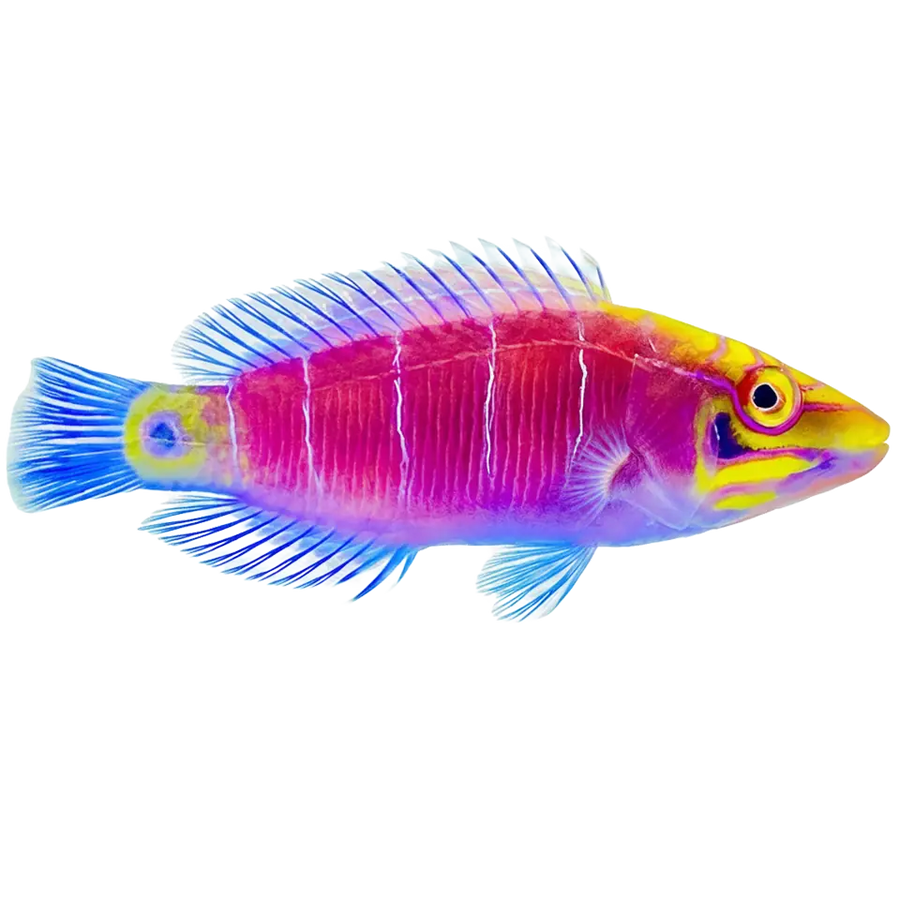
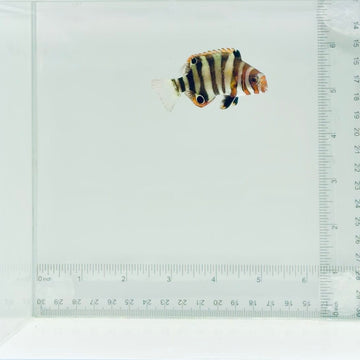
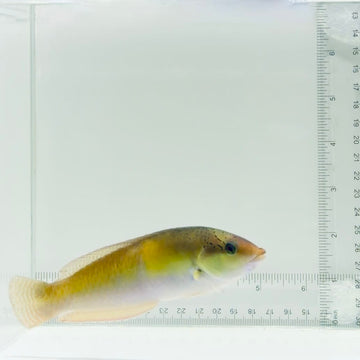
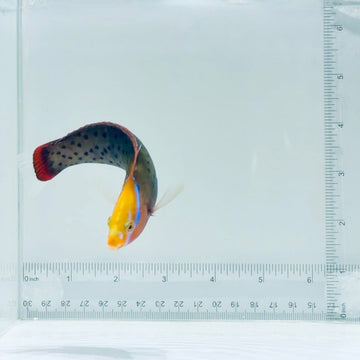
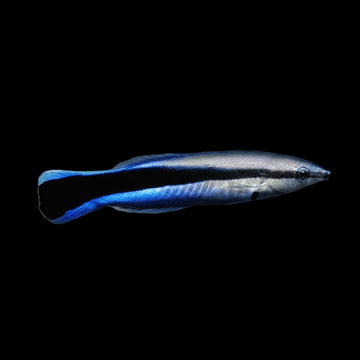
Pintail Fairy Wrasse

Overview:
The Pintail Fairy Wrasse, known for its vibrant colors and active swimming behavior, thrives in a well-maintained marine aquarium. This species requires a tank of at least 75 gallons to accommodate its active nature and provide ample swimming space. Ideal habitat conditions include a temperature range of 72-78°F, a pH level of 8.1-8.4, and a salinity of 1.020-1.025. A well-established tank with live rock is essential, offering both hiding spots and grazing opportunities. Moderate water flow and strong lighting mimic their natural reef environment, promoting their health and vibrant coloration.

Compatibility:
Pintail Fairy Wrasses are generally peaceful and can coexist with a variety of tankmates. They do well in a community setting with other non-aggressive fish species. Avoid housing them with overly aggressive or territorial fish, as this can lead to stress and potential health issues. They can be kept with other wrasses, but ensure ample space and hiding spots to prevent territorial disputes. Introducing them to the tank last can help reduce aggression from established tankmates. They are also reef-safe, making them suitable for tanks with corals and invertebrates.

Health and Quarantine:
Maintaining optimal water quality is crucial for the health of Pintail Fairy Wrasses. Regular water changes and monitoring of water parameters help prevent common health issues. Quarantine new arrivals for at least two weeks to observe for signs of disease and to prevent the introduction of parasites into the main tank. Watch for symptoms such as loss of appetite, rapid breathing, or unusual swimming patterns, which may indicate health problems. Providing a stress-free environment with stable conditions and a balanced diet is key to preventing illness and promoting long-term health.

Pellets Mysis Finely Chopped Seafood
Pintail Fairy Wrasse, native to the Philippines, swims actively in mid to upper tank levels. They exhibit peaceful behavior, making them ideal for community tanks. This species thrives in groups, displaying vibrant colors during social interactions. They are non-territorial, coexisting well with other peaceful fish. Preferring reef environments, they are compatible with coral and invertebrates. A varied carnivorous diet, including mysis shrimp and enriched frozen foods, ensures optimal health. A minimum tank size of 70 gallons is recommended to accommodate their active nature.

FAQ

Frequently Asked Questions

About the Pintail Fairy Wrasse

  • Can male Pintail Fairy Wrasses change color or pattern as they mature, and how can I tell if mine is transitioning from juvenile to terminal male?
    Yes, males show noticeable change as they mature. Juveniles and initial-phase males have softer pink/orange bodies with less defined yellow along the dorsal and less intense blue on the fins. As they approach terminal male form, you’ll see: (1) deeper, more saturated pink/orange body, (2) stronger, continuous yellow stripe along the back and dorsal area, (3) more vivid blue on the dorsal, anal, and tail fins, especially along the edges, and (4) a more elongated, pointed “pintail” with clearer contrast between the central tail filaments and the rest of the caudal fin. You may also notice more frequent display behavior toward other wrasses and increased patrol of the water column. Full transformation can take several months depending on diet, social structure, and stress level.
  • Will a Pintail Fairy Wrasse get along with other fairy wrasses and flasher wrasses, and what combinations are safest in a mixed wrasse community?
    Pintail Fairy Wrasses are generally peaceful and can coexist with other fairy and flasher wrasses, especially in larger tanks (4 ft length minimum, ideally 75–90+ gallons for mixed groups). The safest combinations are with species from different color/shape groups to reduce direct rivalry, such as Carpenter’s or McCosker’s flasher wrasse, or smaller fairy wrasses like Lubbock’s or social fairy wrasses. Avoid mixing with very similar-looking Cirrhilabrus males (e.g., some pintail-like variants or closely related species from the isosceles/roseafascia complexes) in small aquariums, as they may bicker or constantly posture. Introduce multiple wrasses at the same time, use an acclimation box for any new male, and ensure plenty of rockwork and open water so subdominant fish can avoid constant attention.
  • Do Pintail Fairy Wrasses really need a lid, and if so, what kind of cover is best to prevent jumping without blocking too much light?
    Pintail Fairy Wrasses are powerful jumpers and absolutely require a tight-fitting cover. Open-top tanks almost guarantee eventual loss, often during the first month or after a startle event (lights switching, maintenance, sudden movement). Use a rigid frame with 1/4" (6 mm) clear mesh or smaller; larger openings allow thin wrasses to shoot through. Avoid glass panels that trap heat and gas unless your system is designed for it; if you must use glass, leave small vent gaps covered with mesh and increase surface agitation. Ensure all cutouts for plumbing, cords, and overflows are blocked off with mesh or acrylic pieces. Check the lid after any equipment changes, as new cable paths often create escape gaps.
  • What feeding routine keeps Pintail Fairy Wrasses at their best coloration and activity level in a reef tank?
    Pintail Fairy Wrasses thrive on frequent, varied feedings rather than one or two large meals. Aim for 2–4 small feedings per day if possible. Base the diet on small, meaty items: enriched mysis, finely chopped krill, calanus, small plankton, and high-quality marine pellets (1 mm or smaller) plus frozen foods designed for small planktivores. Supplement with live or frozen copepods and baby brine for extra activity and conditioning. Coloration improves when they get carotenoid-rich foods like mysis, calanus, and certain reef blends. Keep portions small so food is consumed quickly; robust skimming and good export are important if you feed heavily. A well-fed Pintail is constantly cruising midwater and responding eagerly at every feeding.
  • Why does my Pintail Fairy Wrasse dive into the rocks at night or during stress even though it’s not a sand sleeper, and should I provide sand for it?
    Pintail Fairy Wrasses do not bury in sand like Halichoeres or leopard wrasses; instead, they wedge themselves into rock crevices or among branching rock/reef structures and secrete a thin mucus “cocoon” at night or when severely stressed. This behavior is normal and doesn’t require sand. In fact, deep sand beds aren’t necessary for this species and can complicate maintenance. What they do need is a rock aquascape with plenty of nooks, caves, and sheltered overhangs so they can quickly vanish when startled and find secure sleeping spots. If your tank is very minimal with sparse rock, the fish may feel exposed and stay shy in the corners. Provide more structure and dim your lights gradually (or ramp them down with a controller) so the wrasse can retreat calmly rather than panic at abrupt light changes.